
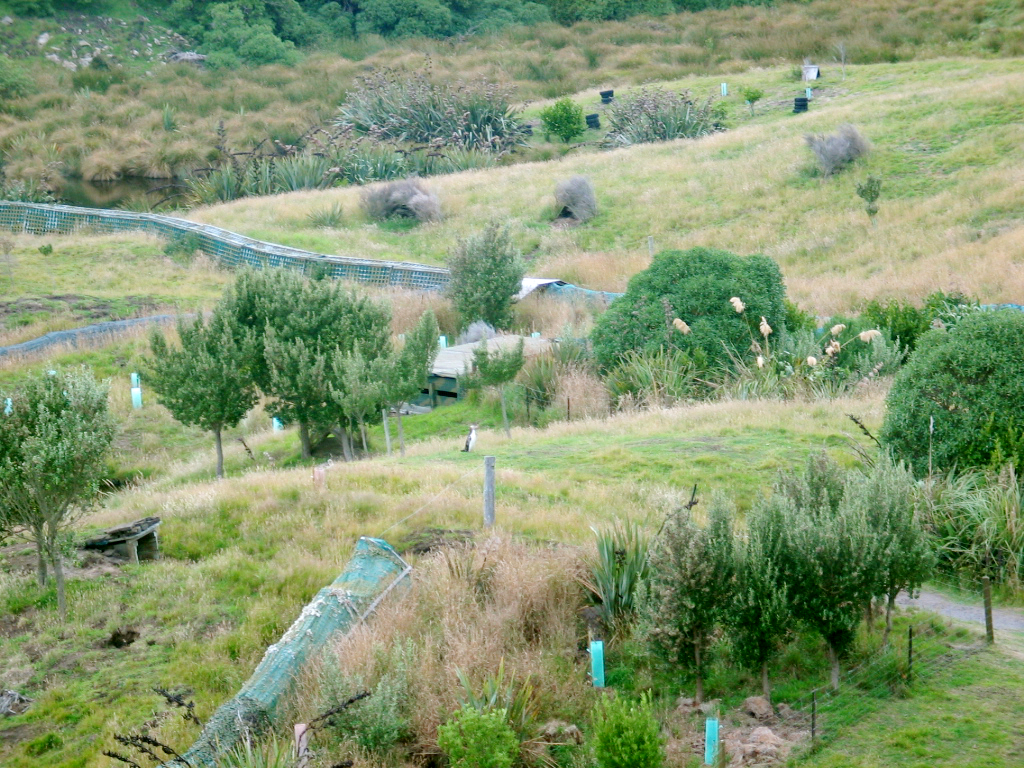
The yellow-eyed penguin, known as hoiho or takaraka to Maori, is a bird in trouble. Fewer than 115 breeding pairs remain on the New Zealand mainland. Since 2019, chicks there have been dying of a neonatal illness called respiratory distress syndrome, and no one knew why some birds were more vulnerable than others. A study published this week in Nature Ecology & Evolution went looking for answers in the birds' DNA. It found something the researchers did not expect: what everyone had treated as one species is really three.
The team, led by scientists at the University of Otago working in partnership with Ngai Tahu, sequenced high-quality whole genomes from 249 individual penguins. The birds spanned the full range of the species, from the mainland Northern population down to the sub-Antarctic Enderby and Campbell Islands in the south.
Three lineages hiding in plain sight
When the genomes were compared, three deeply divergent lineages fell out of the data, with almost no gene flow between them. In plain terms, these groups of penguins have not been interbreeding. The splits are old. Divergence dating puts the separation of the Northern lineage from the southern populations somewhere between 5,000 and 16,000 years ago, well before humans reached New Zealand. That timing matters. It means the divisions are natural products of the species' history, not a recent artifact of human disturbance.
The authors argue this genetic structure is strong enough to warrant recognizing three distinct subspecies. That is not a bureaucratic footnote. Conservation law and funding often hinge on how a population is classified. A dwindling group of birds counted as part of a larger species can look less urgent than the same group recognized as a subspecies on its own. The Northern subspecies, the one collapsing on the mainland, would move from being a fraction of a rare species to being critically small in its own right.
Chasing the genes behind a chick killer
The second part of the work targeted the disease. Using genome-wide association analysis, the researchers scanned for stretches of DNA linked to respiratory distress syndrome. They flagged candidate genes involved in immune function and respiration. These are leads, not verdicts. But they point toward a possible genetic basis for why some chicks succumb and others survive, which could eventually help managers identify vulnerable birds or breeding pairs.
Genome scans also picked up regions of strong local adaptation, signs that the different lineages have been tuning themselves to their own environments over thousands of years. That reinforces the case that these are not interchangeable populations. Move birds between them, and you may be mixing lineages that evolution has kept apart for millennia.
What the DNA cannot settle
A genome is a powerful witness, but it does not close the case. The association analysis names candidate genes; it does not prove that any one of them causes respiratory distress syndrome. Confirming a mechanism would take functional work, and the disease may well involve environmental triggers, pathogens, or nutrition that DNA alone will not reveal. The subspecies proposal, too, is a recommendation that the wider taxonomic community will have to weigh. And while the study maps the Northern population's plight in detail, it flags that the Auckland and Campbell Island groups still need up-to-date counts and trend data. Nobody yet knows how those southern birds are faring.
Still, the practical message is direct. The authors call for urgent action for the Northern subspecies and for immediate population assessments in the south. They also model how conservation should respect the boundaries the genomes revealed, rather than treating all yellow-eyed penguins as one interchangeable pool. For a bird this close to the edge, knowing exactly what you are trying to save is not an academic nicety. It shapes where the limited money and effort go.
There is a broader lesson here for wildlife management. Species that look uniform from the outside can carry deep, ancient divisions in their DNA. Miss those divisions and you risk protecting an average that no longer exists on the ground. The hoiho, treasured as a taonga species in Aotearoa New Zealand, just showed how much a genome can change the conservation math.
Guhlin, J. et al. "Population genomics of yellow-eyed penguins uncovers subspecies divergence and candidate genes linked to respiratory distress syndrome." Nature Ecology & Evolution, 2026. doi.org/10.1038/s41559-026-03062-w
PubMed PMID: 42120682.
Photograph: Ciell, CC BY-SA 2.5, via Wikimedia Commons.
Comments