
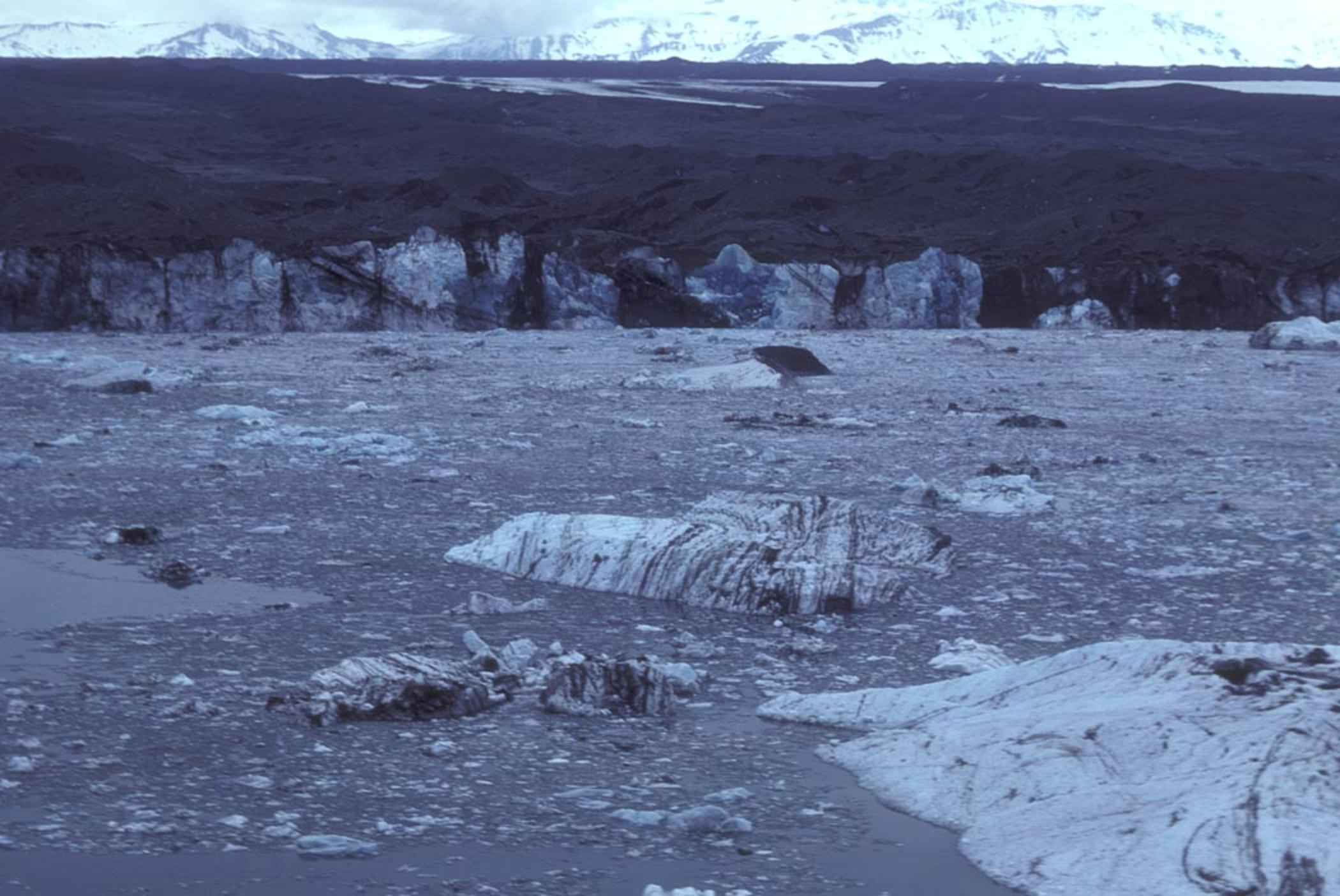
Ask most people what lives on a glacier and the honest answer is nothing. Ice looks like a dead surface. It is not. Scattered across the frozen tops of the world are worms, insects, springtails, tiny water bears, and rotifers that spend their whole lives on and inside the ice. A study published this week in PNAS pulls these overlooked creatures together for the first time, and the tally is bigger than anyone had properly counted.
Researchers assembled a global dataset of land and freshwater animals in glacial habitats. They found at least 152 species, spread across 14 classes and 7 phyla. That is a wide slice of the animal tree of life for a place we tend to think of as barren. And the authors are clear that 152 is a floor, not a ceiling. For nearly every group, they write, the real diversity is underestimated, held down by how little anyone has looked.
Specialists with nowhere else to go
The number that matters most for conservation is 73. That is how many of the species were reported only from glacial habitats. These are the glacier specialists, animals built for cold and found nowhere else. If the ice goes, their address goes with it.
Different groups sort themselves by geography in a way that makes the map interesting. Tardigrades and rotifers, the microscopic survivors famous for shrugging off extreme conditions, turned up mostly in polar regions. Insects and springtails clustered instead on tropical and temperate mountains, the high cold islands that rise out of warmer country. Colder glacier regions carried more specialists overall, which is not a comforting pattern when the whole point of the paper is that the cold is disappearing.
One finding stands out for how ordinary it sounds. The strongest predictor of whether glacier animals showed up in a place was the ability to disperse passively by wind. Blowing in on a gust turns out to be a serious way to colonize a glacier. It also hints at how fragile these communities are, since a species that arrives by luck can vanish the same way once the habitat shrinks.
Watching the habitat melt out from under them
The authors did not stop at a census. They linked where the glacier specialists live to scenarios of glacier retreat, essentially overlaying the animals onto maps of ice that is projected to thin and disappear. From that they picked out specific regions and species likely to see sharp declines in the coming decades. Some face something starker than decline. For them the models point to complete habitat loss, the full removal of the only environment they are known from.
This is a quieter kind of extinction story than the usual charismatic-animal headlines. Nobody is going to run a fundraising campaign around a glacier springtail. But the logic is the same one that applies to polar bears or coral. When a habitat has a hard physical limit, and that limit is moving, the things adapted to it get squeezed against a wall.
What the numbers do and do not tell us
It is worth being careful about what this study is. It is a synthesis of existing records, not a fresh expedition to every glacier on Earth. The authors say so plainly, and they flag taxonomic, ecological, and geographical biases running through the data. Some groups are better studied than others. Some mountain ranges have been visited by scientists and many have not. So the 152-species figure reflects where people have looked as much as where animals actually are. The retreat projections, likewise, describe risk under modeled scenarios rather than a fixed forecast of which species will be gone by which year.
None of that softens the core message. There is a real, diverse fauna living on ice, we have barely inventoried it, and the ice is on its way out. The paper reads less like a discovery and more like a warning that we are about to lose a set of animals before we have finished writing down that they exist. The authors call for urgent research and conservation, which in this case means something specific: go count them properly, while there is still somewhere to count them.
Simoncini, A. et al. "The global diversity and decline of glacier animals." Proceedings of the National Academy of Sciences, 2026. doi.org/10.1073/pnas.2514455123
PubMed PMID: 42296368.
Photograph: U.S. Fish and Wildlife Service, public domain, via Wikimedia Commons.
Comments