
The expectation that warming will push boreal soils from sink to source was built from a particular set of places. Forests and tundra are where the warming experiments were run, and in both, warmer soil means faster microbial respiration and net carbon loss. The generalisation to the whole boreal zone was reasonable, but it skipped the single largest store. Sphagnum peatlands hold roughly 40% of boreal carbon, and they had been studied least.
A group spanning the Chinese Academy of Sciences and the University of Helsinki, reporting as Zhao et al., went back to that gap, combining a meta-analysis of 735 paired observations from 93 boreal warming studies with two long-term warming experiments in Finnish peatlands. Their result runs the other way. In Sphagnum peatlands, warming increased soil carbon accumulation rather than reducing it, and the authors are explicit that this breaks the pattern: This result sharply contrasts with warming-induced carbon loss from boreal forests and tundra, owing to the unique metabolic response of Sphagnum.
Why it matters: Boreal ecosystems hold twice as much carbon as the atmosphere and are warming faster than the global average. Whether the largest boreal carbon store amplifies warming or damps it is a first-order question for climate projections, and the answer here is not the one the prevailing paradigm assumed.
The mechanism is what makes the reversal credible rather than anomalous. Sphagnum is not an ordinary plant and peat is not ordinary soil.
Three effects, all pointing the same way
The authors identify three contributions. Warming raised Sphagnum productivity, so more carbon entered the system. It reduced microbial decomposition, so less left, which is the opposite of the forest and tundra response and the part that most needs the peat context to make sense. And it enhanced iron-mediated protection of soil organic matter, in which iron binds organic compounds into forms microbes cannot readily attack.
Sphagnum earns its exception honestly. The moss acidifies its surroundings, holds water in dead cells, and produces phenolic compounds that inhibit decomposers. Peat accumulates because decomposition there is already suppressed by chemistry and waterlogging rather than limited by temperature alone. In a system where microbes are held back by conditions other than cold, warming the soil does not release them, while the plant above still grows faster. The two responses that cancel in a forest do not cancel here.
Scaled up, the authors estimate the effect may offset nearly half the projected decline in the boreal forest carbon sink, or nearly half the increase in heterotrophic respiration from Arctic tundra. That is a large claim, and it arrives with the condition that governs everything else in the paper.
The assumption the estimate rests on
The offset figure holds only assuming no hydrological changes or plant species shifts. That parenthetical is not a routine hedge; it is the whole load-bearing structure of the result.
A peatland is defined by its water table. Waterlogging is what keeps oxygen out, and keeping oxygen out is what keeps decomposition slow enough for peat to accumulate over millennia. Warming increases evaporation and lengthens growing seasons, and drying peatlands is the mechanism by which they are expected to release carbon. The paper measures what warming does to peat while the water stays put, then notes that it has not asked what warming does to the water.
The second half of the assumption is the same problem on a longer timescale. Drier, warmer peatlands tend to be colonised by vascular plants and shrubs, which shade out Sphagnum, and the special properties driving this result belong to Sphagnum specifically. A peatland that stops being a Sphagnum peatland stops behaving like one. Whether that succession is fast enough to matter this century is not addressed here.
What the study can't say yet
Experimental warming and climate warming are not the same treatment. Warming plots heat soil or air locally over years while leaving regional hydrology, precipitation and species pools intact, which is precisely the condition the estimate assumes. The design cannot produce the drying that is the main worry, so it cannot test it.
The meta-analysis inherits its inputs. The 735 paired observations come from studies differing in warming method, magnitude, duration and measurement, and the underlying literature was described as thin for peatlands, which is the gap this work sets out to fill. The mechanistic detail comes from two sites, both in Finland, and boreal peatlands span Canada, Fennoscandia and Siberia with different hydrology and iron chemistry. The iron-protection pathway in particular depends on local mineral supply.
Timescale is unresolved too. Increased accumulation measured over an experiment's duration does not establish a new equilibrium; productivity responses to warming often fade as other limits bind. And the accounting here is soil carbon, not radiative balance. Waterlogged peatlands emit methane, a far stronger greenhouse gas per unit carbon over short horizons, and a peatland storing more carbon while emitting more methane may not be a net cooling influence. This paper measures the carbon.
The authors' conclusion is narrower than the headline and fairly stated: These findings highlight the vital but overlooked role of Sphagnum peatlands in counteracting boreal carbon loss under future warming. Counteracting is not reversing, and the offset is conditional on peatlands staying wet.
Quick questions
Why would warming slow decomposition? In most soils it speeds it up. Peat decomposition is already suppressed by acidity, low oxygen and Sphagnum's own antimicrobial chemistry, so temperature is not the binding constraint, while the moss above grows faster when warmed.
Does this mean boreal warming is less dangerous than thought? It means one large component may partly offset another, under an assumption that peatlands keep their water. Drying is the scenario this design cannot test and is the main reason peatlands are considered at risk.
What's the one-line takeaway? Across 735 paired observations and two Finnish field experiments, warming increased carbon accumulation in Sphagnum peatlands rather than decreasing it, enough to offset nearly half the expected boreal forest sink decline, provided the water table and the moss both stay where they are.
Zhao Y, Feng X, Pihlatie M, et al. "Warming enhances soil carbon accumulation in boreal Sphagnum peatlands." Nature Ecology & Evolution, 2026;10(3):496-511. doi.org/10.1038/s41559-026-02982-x
PubMed PMID: 41663687.
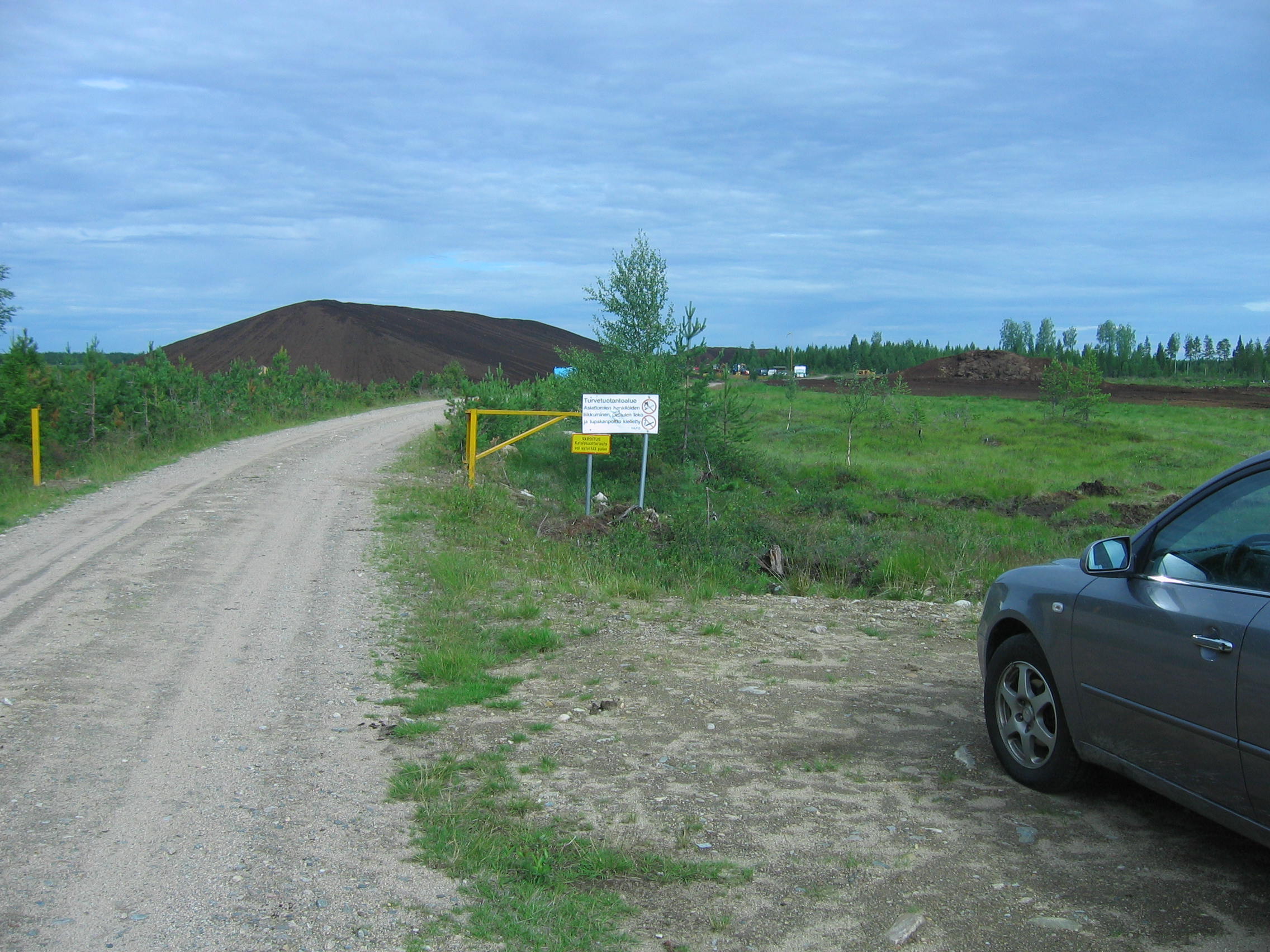
Image: boreal peatland. Via Wikimedia Commons.
Comments