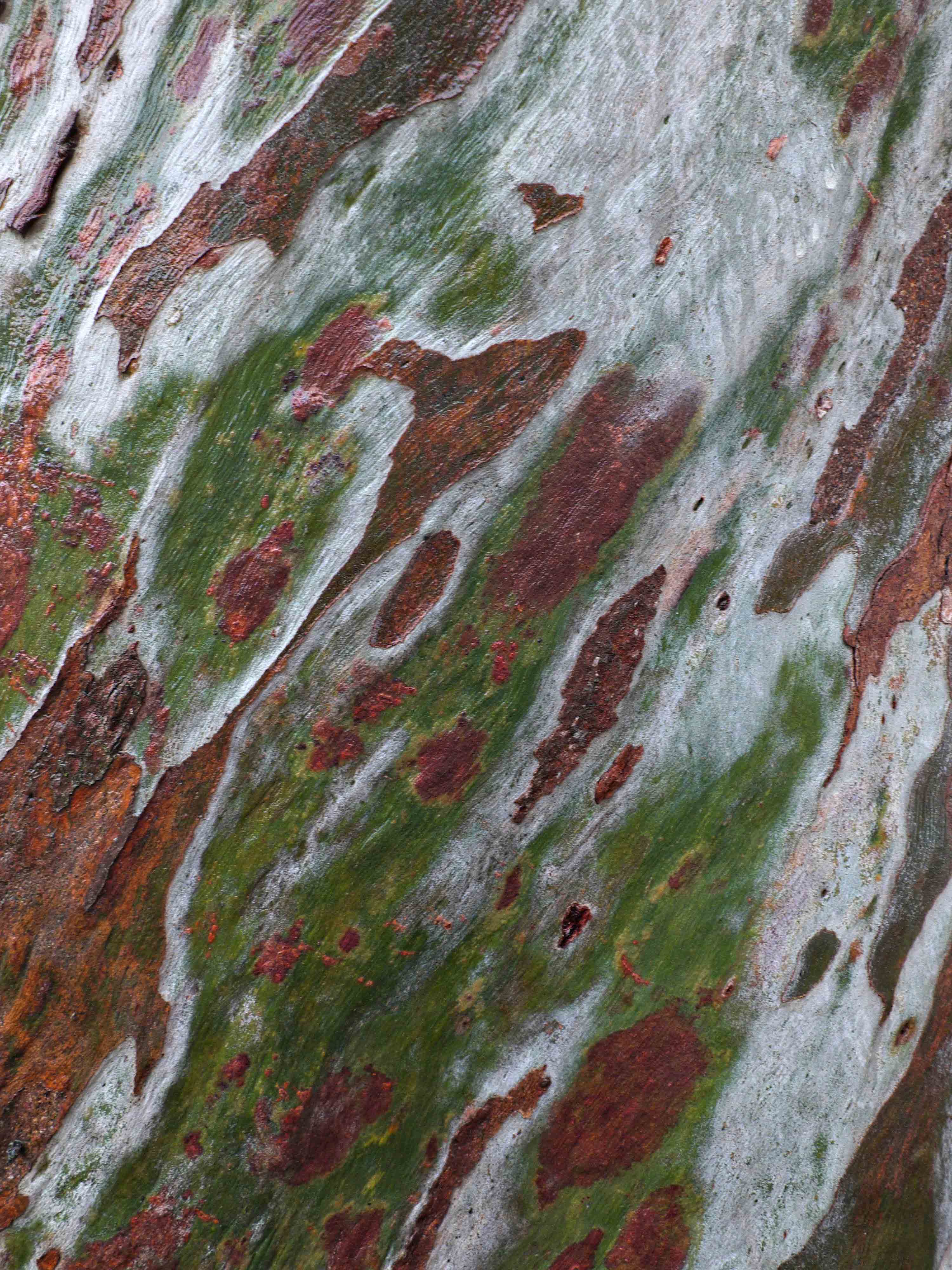
Peel back a strip of eucalyptus bark and you expose a surface most people never think about. It is dry in the sun, soaked after rain, oxygen-rich near the outside and starved of it deeper in. A new study in Science argues that this cracked, shifting real estate is one of the more active microbial habitats in a forest, and that the bacteria living there are busy eating and belching the same gases that drive climate change.
The work, led by Pok Man Leung and Chris Greening at Monash University with collaborators at Southern Cross University, looked at the bark of eight common Australian tree species. Using two complementary genetic methods, the team read out both individual genes and reconstructed whole microbial genomes from bark samples. What they found was not a random smear of environmental bacteria. It was a structured, specialized community.
Bacteria built for a life of feast and famine
The dominant residents turned out to be what the researchers call hydrogen-cycling facultative anaerobes. That phrase does a lot of work. Facultative means these microbes can switch between breathing oxygen and living without it, which suits a surface that floods and dries on its own schedule. Hydrogen-cycling means they trade in molecular hydrogen, producing it in low-oxygen pockets and consuming it when air returns.
Alongside them, the team found methanotrophs in surprising abundance. These are bacteria that make a living oxidizing methane, one of the most potent greenhouse gases. Stranger still, the methane eaters coexisted with methanogens, microbes that produce methane under airless conditions. So the same patch of bark can host organisms that make methane and organisms that destroy it, sitting close together and responding to whichever way the local chemistry tips.
To test whether these genomic hints reflected real activity, the researchers ran microcosm experiments. Bark samples aerobically consumed methane, hydrogen, and carbon monoxide at the low concentrations found inside a living tree. Flip the conditions to anoxic, and the same bark started producing those gases instead. The microbes were not just present. They were metabolizing.
Tree trunks as chemical exchange points
The bigger claim comes when the lab work meets the field. The team paired their microcosm data with in situ measurements taken on standing trees. Their conclusion is that bark-dwelling microbes metabolize several climate-active gases at meaningful rates within tree stems. Forests already move enormous volumes of carbon dioxide, methane, and other gases, and researchers have long treated tree surfaces mostly as passive conduits. This study reframes the trunk itself as a place where microbes actively rework atmospheric chemistry.
If bark methanotrophs are consuming methane across large stretches of forest, they could be trimming emissions that would otherwise reach the air. If bark communities flip to producing methane and hydrogen when conditions turn anoxic, the accounting gets more complicated. Either way, the gas budget of a forest may depend on microbes nobody was measuring.
What this does and does not settle
The findings come from eight tree species in Australia, and bark is not the same everywhere. Species with thick fibrous bark, smooth shedding bark, or bark in a rainforest versus a dry woodland could host very different microbes doing very different things. The paper establishes that these communities exist and are active. It does not yet pin down how much they shift a whole forest's net exchange with the atmosphere over a year, or how the balance moves with drought, fire, or season. Scaling from a bark chip in a jar to a continent of trees is a large leap, and the authors frame the global role as potentially substantial rather than settled.
Still, the basic picture is a useful correction. The living surface of a tree is not inert. It is colonized by microbes running redox chemistry on gases that matter for the planet's heat balance. For anyone modeling how forests soak up or release greenhouse gases, that is a variable worth adding. The next question is how much these bark communities are already bending the numbers we thought we understood.
Leung, P. M. et al. "Bark microbiota modulate climate-active gas fluxes in Australian forests." Science, 2026. doi.org/10.1126/science.adu2182
PubMed PMID: 41505541.
Photograph: MayumiKataoka, CC BY-SA 4.0, via Wikimedia Commons.
Comments