
Tuberculosis kills more than a million people a year, and the reason it is so hard to shake comes down to a standoff inside the lung. The immune system walls off Mycobacterium tuberculosis in dense knots of cells called granulomas. Sometimes those walls hold. Sometimes the bacteria keep growing inside them. A team at the Chinese Academy of Sciences has now pinned down one thing that tips a granuloma toward failure, and it is not what most people would guess. The problem is fat.
Writing in Nature Microbiology, Qiyao Chai and colleagues mapped the cell-by-cell geography of human tuberculosis granulomas using spatial transcriptomics, which reads gene activity while keeping track of exactly where each cell sits. They paired that with microscopy of human lung tissue and experiments in mice. The picture that emerged pointed straight at a breakdown in communication between two arms of the immune response.
The handshake that stops working
Controlling TB depends on a handshake. Infected macrophages, the immune cells that swallow bacteria, are supposed to display fragments of the pathogen on their surface using molecules called MHC class II. CD4 T cells read those fragments and, if they recognize a threat, switch on and coordinate the attack. Break the handshake and the whole coordinated defense goes slack.
That is what the researchers saw, especially in the necrotic granulomas where tissue had started to die. Macrophages in those zones carried less MHC class II on their surface, and nearby CD4 T cells looked underactivated. The innate and adaptive sides of the immune system were sitting next to each other and barely talking.
Then the team asked why. Infecting macrophages, or simply exposing them to mycolic acids, the waxy lipids that coat the TB bacterium, threw off the cells' handling of cholesterol. Cholesterol trafficking stalled. The molecule built up inside the cell and, critically, MHC class II got trapped alongside it in lysosomes, the cell's disposal compartments. Stuck in there, those alert molecules never reached the surface where T cells could see them. Antigen presentation dropped. The T cell response weakened.
Unclogging the pathway
The most useful part of the study is what happened when the researchers pushed cholesterol back into balance. Using drugs to restore normal cholesterol handling during late-stage infection, they improved control of M. tuberculosis in mice. In other words, the fat overload was not just a side effect of a losing battle. It was part of the cause, and reversing it helped.
That flips the usual thinking a little. Cholesterol has long been studied in TB mostly as bacterial food, since the microbe can burn host cholesterol to survive. This work adds a second role. The buildup also gags the infected cell, keeping it from calling in the T cells that would otherwise help finish the job. Both problems trace back to the same disordered lipid metabolism.
What to hold in reserve
A few limits are worth keeping in view. Most of the causal experiments, including the drug treatment, were done in mice and in cultured human cells, not in people with active tuberculosis. Mouse granulomas and human granulomas are not identical, and the necrotic structures that showed the strongest effect are exactly the ones hardest to model faithfully. The human data here are descriptive snapshots, which show an association between low MHC class II and stalled T cells but cannot on their own prove the sequence of events. The specific drugs used to reset cholesterol would need their own safety and dosing work before anyone tries them against TB in the clinic.
Still, the appeal of this direction is that it points at the host rather than the bacterium. Drug-resistant TB spreads because the microbe keeps evolving around antibiotics. A therapy that repairs the immune cell's own signaling would not care whether the bacterium is resistant to standard drugs. Chai and colleagues frame cholesterol overload as something that could be targeted, and the mouse results give that idea some early traction. Whether it survives the jump to human lungs is the open question, but it is a concrete one, with a clear thing to measure: does clearing the fat let the immune handshake happen again.
Chai, Q. et al. "Lipid accumulation in tuberculosis granulomas inhibits macrophage-CD4 T cell interactions and infection control." Nature Microbiology, 2026. doi.org/10.1038/s41564-026-02317-3
PubMed PMID: 41933199.
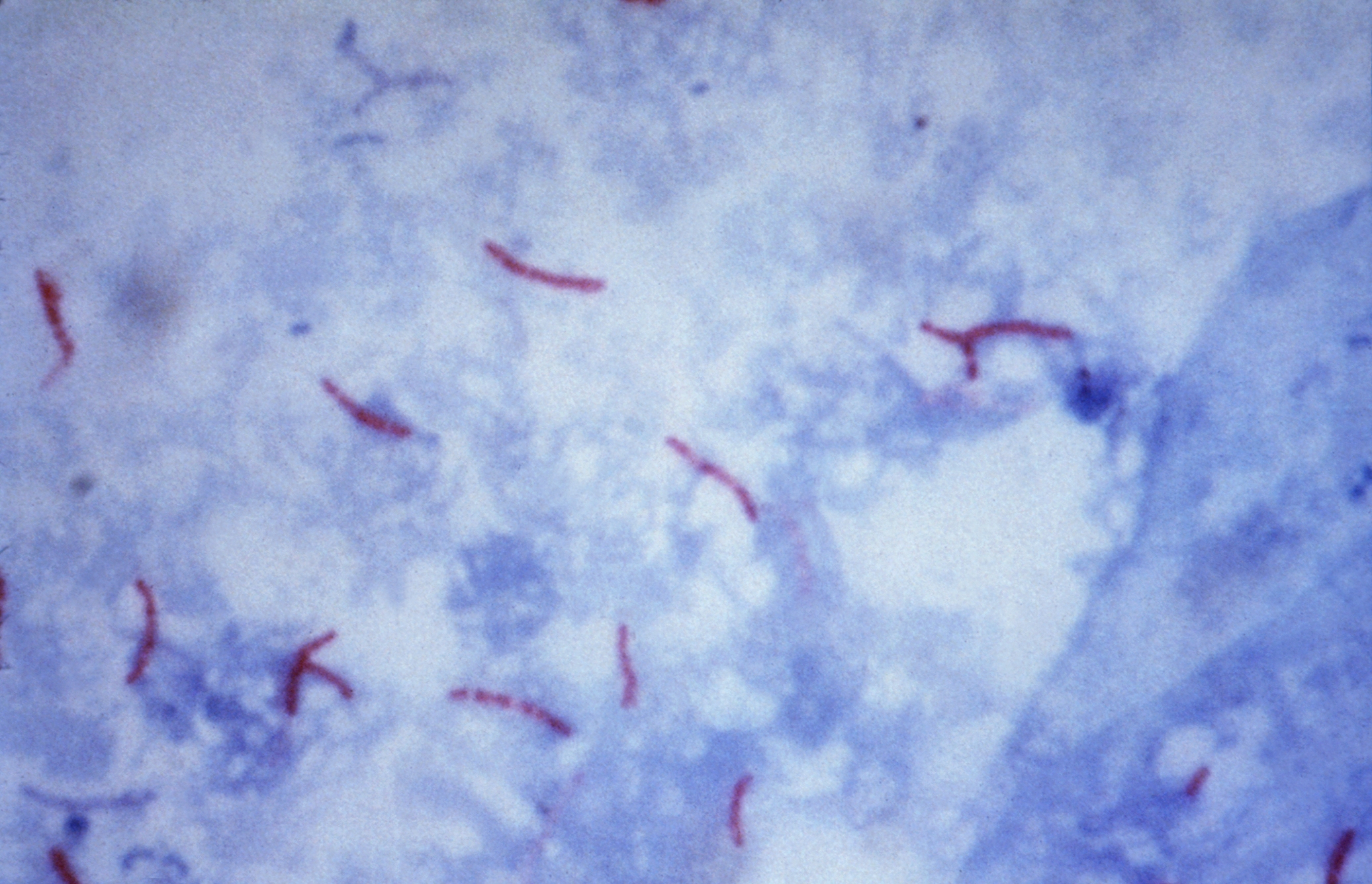
Photograph: CDC/Dr. George P. Kubica, Public domain, via Wikimedia Commons.
Comments