

Notch is one of the fussiest switches in cell biology. To turn it on, a neighboring cell has to physically grab the Notch receptor and pull. That mechanical tug unfolds part of the receptor, exposes a hidden cut site, and releases a fragment that travels to the nucleus and rewrites which genes are on. No pull, no signal. That requirement has frustrated drug developers for years. You can block Notch with soluble molecules, but you cannot switch it on the same way, because a floating protein has nothing to yank against.
A team at Moffitt Cancer Center found a way around the problem. In a paper published in Nature Chemical Biology, David Perez, Vincent Luca and colleagues describe engineered proteins they call synthetic Notch agonists, or SNAGs, that fake the missing force. The trick is to borrow it from a cell's own housekeeping machinery.
Hijacking a cell's recycling to generate force
Every cell constantly pulls surface proteins inward and digests or recycles them, a process called internalization. Perez and colleagues built a two-headed protein. One head is a Notch ligand that has been affinity-matured, meaning it was evolved in the lab to grip the Notch receptor more tightly than the natural version does. The other head latches onto a completely different protein on the cell surface that the cell routinely drags inside.
When both heads bind, the second target starts its trip into the cell and drags the tethered Notch receptor along with it. That inward motion supplies the tension. The receptor unfolds, gets cleaved, and Notch signaling fires. In effect the SNAG converts the cell's ordinary traffic into the mechanical pull that Notch demands.
Because activation only happens when the anchoring protein is present, the design doubles as a targeting system. A SNAG stays quiet until it lands on a cell carrying the right marker. That conditional logic is the part synthetic biologists tend to care about most.
Six markers, including tumor antigens
The group did not build a single one-off molecule. They made SNAGs that anchor to six separate surface markers. Among them were three well-known tumor antigens: PDL1, CD19 and HER2. They also targeted CD40, a receptor that helps stimulate immune responses.
Two of the tumor-targeted versions were tested in mixed cultures of immune cells and cancer cells. HER2-SNAGs and CD19-SNAGs raised the levels of T cell activation markers and turned up Notch target genes when T cells were placed alongside tumor cells carrying the matching antigen. Notch has a long, tangled history in cancer, sometimes driving tumors and sometimes suppressing them depending on the tissue, so a tool that switches the pathway on only in a defined cellular context is genuinely useful for sorting out those effects. The authors frame it as a step toward immunotherapy applications, since coaxing T cells into a more active state near a tumor is exactly what many cell therapies are trying to do.
The broader appeal is that the same design principle should extend beyond Notch. Plenty of receptors respond to mechanical force rather than simple binding, and until now there was no clean way to activate them with a soluble drug. Repurposing internalization as a force generator gives researchers a general handle on that whole class of mechanoreceptors.
What the study does not yet show
This is early-stage protein engineering, and the evidence lives mostly in cell culture. The immune-activation results come from cocultures, not from animals with tumors or from patients, so how well a SNAG performs inside a living body remains open. Pulling on a receptor by drafting off another protein's internalization also means the effect depends on how fast that second protein cycles, which varies from cell type to cell type and could make responses uneven. And activating Notch anywhere it should stay off carries its own risk, given the pathway's role in normal tissue renewal. None of that is addressed here, and the authors are careful to present SNAGs as a platform rather than a finished therapy.
Still, the core idea is clever in a way that will likely outlast this particular set of molecules. Notch spent two decades looking undruggable from the activating side because nobody could supply the force it needed. Perez and his colleagues did not invent a new force. They found one already running inside every cell and pointed it at the receptor.
Perez, D. H. et al. "Engineering synthetic agonists for targeted activation of Notch signaling." Nature Chemical Biology, 2025. doi.org/10.1038/s41589-025-02030-y
PubMed PMID: 40993428.
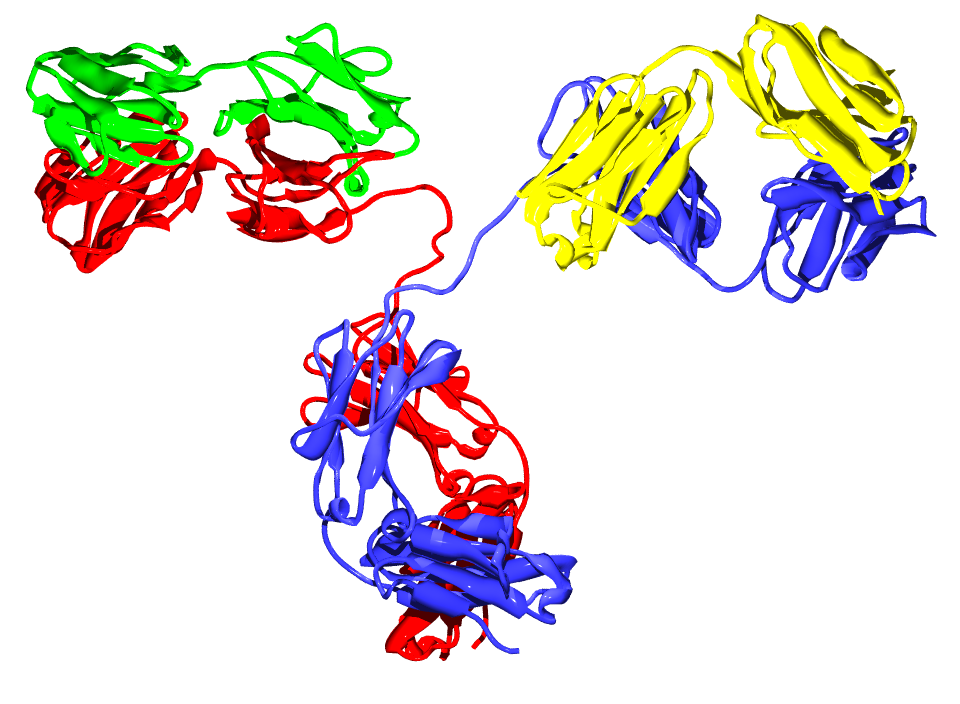
Photograph: TimVickers, Public domain, via Wikimedia Commons.
Comments