

A virus needs a living cell to make copies of itself. Strip a cell down to bare chemistry and the usual assumption is that the virus has nothing left to hijack. A team working with cell-free biology just showed that assumption is wrong.
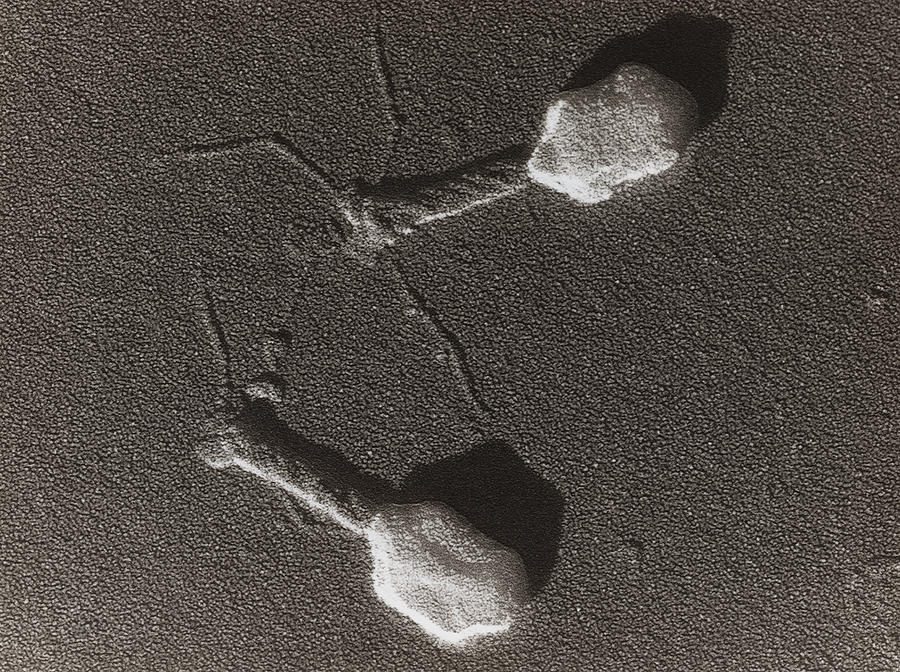
In a paper published in Nature Communications, Antoine Levrier and colleagues built artificial cells out of purified components and then let a real bacteriophage, T7, infect them. The phage stuck to the surface, injected its genome, copied that genome, made viral proteins, packed them into new particles, and released fresh infectious virus. Every step of a viral life cycle, running inside a container that was never alive.
What is actually in one of these fake cells
The starting material is a liposome, a bubble of lipid membrane roughly the size of a bacterium. Inside, the researchers loaded a cell-free gene expression system, the molecular machinery that reads DNA and translates it into protein without any intact cell around it. On the outside of the membrane they added lipopolysaccharides, the sugar-and-fat molecules that stud the surface of real bacteria like E. coli and that T7 uses as a docking site.
That last detail is what makes the trick work. T7 does not recognize a generic blob of fat. It recognizes specific surface molecules. By decorating the outer leaflet of the liposome with the right lipopolysaccharides, the team gave the phage something it would treat as a genuine host. The virus adsorbed onto the synthetic cells specifically, the same way it targets bacteria.
Tracking the infection one step at a time
Because the whole system is built from defined parts, the researchers could watch and measure each stage instead of inferring it. They confirmed the phage bound to the liposomes, that its genome entered, that the genome replicated inside, that viral genes were expressed, and that new virions assembled. Then those new particles went on to bind again, closing the loop.
They also put numbers on the process. The work quantifies the multiplicity of infection, which is how many phages you need per synthetic cell to get productive infection, along with replication efficiency and how phage rebinding plays out over time. Liposome size mattered too. There is a lower limit on how small a synthetic cell can be and still support a full cycle, which makes sense given how much molecular hardware has to fit inside.
None of the individual pieces here is new. Cell-free expression systems have been around for years, and so have liposome-based synthetic cells. What is new is running a complete viral infection through one, from first contact to the release of progeny, with nothing living involved at any point.
Why bother rebuilding a virus from parts
Studying viruses inside living cells means fighting through everything else the cell is doing. Metabolism, immune responses, the constant churn of a real organism. All of it adds noise, and a lot of it you cannot control. A fully defined system removes that noise. If you want to know exactly what a phage genome needs to replicate, or how membrane composition changes whether a virus can get in, you can now change one component and see what happens.
That kind of control is useful beyond basic curiosity. Phages are being developed as precision antibacterial treatments, and understanding infection at the level of individual molecules could help engineer them more rationally. The platform also gives synthetic biologists a cleaner way to probe how viruses and membranes interact.
Some caveats are worth keeping in view. This is a reconstruction of one phage, T7, meeting one type of engineered surface, and a liposome is a far simpler object than a bacterium with its crowded cytoplasm and active defenses. The efficiencies measured in a test tube will not automatically match what happens in a living host. And a synthetic cell that can host a virus is not itself alive. It runs a program, then stops. Still, getting a virus to complete its entire cycle in a container assembled from a parts list is a real marker of how far bottom-up biology has come.
Levrier, A. et al. "A synthetic cell phage cycle." Nature Communications, 2025. doi.org/10.1038/s41467-025-67249-8
PubMed PMID: 41398148.
Photograph: AFADadcADSasd, CC BY 4.0, via Wikimedia Commons.
Comments