

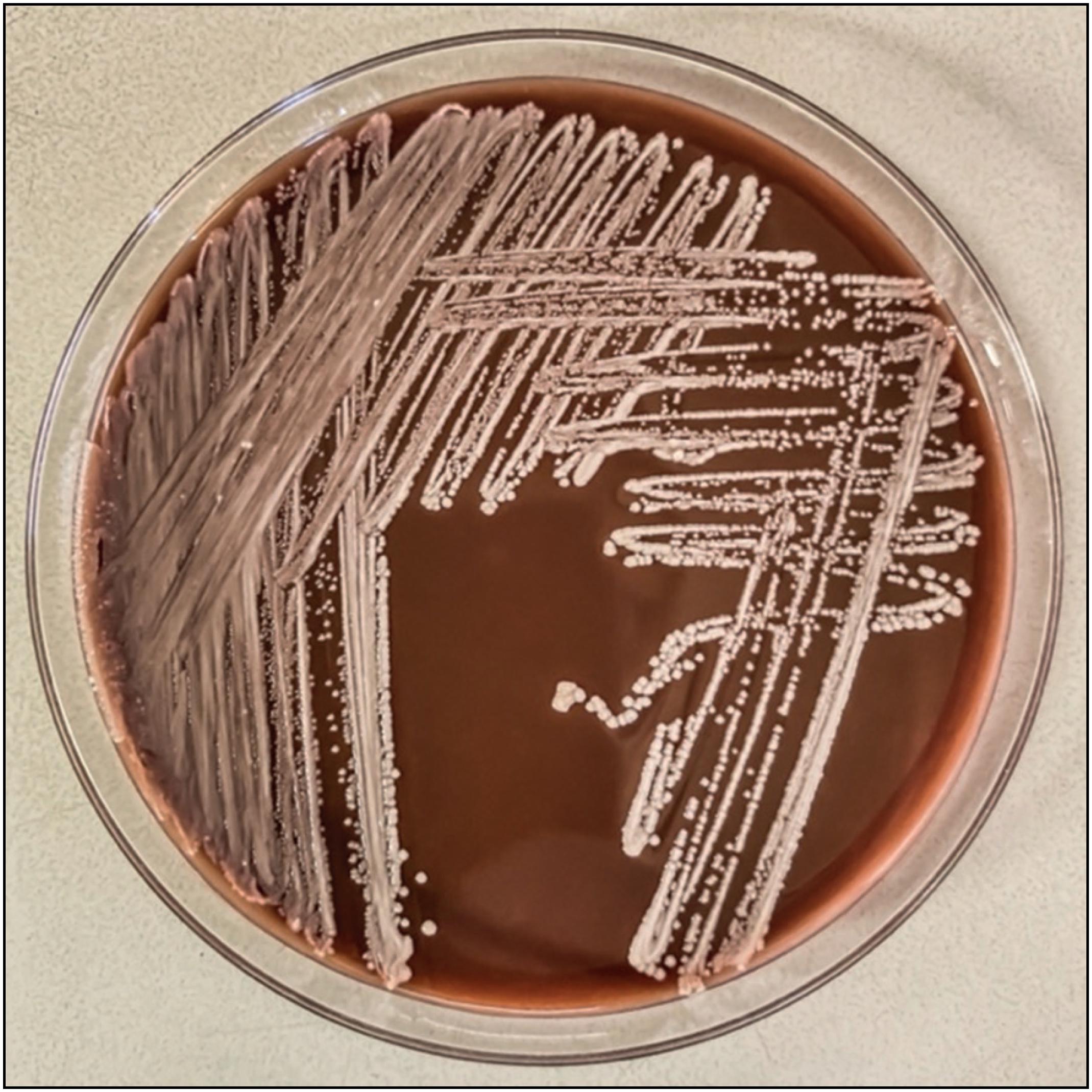
Streptomyces bacteria are the reason a lot of medicine cabinets are stocked the way they are. These soil microbes make a startling share of the world's antibiotics, along with anticancer agents and compounds used to kill farm parasites. The catch is that coaxing them to produce a useful molecule in bulk has always been closer to craft than engineering. Every strain behaves a little differently, and the genetic tricks that work in one species often fall flat in the next.
A team led by researchers in Shanghai and Beijing set out to change that. Writing in Nature Biotechnology, they describe a set of interchangeable genetic parts that behave predictably across many Streptomyces species. They call the whole thing SMARTS, and the headline demonstration is hard to shrug off: one engineered strain was pushed all the way to a 120,000-liter industrial fermentation tank.
Letting the bacteria decide when to start
The clever part sits at the very front of the system. Streptomyces cells, like a lot of bacteria, keep track of how many neighbors they have through a chemical process called quorum sensing. They release small molecules, and when the concentration climbs high enough, the population "knows" it has reached a critical density and shifts its behavior. In the wild, that is often the moment these bacteria begin churning out their specialized chemicals.
The researchers noticed something useful: quorum-sensing receptors from different Streptomyces species, which respond to different signal molecules, can all latch onto the same stretch of DNA. That shared docking site let them build a single promoter, a genetic on-switch, that responds to the crowding signal no matter which species it is dropped into. Production turns on automatically when the culture is dense, rather than at a moment an engineer has to guess.
A promoter alone is a blunt instrument, though. Quorum signals are fleeting, and the response can be noisy. So the team paired the switch with two other modules. One is a stabilizer that converts a brief pulse into a steady, lasting output. The other is a multiplexer that lets a single input control several genes at once, each dialed to a different strength. Together the three pieces convert a transient natural signal into stable, tunable, multi-gene commands.
From a lab curiosity to a fermentation tank
To show the system does real work, the researchers rebuilt two strains for two very different jobs. In Streptomyces avermitilis, they redesigned the cell's internal wiring to specialize in baiweimectin, a compound used to kill crop-damaging nematodes. In Streptomyces venezuelae, they programmed the machinery from scratch to make epidoxorubicin, a semisynthetic relative of a common chemotherapy drug.
The nematicide strain is the one that went big. At the 120,000-liter scale, it reached a titer of 8.4 grams per liter, a number that lands the process in genuinely industrial territory rather than a proof of concept on a bench. That jump matters because most flashy metabolic-engineering results never survive contact with a full-size bioreactor, where temperature gradients, oxygen limits, and sheer volume tend to punish anything fragile.
What the study can't say yet
A plug-and-play label always oversells a little. The system was demonstrated in a handful of Streptomyces species, and the authors' own framing is that shared quorum-sensing biology makes it portable, not that it will slot into every strain untouched. Streptomyces is a large and quirky genus, and some members carry regulatory baggage that a standardized toolkit will not automatically tame.
The two showcase products also happen to be molecules the field already understands well. Whether the same modules can wake up the many "silent" gene clusters that Streptomyces hides, the ones that might hold genuinely new antibiotics, is a separate and harder question this work does not answer. High titer in a tank is also not the same as a finished, cost-competitive manufacturing process; downstream purification and economics still decide whether a strain becomes a product.
Still, the achievement here is less about any single compound than about reliability. For decades, engineering these bacteria has meant reinventing the control layer for each strain. A component set that behaves the same way across species, and that holds up at industrial scale, is the kind of unglamorous infrastructure that makes everything built on top of it faster. If new antibiotics and drugs are going to come out of these microbes, someone first has to make the microbes easy to program. This is a real step toward that.
Yang B, Li Z, Zhang J, et al. "Scalable secondary metabolite production in Streptomyces using a plug-and-play system." Nature Biotechnology, 2025. doi.org/10.1038/s41587-025-02762-1
PubMed PMID: 40817351.
Photograph: Carlos Espinoza et al., CC BY 4.0, via Wikimedia Commons.
Comments