Grab a handful of soil and you are holding billions of microbes. Some of them can make you sick. A team drawing on 1,602 soil metagenomes from 59 countries has now drawn the first global map of where the most common soil-dwelling human bacterial pathogens actually live, and the picture carries a practical message. The more crowded and varied the microbial community in a patch of ground, the fewer of those pathogens tend to be found there.
The work, published in Cell Host & Microbe, treats soil as what it is: a vast reservoir of microbial life that humans touch constantly through farming, food, water, and dust. Pathogens that persist in soil are a known route to infection, yet nobody had mapped their distribution at planetary scale or asked how they relate to the rest of the microbial neighborhood.
Wet ground and farmland stand out
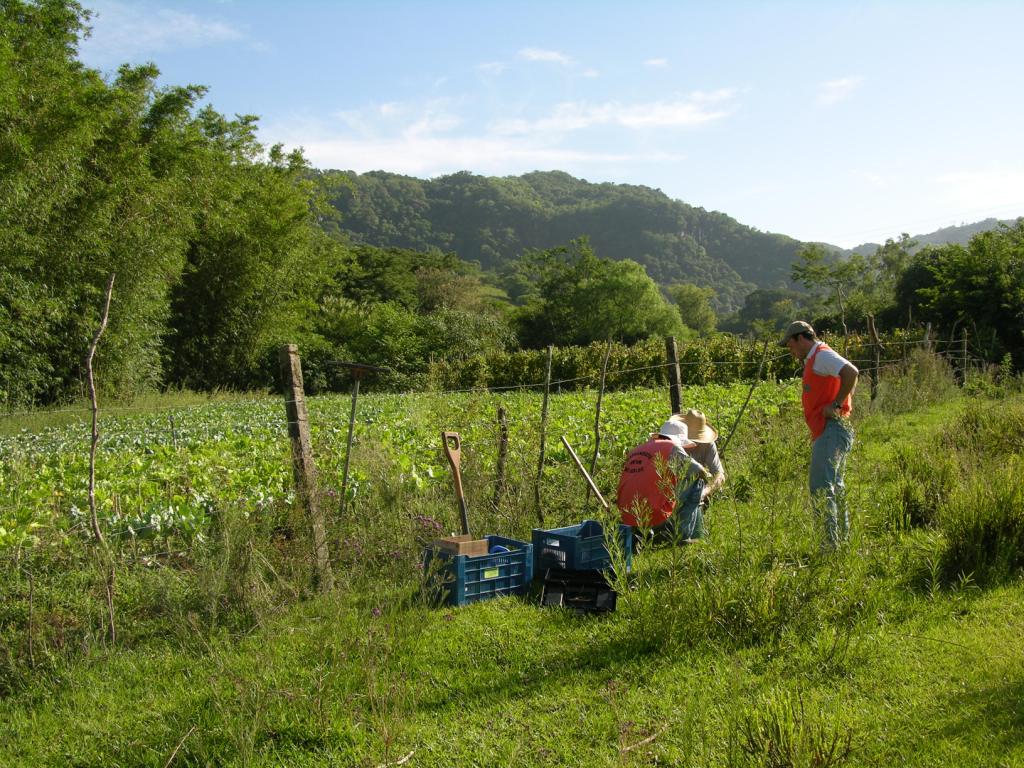
The dominant human pathogens were not spread evenly. They showed up more in wet ecosystems, both tropical and temperate, and were especially abundant in cropland soils. That last point matters. Croplands are exactly the soils people disturb, irrigate, and harvest from, which puts these organisms close to the food supply and to the workers who tend it.
Then comes the association that gives the paper its through-line. Across the global dataset, soil microbiome diversity ran opposite to pathogen prevalence. Where the community was richer, the share of dominant pathogens was lower. This fits a long-standing idea in microbial ecology that a full, competitive community leaves less room for any single troublemaker to take hold. Here that idea gets tested against soils from six continents rather than a lab plate.
The abundance tracks real-world harm
A map of bugs would be academic if the bugs did not matter. The authors checked, and the link held up in a sobering direction. The abundance of dominant pathogens correlated with disease virulence and with global patterns of mortality from infectious disease. In other words, the places where these organisms are most concentrated in soil line up with where the diseases they cause take the heaviest toll.
The team also looked forward. Under global change scenarios, many of the dominant pathogens are projected to expand their share of the community. Warming and shifting moisture, the same forces reshaping where crops grow, appear poised to favor some of the very organisms this study flags.
What the map can and cannot say
A few limits are worth keeping in view. This is a study of associations, built from metagenomic surveys rather than controlled experiments, so it points to relationships without proving that diversity itself drives pathogens down. Relative abundance in a sample is not the same as infection risk to a person standing on that soil. And 1,602 samples, while a lot, still leave large stretches of the planet thinly covered. The authors are careful to frame the result as an atlas and a starting point.
Still, the payoff is concrete. A global inventory of where soil-borne human pathogens cluster, and a signal that diverse soil communities tend to hold them back, gives public health and agriculture something to work with. It suggests that protecting soil biodiversity is not only good for crops and carbon but may also be part of keeping certain infections from getting a foothold. The researchers pitch the atlas as a tool for surveillance and risk management, a way to watch the ground for trouble before it reaches people.
It reframes a familiar substance. Soil is not just a backdrop for growing things. It is a living system whose internal balance can tilt toward or away from human harm, and the tilt is something we can measure.
Xiong, C. et al. "Soil microbial diversity associates with lower prevalence of human bacterial pathogens across global soils." Cell Host & Microbe, 2026. doi.org/10.1016/j.chom.2026.03.011
PubMed PMID: 41923636.
Photograph: Prof. Dr. Alessandro Samuel-rosa, CC0, via Wikimedia Commons.
Comments