


In most people with amyotrophic lateral sclerosis, the same thing goes wrong inside dying nerve cells. A protein named TDP-43, which normally sits in the nucleus doing careful work with RNA, drifts into the cell body and starts to clump. Those clumps are a signature of ALS and of several other fatal brain diseases. Stopping them has been one of the hardest problems in neurodegeneration research.
A study published this week in Science takes an unusual angle on the problem. Instead of trying to break clumps apart or block them with a drug, the researchers used short pieces of RNA to nudge TDP-43 into a shape that does not want to aggregate in the first place. The team, led by Katie E. Copley and colleagues, calls these molecules short RNA chaperones.
Reading the protein's weak spot
TDP-43 is what biologists call a prion-like protein. Part of it is disordered and sticky, prone to latching onto copies of itself. The researchers found that certain short, specific RNAs bind to the parts of TDP-43 that normally grab RNA, called the RNA recognition motifs. That binding does something at a distance. It destabilizes a small helical stretch buried in the sticky, prion-like region of the protein.
That structural shift matters. When the helix loosens, TDP-43 settles into conformers that resist aggregation. The RNA is not gluing the clumps shut. It is changing the protein's internal balance so the clumping-prone form becomes less favorable. This is an allosteric effect, where action at one site reshapes behavior somewhere else on the molecule.
Once the team understood the mechanism, they went looking for better versions. By mining across sequence space, they identified short RNA chaperones with stronger activity, including against mutant forms of TDP-43 that are linked to inherited disease.
From dish to mouse
The enhanced chaperones did real work in living systems. In optogenetic models, where light is used to trigger TDP-43 to misbehave on command, the RNAs blunted the abnormal behavior. They also helped motor neurons grown from ALS patients, alongside neurons from healthy controls, which is a meaningful test because those patient-derived cells carry the actual genetic backdrop of human disease.
Then came the mice. The animals were engineered so TDP-43 built up in the wrong compartment of their motor neurons, and those neurons were dying, mirroring what happens in people. An enhanced short RNA chaperone cut down the pathological aggregation. It restored TDP-43 to its normal job. And it protected the neurons, the outcome that ultimately counts.
What makes this appealing is that it works with the protein's own biology. TDP-43 already binds RNA all day long. The therapy borrows that native habit and points it toward stability rather than letting the protein slide into clumps.
What this does not settle
A mouse is not a person, and a promising mechanism is not a treatment. The study shows neuroprotection in animals and in cultured human cells, not slowed disease in patients. Getting a short RNA into the right neurons in a human brain and spinal cord, at the right dose, for long enough, is a serious delivery challenge that this work does not solve. TDP-43 pathology also appears in frontotemporal dementia and other conditions, and the paper does not test those directly. Long-term safety, durability, and whether restoring TDP-43 function translates into preserved movement over months or years all remain open.
Still, the logic here is clean. ALS has very few options, and most attempts to target TDP-43 have struggled. Turning a toxic protein's favorite binding partner into a stabilizer, rather than fighting the clumps head on, is a genuinely different strategy. It gives the field a mechanistic starting point for RNA-based approaches to a disease that has resisted almost everything thrown at it.
Copley, K. et al. "Short RNA chaperones promote aggregation-resistant TDP-43 conformers to mitigate neurodegeneration." Science, 2026. doi.org/10.1126/science.adv3301
PubMed PMID: 42096556.
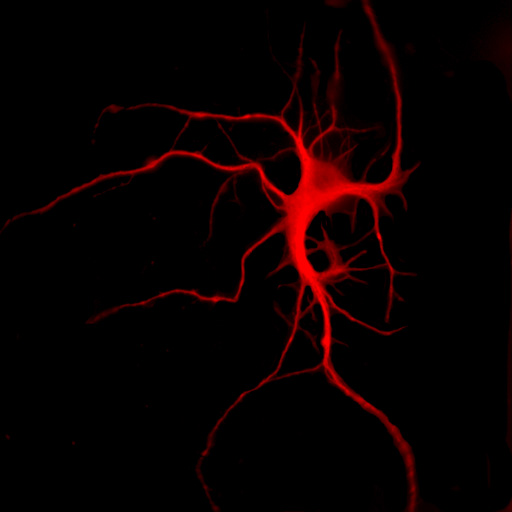
Photograph: Dchordpdx, CC BY 4.0, via Wikimedia Commons.
Comments