

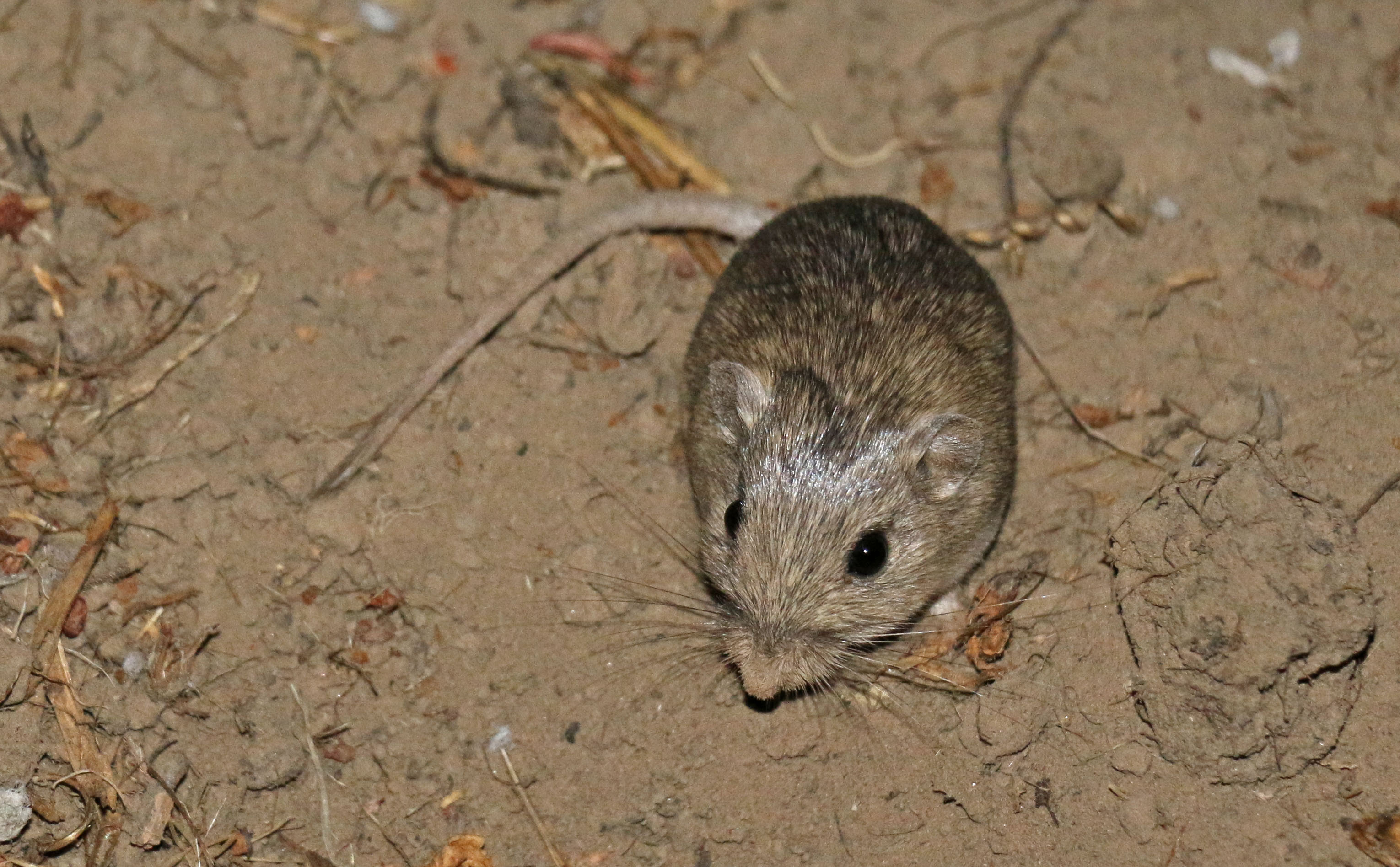
The Pacific pocket mouse weighs about as much as three pennies. For decades it was thought to be gone entirely, wiped out along the coastal scrub of Southern California by freeways, houses, and farms. Then in 1993 a few turned up near Dana Point, and conservationists have been trying to keep the tiny animal alive ever since. The problem is that the survivors were left in three small, separate pockets, each too inbred to have much of a future on its own.
The obvious fix is to mix them. Move mice between populations, let them breed, and fresh genetic variety should paper over the damage that inbreeding does. Biologists call this genetic rescue, and it has pulled several species back from the edge. But there was a catch specific to this mouse that made managers nervous. The isolated groups do not all carry the same number of chromosomes. When two animals with mismatched chromosome sets have offspring, those offspring can end up less fertile, a risk known as outbreeding depression. Fix one problem and you might create another.
A team led by Aryn Wilder at the San Diego Zoo Wildlife Alliance decided to actually measure the tradeoff rather than guess at it. Their answer, published in Science, is that the rescue is worth it. Mice from the captive breeding program that carried a mix of ancestry were healthier than purebred mice from the shrinking wild populations, even accounting for the chromosome mismatch.
What the genomes showed
The researchers sequenced whole genomes from hundreds of Pacific pocket mice and paired that data with records of how individual animals fared: whether they bred, how many pups they produced, how long they lived. This is the part that is hard to pull off. Plenty of studies can show that a population is losing genetic diversity. Far fewer can connect a specific animal's DNA to its actual reproductive success, because you need both the sequences and the life histories for the same individuals.
Two patterns came out of that pairing. First, the remnant wild populations showed clear signs of what the authors call genomic erosion: long stretches of DNA that are identical on both copies of a chromosome, a fingerprint of inbreeding, along with a heavy load of harmful mutations that inbreeding tends to expose. Second, mice with admixed ancestry in the breeding program had that erosion partly reversed. Mixing the lineages brought back variation and buried some of the harmful mutations under healthier copies.
Why the chromosome problem did not win
The chromosome difference was real, and it did cost something. Mice with mismatched karyotypes, meaning different chromosome arrangements inherited from each parent, appeared to have somewhat reduced fertility. That is exactly the outbreeding-depression risk managers worried about. On its own, that finding might argue for keeping the populations apart.
The reason it does not is the comparison the study makes possible. Set the fertility cost of admixture next to the alternative, which is leaving the small populations to stew in their own inbreeding. Non-admixed mice with low genetic diversity and high mutational load did worse overall. Their fitness was lower than the admixed animals despite the chromosome penalty the admixed ones carried. In other words, the danger of doing nothing was larger than the danger of mixing. For a species down to a few hundred animals, that difference is the whole ballgame.
What the study can't say yet
This is a single species in a specific bind, and the numbers should be read with that in mind. The fitness measurements come largely from a managed breeding program, where food, predators, and disease are controlled in ways they never are in wild scrub. Whether the same fitness boost shows up once these mice are released and have to survive on their own is a separate question the genomes cannot answer.
The chromosome finding also deserves caution. Reduced fertility in mismatched animals was detectable, but the long-term consequences over many generations are not something a snapshot of current animals can fully resolve. If those fertility costs compound, the calculus could shift. The study makes a strong case for the first move, not a promise about the tenth.
Still, the practical message is unusually clear for conservation genetics, a field that often trades in maybes. Managers weighing genetic rescue have long been told to fear outbreeding depression, sometimes to the point of paralysis. Here is a case where the feared risk was measured, found to be real, and found to be the smaller of two evils. For the Pacific pocket mouse, the safer bet is to bring the survivors together, chromosomes and all.
Wilder et al. "Fitness benefits of genetic rescue despite chromosomal differences in an endangered pocket mouse." Science, 2025. doi.org/10.1126/science.adn4666
PubMed PMID: 40839742.
Photograph: Pacific Southwest Region USFWS, Public domain, via Wikimedia Commons.
Comments