

Pull nearly three decades of fish surveys out of the North Atlantic, North Pacific, and the seas around them, and a slow bleed shows up. Fish populations sitting in warming water tend to shrink year after year. But the same dataset holds a twist. When a hot summer or a marine heatwave hits, some populations do not shrink at all. They boom. Which outcome you get depends almost entirely on where a population lives inside its temperature comfort zone.
That is the core finding of a new analysis in Nature Ecology & Evolution led by Shahar Chaikin and colleagues. The team pulled together 702,037 estimates of biomass change spanning 33,990 fish populations and 1,566 species, all sampled between 1993 and 2021 across major Northern Hemisphere basins. It is one of the larger attempts to separate two things that usually get lumped together: the grinding, long-term rise in ocean temperature, and the sharp temperature spikes that come and go within a few years.
The slow bleed and the sudden swings
Long-term warming lined up with an annual biomass decline of as much as 19.8 percent. That is the steady, cumulative pressure. Nothing dramatic in any single year, but compounded over decades it hollows out a population.
The short-term picture looked completely different. In warmer-than-usual years and during marine heatwaves, populations near the warm edge of their species' range lost up to 43.4 percent of their biomass. These are the fish already living close to their thermal ceiling, and a heat spike pushes them over it. At the cold edge of the range, the opposite happened. Populations there gained up to 176 percent during the same warm events. For a fish sitting near the chilly limit of where its species can survive, a burst of heat is not a threat. It is a window.
So a marine heatwave is not simply good or bad for fish. It redistributes them. Warm-edge losers, cold-edge winners. The authors frame it as exactly that kind of accounting.
Why the winners are a trap for managers
Here is where the practical worry comes in. If you are managing a fishery and you watch biomass jump 176 percent after a warm year, the tempting read is that the stock is thriving and can take more fishing pressure. The study argues that read is dangerous. Those gains are transient. They ride on a temporary temperature anomaly, not on any durable improvement in the population's health. Lean into them with heavier quotas and you risk overexploiting a population that was only briefly, artificially flush.
The long-term signal still points down. Chaikin and colleagues are blunt that management strategies need to plan for the biomass loss expected under continued ocean warming, rather than getting distracted by the short-lived spikes that heatwaves throw off at the cold edges of species ranges.
What the numbers can and cannot say
Some limits are worth stating plainly. This is a correlational study built on observational survey data, so it maps associations between temperature and biomass rather than proving mechanism population by population. The percentages quoted are upper bounds, the strongest responses seen, not typical values across every stock. Coverage is Northern Hemisphere, drawing on major basins there, so the tropics and the Southern Hemisphere are not represented and may not behave the same way. Biomass also responds to more than heat. Fishing pressure, predators, and food supply all move the needle, and teasing temperature apart from those forces across tens of thousands of populations is hard.
Even with those caveats, the edge-dependent pattern is the part that sticks. It reframes a warming ocean not as a uniform decline but as a reshuffling, where the same heat event can gut one population and gift another. The catch is that the gifts do not last, and the losses do. Manage as though every warm-year surplus is real money in the bank, and the warming trend underneath will eventually collect.
Chaikin, S. et al. "Long-term warming reduces fish biomass, but heatwaves shift it." Nature Ecology & Evolution, 2026. doi.org/10.1038/s41559-026-03013-5
PubMed PMID: 41741680.
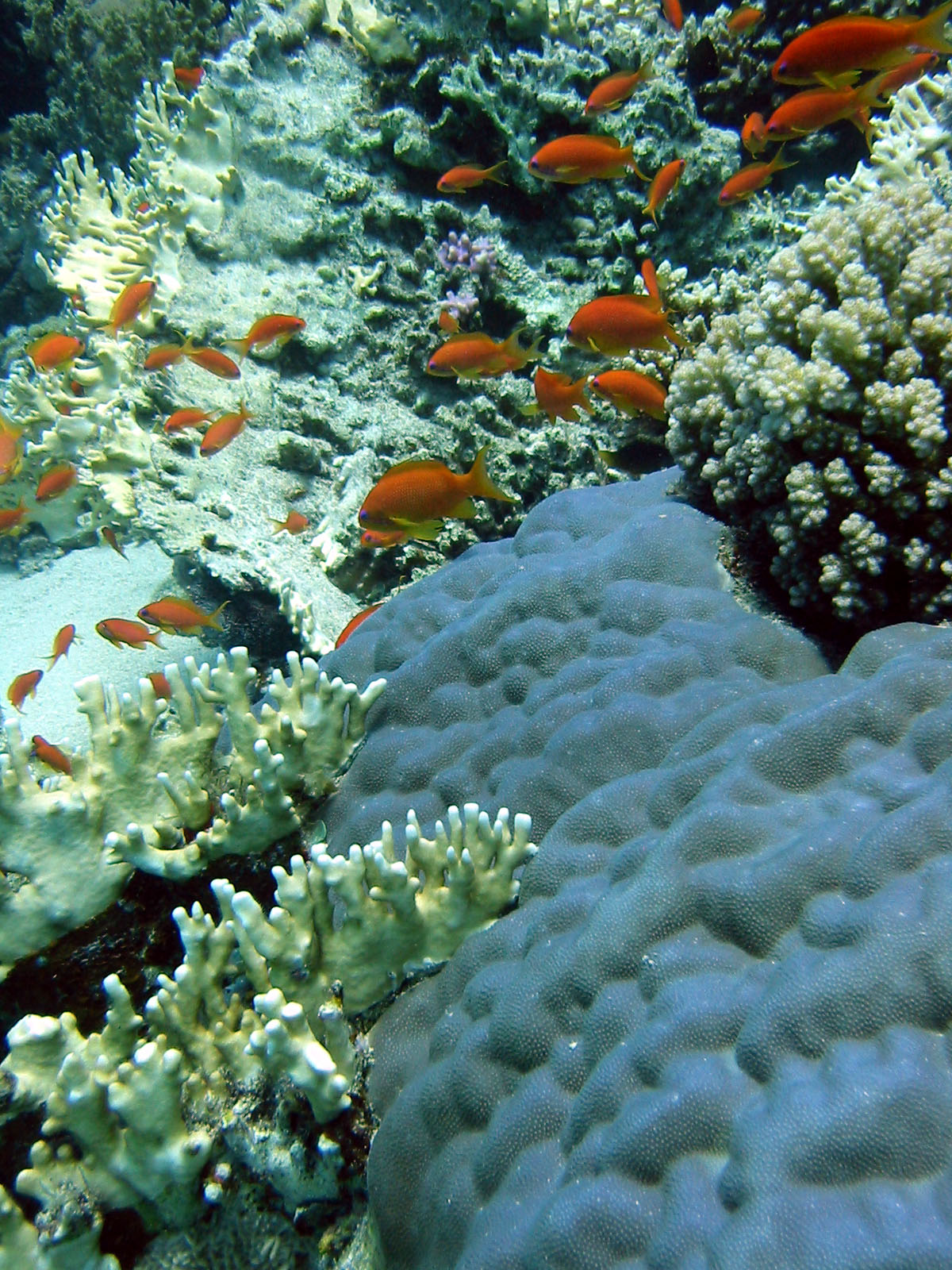
Photograph: Alan Slater (Photo2222), Public domain, via Wikimedia Commons.
Comments