


For decades, vaccines against Clostridioides difficile shared an awkward flaw. They could blunt the diarrhea and the damage. What they could not do was get rid of the bacterium itself. A person could be protected from getting sick while still carrying the microbe, still shedding spores, still capable of relapsing or passing it to the next patient down the ward. That gap is a big reason the infection remains the leading cause of healthcare- and antibiotic-associated illness, with roughly one in three patients relapsing after treatment.
A study published in Nature on February 18 argues the problem was never the vaccine's ingredients. It was the delivery address. Audrey Thomas and colleagues at Vanderbilt University Medical Center compared two ways of giving the same multivalent vaccine and found that where you inject it decides whether the bacterium survives.
The colon has its own immune postal code
The team built a vaccine combining inactivated C. difficile toxins with newly identified surface antigens from the bacterium, all mixed with an adjuvant. Then they gave it to mice by two routes. One group got the standard approach: an injection into the body cavity, which trains the systemic immune system and floods the blood with antibodies. The other group received the vaccine rectally, delivering it straight to the colon, the tissue where C. difficile actually lives and does its damage.
Both routes protected the animals from dying and from the worst tissue injury. But only the mucosal, rectal route cleared the bacterium from the gut. The injected mice survived while staying colonized. The rectally vaccinated mice got rid of the microbe entirely, and they were also protected against recurrence, the feature that makes this disease so hard to shake in real patients.
That split matters more than it might sound. Systemic antibodies can neutralize the toxins that make you ill, which is why parenteral vaccines look good on a survival chart. Neutralizing toxins is not the same as evicting the organism that makes them. Clearance is what breaks the cycle of transmission and relapse, and clearance only happened when the immune response was built inside the colon.
What decolonization actually required
When the researchers looked at what set the cleared mice apart, two immune signatures stood out. The first was fecal IgG antibodies aimed at the bacterium's vegetative surface antigens, meaning the antibodies were present right at the gut surface rather than circulating in blood. The second was a population of tissue-resident memory T cells parked in the colon, skewed toward the T helper 17 program and directed against a spore antigen.
That second detail is worth pausing on. Spores are the dormant, armored form C. difficile uses to survive antibiotics and to spread. An immune response tuned against spore antigens, stationed permanently in the tissue, is a plausible mechanism for stopping the bacterium from re-establishing itself after treatment. The authors describe the combination as sterilizing immunity, a phrase usually reserved for vaccines that stop an infection cold rather than merely soften it.
Mouse promise, human caveats
The honest framing here is that this is a mouse study, and the leap from rodent colon to human clinic is where many elegant vaccine ideas stall. Rectal administration is not a route people love, and translating a decolonizing regimen into something practical for hospitals will take work the paper does not claim to have done. The antigens and adjuvant that worked in these mice still need to prove themselves in larger animals and eventually in people, where the microbiome, prior antibiotic exposure, and immune history are all messier.
What the work does offer is a clear correction to a longstanding assumption. Earlier C. difficile vaccine programs, including ones that reached late-stage human trials, leaned on systemic immunization and never reduced how much bacterium patients carried. This study suggests that was a predictable consequence of aiming the immune system at the wrong compartment. If you want to clear a gut pathogen, the evidence points to teaching the gut to do it. That reframing could ripple out to other mucosal infections where toxin neutralization has been standing in for the harder goal of getting rid of the bug.
Thomas, A. K. et al. "Mucosal vaccination clears Clostridioides difficile colonization." Nature, 2026. doi.org/10.1038/s41586-026-10138-x
PubMed PMID: 41708852.
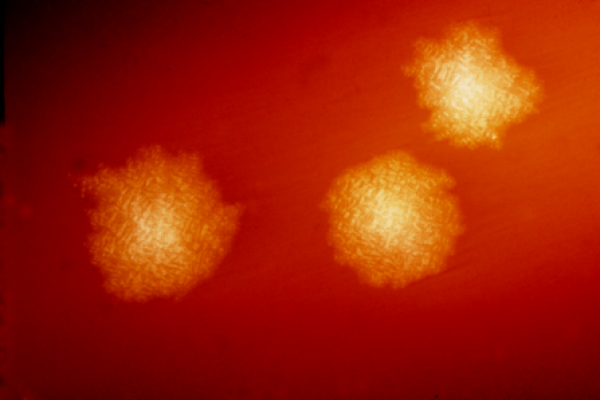
Photograph: CDC/Dr. Holdeman, Public domain, via Wikimedia Commons.
Comments