


For years, immunologists had a tidy story about how vaccines arm the immune system's assassins. Killer CD8 T cells, the cells that hunt down virus-infected and tumor cells, are supposed to depend on one rare and fussy cell type: the type 1 conventional dendritic cell, or cDC1. That cell is a specialist at "cross-presentation," the trick of grabbing outside proteins and displaying them on the surface molecule that CD8 T cells inspect. Take cDC1 out of a mouse and, for most vaccines, the killer-cell response collapses.
mRNA vaccines were assumed to follow the same script. A team at Washington University in St Louis, led by Suin Jo and Kenneth Murphy, decided to actually test that assumption. It did not hold up.
Knock out the specialist, and nothing breaks
The researchers vaccinated mice engineered to lack cDC1 cells, and separately mice missing WDFY4, a protein that the classic cross-presentation pathway cannot work without. With a protein or DNA vaccine, that kind of surgery guts the CD8 response. With an mRNA-lipid nanoparticle vaccine, the killer T cells were primed anyway.
Instead of leaning on one cell, the mRNA vaccine used two. Both cDC1 cells and their cousins, cDC2 cells, could do the job, and they filled in for each other. When the team let only cDC1 cells present the antigen, or only cDC2 cells, the resulting T cells looked a little different from each other. But it barely mattered where the outcome counted. Either population could drive an anti-tumor response and lay down immune memory. Redundancy like this is unusual, and it is the kind of thing you want in a vaccine, because a single point of failure is a single point of failure.
A borrowed coat of armor
The stranger finding involves a process with an oddly domestic name: cross-dressing. Rather than chewing up a protein and building its own display molecules from scratch, a dendritic cell can lift ready-made peptide-MHC complexes straight off the surface of a neighboring cell and wear them as its own. The Murphy lab found that this hand-me-down route supplies a large share of the CD8 priming after mRNA vaccination.
Cross-dressing depended on type I interferon, the same alarm signal that lipid nanoparticles are already known to trigger. And the peptides being borrowed came from non-immune cells, the ordinary tissue cells that soak up the mRNA and start manufacturing the encoded protein. So the dendritic cell does not necessarily have to take up the vaccine itself. It can pick up the finished product from a bystander.
What this does and doesn't settle
The work was done in mice, and mouse dendritic cell biology does not map perfectly onto human. Cross-dressing has been described before in other settings, so the mechanism itself is not brand new; what is new is the claim that it carries so much of the load for a clinically important vaccine platform. The study also does not tell us whether the off-target T cells are helpful, harmless, or a liability, and that question matters for both cancer vaccines and everyday shots. It measures mechanism, not safety.
Still, the practical takeaway is worth sitting with. A vaccine design that does not hinge on one scarce cell type, and that can prime killer cells through more than one route, is a robust design. It also reframes how researchers might tune these vaccines. If cross-dressing and type I interferon are doing much of the work, those are the levers to pull. The old model said the pathway to a killer T cell ran through a single door. This one says the door was never the only way in.
Jo, S. et al. "mRNA vaccines engage unconventional pathways in CD8 T cell priming." Nature, 2026. doi.org/10.1038/s41586-026-10353-6
PubMed PMID: 41986715.
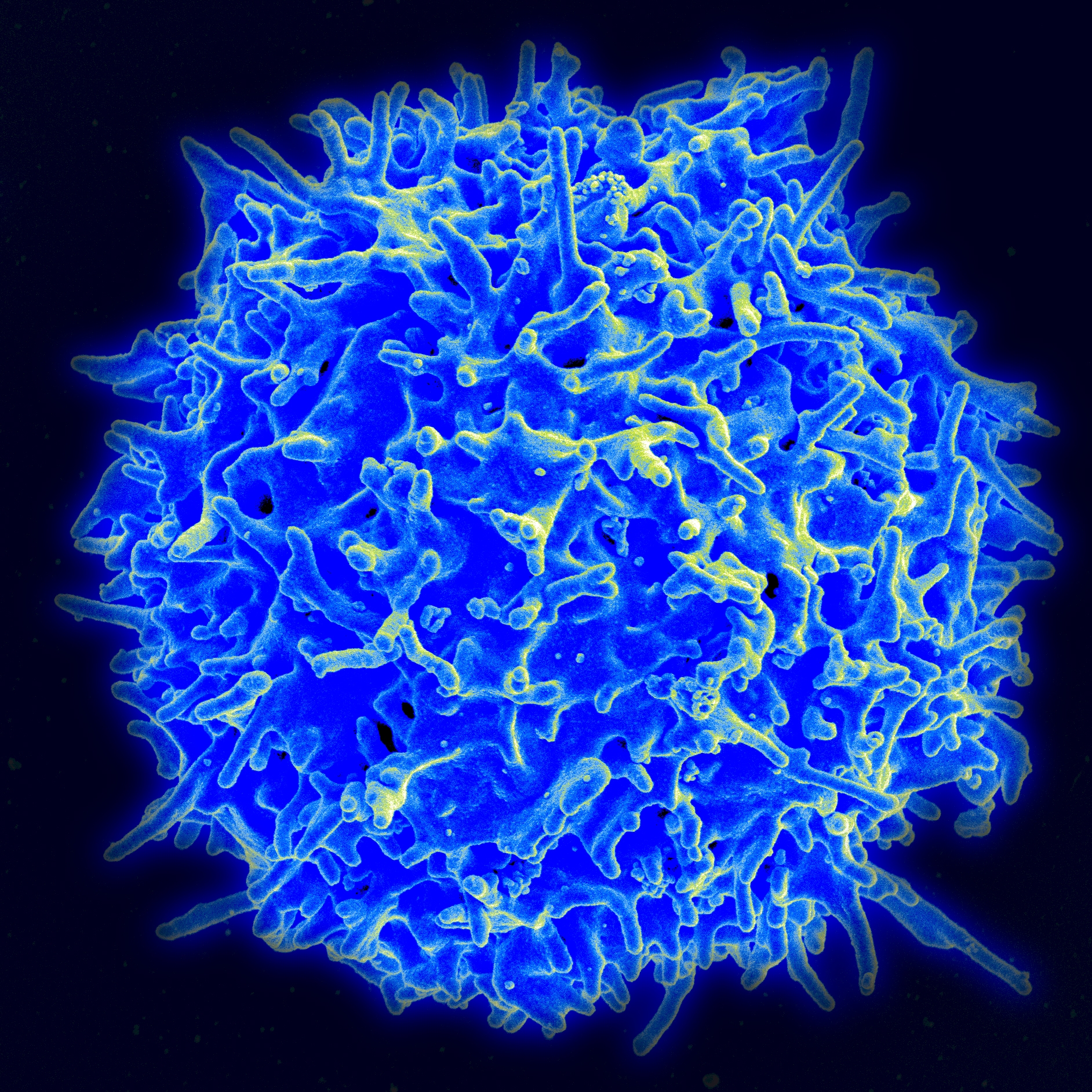
Photograph: NIAID/NIH, Public domain, via Wikimedia Commons.
Comments