
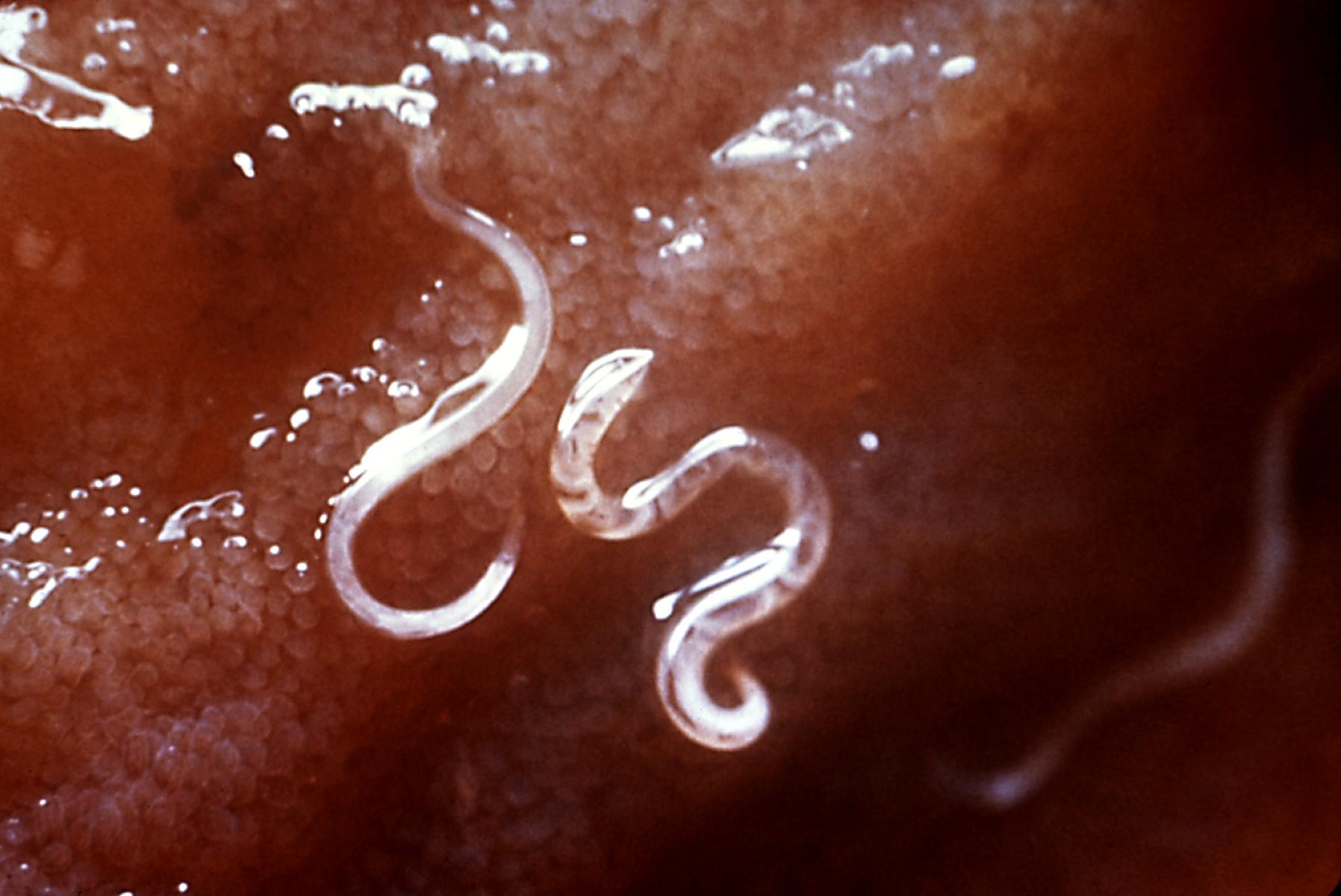
For most of human history, our guts were crowded. Parasitic worms were near-universal companions, so common that our immune systems evolved alongside them. Industrialized living scrubbed them out. A study from Princeton, published in Cell Host & Microbe, argues that when we lost the worms, we may have lost something we passed to our children too: a head start against respiratory viruses.
The team, led by Ai Ing Lim and first author Krist Antunes Fernandes, worked with mice. Mothers were infected with intestinal helminths before and during pregnancy. Their pups, never exposed to worms themselves, grew up better able to fight off respiratory syncytial virus and influenza A. The protection was broad, it lasted, and it did not depend on the babies inheriting any worms. It came from what the worms did to the mother's gut.
A metabolite, not a monster
Helminths are large parasites. You might expect their benefit, if any, to come from some direct signal they send. That is not what happened here. The worms reshaped the mother's gut bacteria, and one product of that reshaped community did the real work: indole-3-propionic acid, or IPA, a small molecule that bacteria make from the amino acid tryptophan.
IPA turned out to be the active ingredient. In the offspring, it switched on type I interferon responses in the epithelial cells lining the lung. Type I interferon is one of the body's fastest antiviral alarms. Giving IPA on its own, without any worms in the picture, was enough to protect pups from RSV and influenza A. So the chain runs from parasite to bacteria to metabolite to lung, across a generation. The authors call it trans-kingdom crosstalk, which is a precise way of saying that an animal, some microbes, and a mammal's own tissue were all talking to each other through chemistry.
The human echo
Mouse findings can stall at the species boundary, so the researchers checked whether the same wiring exists in people. They looked at populations with chronic helminth infections and found gut bacteria enriched for exactly the tryptophan-processing machinery that makes IPA. Then they treated human bronchial epithelial cells with IPA in a dish. Those cells ramped up the same antiviral interferon signaling seen in the mice.
That is not proof that worms protect human babies. It is a set of matching parts. The metabolic capacity is there in worm-carrying populations, and human lung cells respond to the molecule the way mouse cells do. It fits the broader "old friends" idea, the notion that organisms we coevolved with, including parasites once thought purely harmful, helped calibrate our immune systems, and that their absence in industrialized life has costs.
What it does not settle
Worth being clear about the gaps. This is a mouse study with human cell and population data bolted on, not a clinical trial. No one gave pregnant women worms and tracked their infants. The human evidence is correlational and mechanistic, not outcome-based, so it cannot say that helminth-carrying mothers have virus-resistant babies. The work also does not weigh IPA's benefit against the real disease burden that intestinal worms cause, which remains substantial in the regions where they persist. And whether an oral dose of IPA, or a bacterium engineered to make it, could safely reproduce the effect in humans is an open question the paper raises rather than answers.
Still, the logic is clean and a little surprising. The useful thing was never the parasite. It was a bacterial byproduct the parasite happened to encourage, one that can in principle be bottled without the worm. If that holds up, it points to a class of interventions that borrow the immune lessons of our microbial past without asking anyone to reacquire the passengers. A tryptophan metabolite is a lot easier to swallow than a gut full of nematodes.
Antunes Fernandes, K. et al. "Maternal helminths rewire the microbiota to promote offspring antiviral immunity." Cell Host & Microbe, 2026. doi.org/10.1016/j.chom.2026.04.009
PubMed PMID: 42097143.
Photograph: CDC/PHIL, Public domain, via Wikimedia Commons.
Comments