


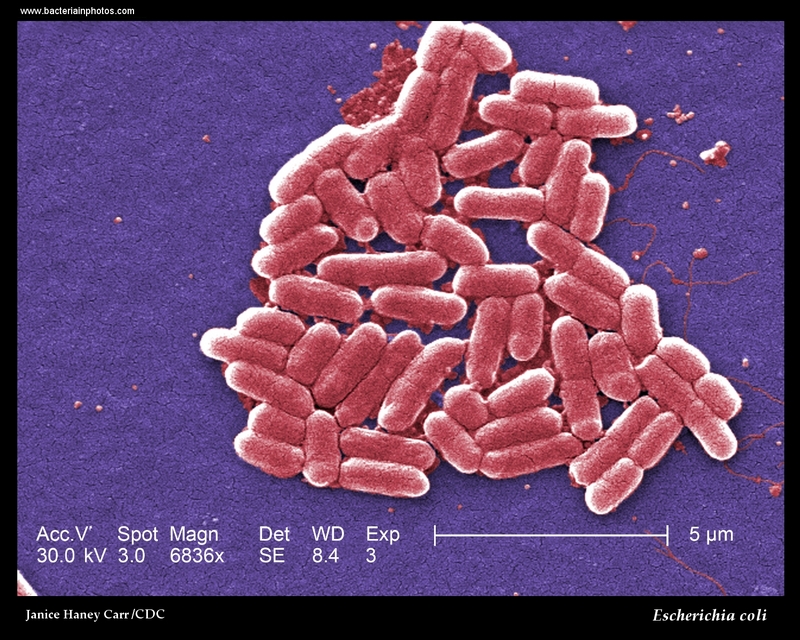
About one in every 1,000 newborns develops sepsis caused by Escherichia coli. That number sounds small until you flip it around. E. coli starts colonizing a baby's gut within hours of birth, and a newborn's immune defenses are famously underbuilt. So the real puzzle is not why some babies get sick. It is why almost all of them stay well.
A study published in Nature on March 11 offers an answer, and it points squarely at the mother. A team led by Sing Sing Way at Cincinnati Children's Hospital found that healthy newborns are shielded by a specific set of antibodies passed across the placenta before birth. Babies who go on to develop E. coli sepsis are missing them.
A hole aimed at one bug
The researchers examined dried blood spots, the same heel-prick cards collected from nearly every baby in the first day of life. They compared samples from 100 infants who developed E. coli sepsis against sex- and gestational-age-matched healthy controls. The sick babies had consistently lower levels of maternal IgG antibodies that recognize E. coli. Their blood was also worse at opsonization, the process of coating bacteria so immune cells can find and destroy them. The gap was not a general immune weakness. It was narrow and pathogen-specific.
One protein sits at the center of the story. Outer membrane protein A, or OmpA, studs the surface of E. coli, and it turned out to be a main target of the protective maternal antibodies. Babies with sepsis had reduced IgG against OmpA in particular. That specificity matters, because it hints at a defined target rather than a vague notion that more immunity is simply better.
Rewriting the odds before conception
The mouse experiments are where the work gets provocative. Newborn mice are naturally vulnerable to E. coli, much like human infants. But when female mice carried the probiotic strain E. coli Nissle 1917 in their intestines before pregnancy, they generated anti-E. coli IgG that crossed the placenta to their pups. Those antibodies recognized not just the harmless probiotic but a broad range of clinical E. coli isolates, including the aggressive strains that cause human sepsis. The pups were protected. Gut colonization in the mother, weeks before conception, changed the odds for the offspring.
The protection had rules. It depended on OmpA being present, and it required both complement proteins and Fc receptors on immune cells to work. Antibodies alone did nothing. They needed the rest of the machinery to finish the job, which fits the opsonization defect seen in the human blood spots.
What the data can and cannot say
What the study does not claim is as important as what it does. The human data are correlational. Lower maternal antibody levels track with sepsis, but the blood-spot analysis cannot prove that topping up those antibodies would have prevented every case. The causal chain, from maternal gut colonization to durable infant protection, was demonstrated in mice, and mice are not babies. The Nissle strain has a long safety record in people, yet no one has shown that giving it to prospective mothers protects human newborns. That trial has not been run.
Still, the logic is clean and the potential payoff is large. Neonatal sepsis kills hundreds of thousands of infants worldwide each year, and E. coli is among the most common culprits. Antibiotics remain the front-line treatment, but resistance is rising and newborns often deteriorate fast, before drugs can help. A preventive approach that works before birth would sidestep that race.
The idea of shaping maternal immunity to protect a child is not new in principle. Vaccinating pregnant women against tetanus, influenza, and respiratory syncytial virus already leans on the same placental antibody transfer. This work suggests a third route: not a shot, but a bacterium living quietly in the gut, teaching the immune system to make the right antibodies long before a baby exists to receive them.
Plenty of questions remain. How long does the primed immunity last? Would it hold up across the genetic diversity of E. coli strains in different hospitals and regions? Could the same strategy be pushed too far, disturbing a mother's own microbiome? None of that is answered yet. But the study reframes a familiar tragedy. A newborn's vulnerability to E. coli may be less about the immaturity of its own defenses and more about what its mother did, or did not, hand down.
Diep, R. E. et al. "Natural maternal immunity protects neonates from Escherichia coli sepsis." Nature, 2026. doi.org/10.1038/s41586-026-10225-z
PubMed PMID: 41813901.
Photograph: Janice Haney Carr, CDC, Public domain, via Wikimedia Commons.
Comments