


Bacteria fight dirty. Down in the crowded gut, many so-called friendly microbes carry chemical weapons and use them on their neighbors. A big class of these weapons is called lantibiotics, small ring-shaped molecules that punch holes in rival cells. The usual story is that this is good for us. A commensal that kills competitors also tends to kill invaders, so it helps hold the fort against infection. A team led by Cody Cole and Eric Pamer at the University of Chicago decided to test that assumption, and the answer they got is not the reassuring one.
Their paper, published December 1 in Cell Host & Microbe, followed a single lantibiotic-making gut bacterium and watched what it did to everything around it. The short version: it cleared the field. And a cleared field is exactly what pathogens want.
Starting with a hospital hint
The researchers first looked at gut bacteria from hospitalized patients. They noticed something suggestive. Bacterial species that carried the genes for making lanthipeptides, the family that includes lantibiotics, tended to be more abundant than versions of the same species that lacked those genes. Carrying a weapon seemed to pay off in raw numbers. Some of the weapon sequences they found matched the lantibiotic genes of a species called Blautia pseudococcoides, and a strain they nicknamed BpSCSK became the star of the experiments.
Blautia is normally considered one of the good guys. It is a common member of a healthy human gut community. So it was a fair test of the standard belief: give a beneficial, weapon-carrying commensal a chance to protect the gut, and see whether protection is what you get.
When the medicine empties the room
They ran the test in mice whose microbiomes had been knocked flat by antibiotics, the state where a gut is most vulnerable and most in need of repopulating with normal bacteria. Into that opening they introduced BpSCSK. Instead of standing guard while the neighborhood rebuilt, the bacterium blocked the rebuild. It prevented a wide range of ordinary commensal species from recolonizing the intestine. The gut stayed thin and depleted.
The chemistry followed the population. With most of the normal microbes locked out, the fecal levels of microbiota-derived metabolites dropped sharply. Those metabolites are not incidental. Many of them, including certain short-chain fatty acids and bile-acid products, are part of how a healthy microbiome makes the gut inhospitable to invaders. Strip them out and you strip out a layer of defense.
Then came the part that matters for patients. The researchers challenged these lantibiotic-flattened guts with two serious pathogens: Klebsiella pneumoniae, a frequent driver of drug-resistant hospital infections, and Clostridioides difficile, the cause of the diarrheal infections that so often follow antibiotics. In a normal recovering gut, a rebuilt community fends these off. Here, colonization resistance was lost, and the loss lasted. The single lantibiotic producer had turned a recovering gut into an open door.
Why a friendly microbe cut both ways
The uncomfortable lesson is that a weapon does not check ID. A lantibiotic that suppresses pathogens also suppresses the harmless bystanders that a healthy microbiome depends on. In an intact gut, the crowd keeps any one producer in check. In a gut freshly emptied by antibiotics, the same producer can dominate and keep everything else out, defense included. The trait that looks protective on paper became a liability at the worst possible moment.
Some caution is in order before reading this into human care. The colonization experiments were done in mice, and mouse and human gut communities differ. The human data here are associations from patient samples, which point in an interesting direction but do not by themselves prove cause. And the work centers on one bacterium and its particular lantibiotic, so it is not a blanket verdict on every weapon-carrying commensal.
Still, the practical warning is clear enough. Lantibiotics have been floated as a clean, targeted alternative to antibiotics, and lantibiotic-making bacteria have been eyed as living therapeutics. This study says the timing and the context decide whether such a microbe heals or harms. A germ that guards its own turf can, under the right conditions, guard it against you.
Cole, C. G. et al. "Lantibiotic-producing bacteria impact microbiome resilience and colonization resistance." Cell Host & Microbe, 2026. doi.org/10.1016/j.chom.2025.11.007
PubMed PMID: 41330369.
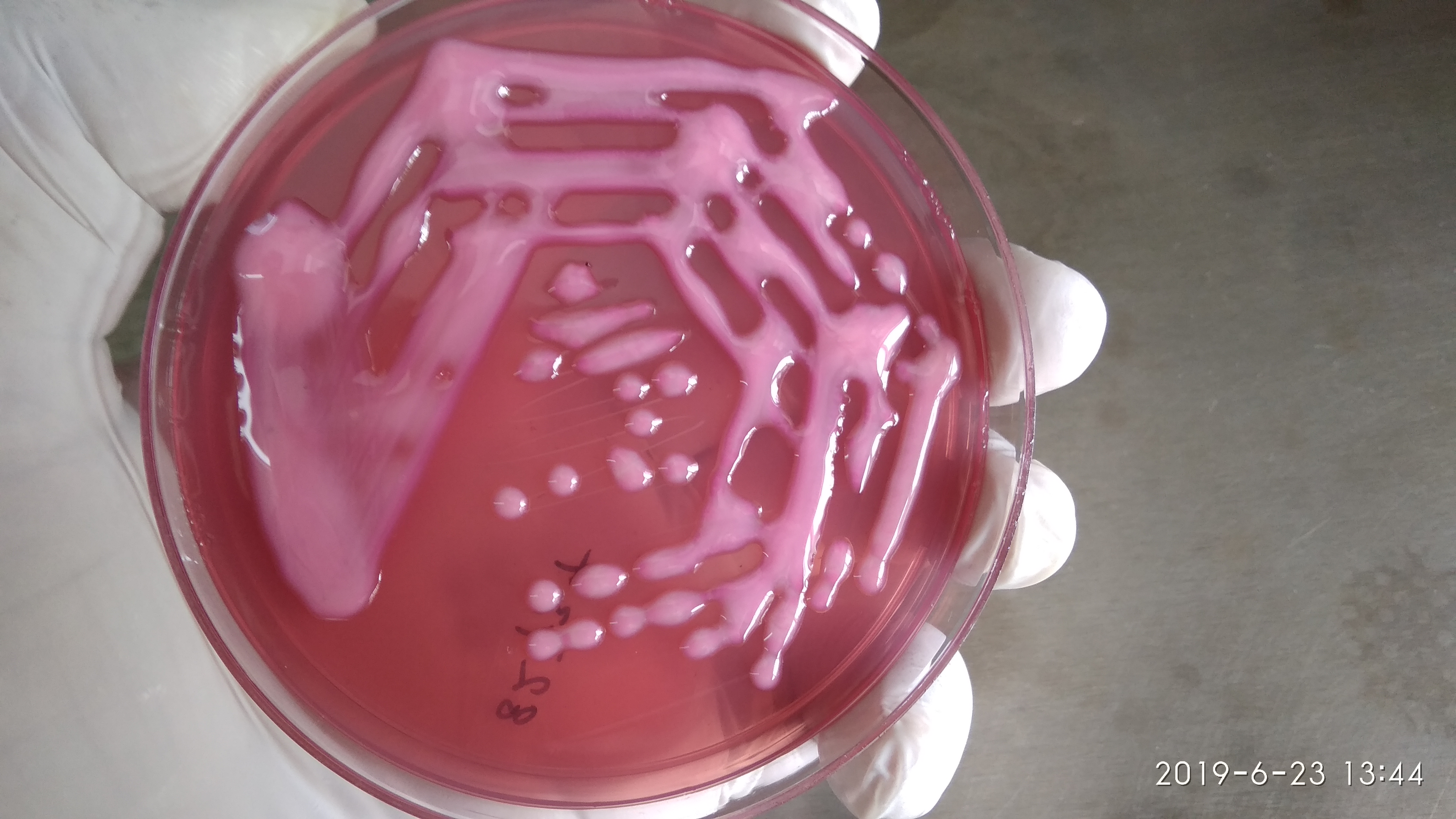
Photograph: Ajay Kumar Chaurasiya, CC BY-SA 4.0, via Wikimedia Commons.
Comments