

Measles is one of the most contagious viruses we know. One infected person in a room can seed the disease in nine of ten susceptible people nearby. The vaccine works, and it works well, but coverage has slipped in places, and outbreaks have followed. That backdrop makes a plain question worth asking: when a person's immune system does beat measles, where exactly does it land its punches?
A team led by researchers at the La Jolla Institute for Immunology went looking for the answer at the level of individual molecules. They took memory B cells from someone who had received the standard measles-mumps-rubella shot and fished out the antibodies those cells make. What came back was a panel of fully human monoclonal antibodies aimed at the two proteins measles uses to break into a cell.
Two proteins, nine ways in
Measles studs its surface with two machines. One is the hemagglutinin, or H, which the virus uses to latch onto a target cell. The other is the fusion protein, F, which pries open the membrane so the viral genome can pour inside. Block either job and the virus stalls at the doorstep.
The researchers sorted their antibodies by where they bind. They found four distinct clusters of binding sites on H and five on F. Then they used high-resolution cryo-electron microscopy to photograph representative antibodies locked onto their targets, so the contact points were not inferred but seen. The most protective antibodies gripped patches of the proteins that stay conserved, meaning the virus cannot easily change them without breaking its own machinery.
Potency is where the numbers get striking. Antibodies against both H and F neutralized the virus at picomolar concentrations. That is a vanishingly small amount of antibody doing the work, the kind of strength you want if you are thinking about a drug rather than just a lab curiosity.
Protection that runs both directions
Neutralizing a virus in a dish is one thing. The team also gave the antibodies to animals and measured what happened to the virus in the body. Viral loads dropped substantially. Crucially, this held whether the antibodies were given before exposure or after it. A pre-exposure benefit points toward prophylaxis, something you might hand to an unvaccinated infant or an immunocompromised person heading into an outbreak. A post-exposure benefit is harder to pull off and more useful in a pinch, because in real life people usually show up after they have already been near the virus.
Infants are the group this matters most for. Newborns are too young for the first MMR dose, they lean on antibodies borrowed from their mother, and that borrowed protection fades over the first months of life. A well-defined human antibody, mapped down to the atoms it touches, is exactly the sort of thing you could deploy in that window.
What the study does not settle
These antibodies came from a single vaccinated donor, so the panel reflects one person's immune history rather than the full range of human responses. The protection numbers come from animal models and cell assays, not from people, and the distance between a strong result in a mouse and a licensed therapy is long and full of ways to fail. Cost, manufacturing, and dosing schedules all sit outside what a structural study can tell you. The work maps targets and shows they can be hit hard; it does not yet prove a product.
Still, the logic is clean. Measles carries essentially one antigenic type and changes little, which is part of why the vaccine has held up for decades. That same stability is a gift to antibody designers, because a binding site that is conserved today should still be there tomorrow. By pinning down where the strongest human antibodies attach, the study hands drug developers a set of blueprints for measles that may not need frequent updating. For a virus that keeps finding gaps in our defenses, having a precise map of its weak points is a good place to start.
Acciani, M. et al. "Human neutralizing antibodies targeting the measles virus hemagglutinin and fusion surface proteins." Cell Host and Microbe, 2026. doi.org/10.1016/j.chom.2026.04.010
PubMed PMID: 42102820.
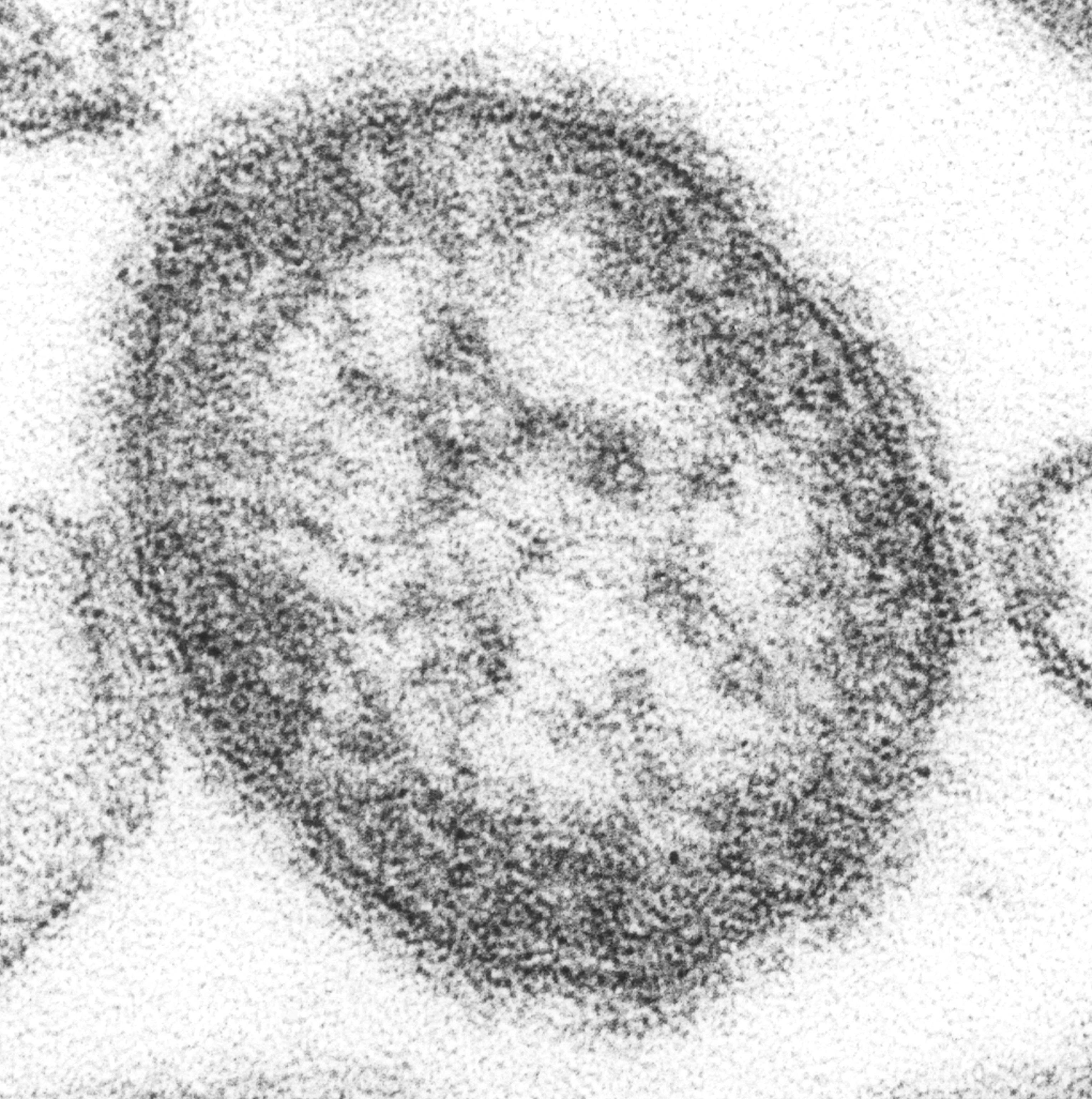
Photograph: CDC/Cynthia S. Goldsmith, Public domain, via Wikimedia Commons.
Comments