

HIV has a talent for slipping away. Its outer envelope mutates so fast that most antibodies the body raises against it are outdated within weeks. This is why a vaccine has stayed out of reach for four decades, and why antibody-based prevention has been hard to turn into a real drug. Give the virus one narrow target and it finds a way around it.
But a small number of people make antibodies that HIV cannot easily dodge. Their blood neutralizes a huge range of viral strains at once. These individuals are called elite neutralizers, and they are rare. A team based mainly at the University of Cologne decided to mine them systematically, and reported the result in Nature Immunology.
Sorting 831 antibodies down to one
The researchers took blood from 32 of these top neutralizers and did single B cell profiling, isolating the individual immune cells that make antibodies. From those cells they expressed 831 different monoclonal antibodies and tested them against panels of HIV.
One stood out. They named it 04_A06. It targets the CD4 binding site, the spot on the virus that HIV uses to latch onto human immune cells. That site is functionally critical, so the virus cannot mutate it freely without crippling itself. Against a panel of 332 viral strains spanning multiple clades, 04_A06 neutralized 98.5%, with a geometric mean IC50 of 0.059 micrograms per milliliter. Lower is better there. That is a potent, wide-reaching antibody.
What makes it hard to escape came down to structure. The team found an unusually long insertion of 11 amino acids in the antibody's heavy chain. That extra stretch lets 04_A06 reach across and grip highly conserved residues on the neighboring gp120 protomer, essentially anchoring itself to parts of the virus that rarely change. Known escape mutations that defeat other CD4-binding-site antibodies did not defeat this one.
Holding up against the viruses actually circulating
Breadth on a curated lab panel is one thing. Real-world viruses are another. So the team tested 04_A06 against strains collected during the Antibody-Mediated Prevention trials, a large clinical effort that tested whether an infused antibody could stop new HIV infections. Against 191 of those contemporary strains, 04_A06 still neutralized 98.4%, with an IC50 of 0.082 micrograms per milliliter.
In HIV-infected humanized mice, the antibody drove and maintained full viral suppression. The researchers also engineered a version called 04_A06LS, tuned for a longer half-life in the body, and ran computational modeling to estimate how it would perform as prevention. The model predicted efficacy above 93%.
What this does and does not settle
The numbers are striking, but this is not a finished medicine. Every result here comes from lab assays, mouse experiments, and in silico prediction. The greater-than-93% prevention figure is a model estimate, not a clinical trial outcome, and the mice were humanized models rather than people. HIV has humbled confident predictions before, and a single antibody, however broad, can still meet resistant viruses in a real population. The path from a promising antibody to something usable in the field runs through years of human testing.
Still, the strategy is worth noting. Instead of designing an antibody from scratch, the team let human immune systems do the hard part and then searched for the best product. Thirty-two people who already beat the virus at its own game yielded one candidate that outperformed classic escape routes. Whether 04_A06 becomes a prevention shot, a treatment, or a template for a vaccine, it widens the toolkit against a virus that has spent decades staying one step ahead.
Gieselmann, L. et al. "Profiling of HIV-1 elite neutralizer cohort reveals a CD4bs bnAb for HIV-1 prevention and therapy." Nature Immunology, 2025. doi.org/10.1038/s41590-025-02286-5
PubMed PMID: 41053396.
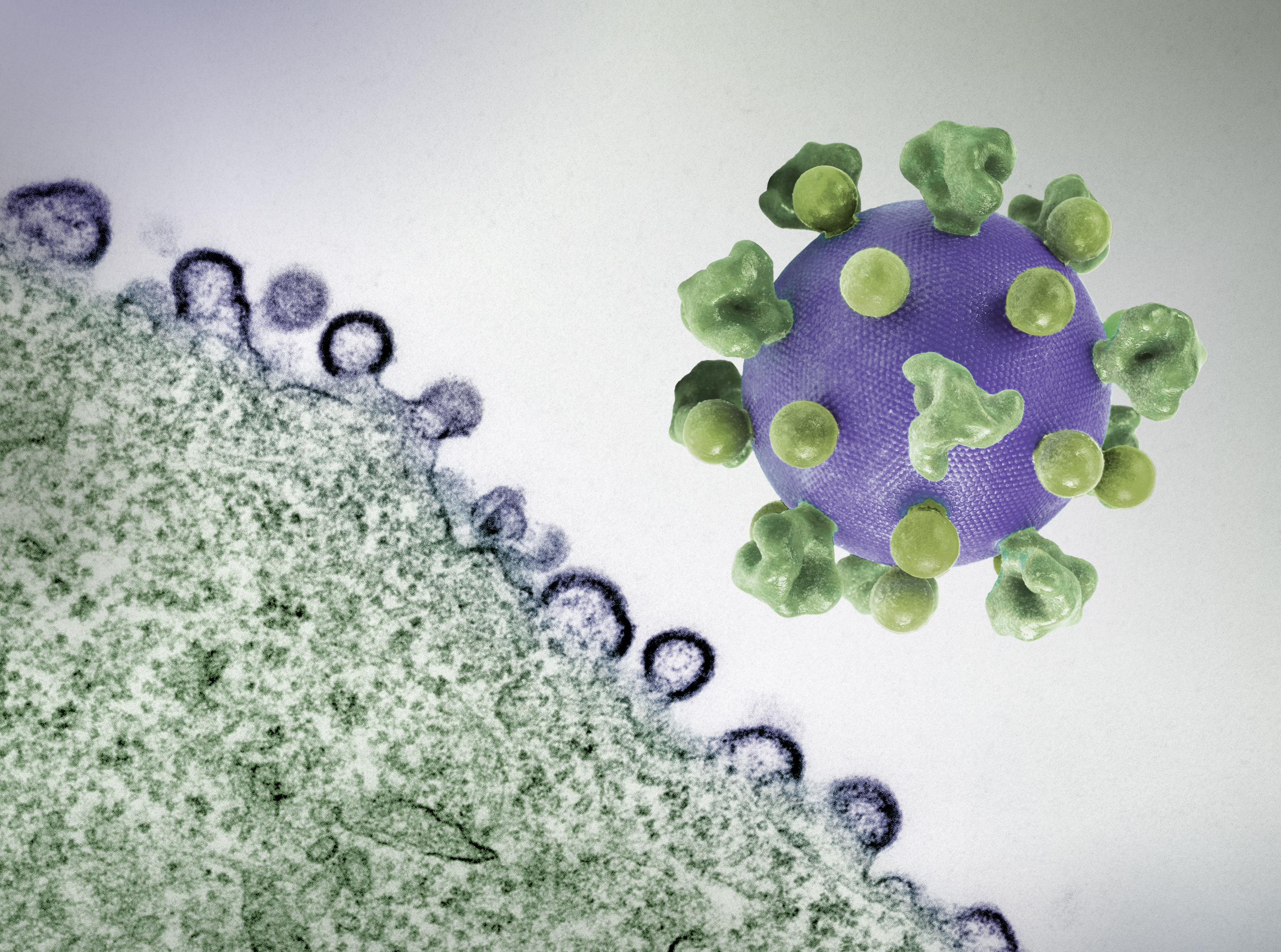
Photograph: NIAID, CC BY 2.0, via Wikimedia Commons.
Comments