

For almost everyone living with HIV, the deal is the same: take a pill every day, forever. Stop, and the virus roars back within weeks from the hidden reservoir it carves out in the body's own cells. That reservoir is the reason there is still no cure. So a result out of the University of California, San Francisco is worth sitting with. In a small trial, seven of ten people who followed an intensive immune-training regimen were able to stop their antiretroviral drugs and still hold the virus down.
The study, published in Nature on December 1, was deliberately modest in size. Ten people, all on suppressive antiretroviral therapy, all volunteering for something with no guaranteed payoff and a real risk that their virus would rebound. It is a proof of concept, not a treatment you can ask your doctor for. But the direction it points is the one the whole field has been trying to reach.
Three interventions, stacked
The regimen came in three parts. First, a therapeutic vaccine meant to sharpen the immune system's aim: a DNA vaccine targeting conserved pieces of the HIV Gag protein, paired with the immune-stimulating molecule IL-12, then boosted with a modified vaccinia Ankara vector. The idea is to train the body to recognize the parts of HIV that the virus cannot easily mutate away from.
Second, while participants were still taking their drugs, the team infused two broadly neutralizing antibodies, called 10-1074 and VRC07-523LS. These are lab-made antibodies that latch onto HIV directly. Alongside them came lefitolimod, a molecule that pokes the innate immune system through a sensor called TLR9, essentially raising a general alarm. Third, when it was time to interrupt the daily drugs, participants got another round of the antibodies to cover the transition.
Then the drugs stopped, and the researchers watched.
What the killer T cells did
Seven of the ten participants showed what the authors call post-intervention control: the virus rebounded, but their bodies reined it back in without a return to daily medication. And here is the part that makes the mechanism interesting. That control did not depend on how much antibody was still floating around in the blood. In several participants the infused antibodies had largely cleared, yet control held anyway. Something the immune system itself was doing carried the load.
The clue was in the CD8 T cells, the immune system's assassins. Participants who mounted a fast, robust expansion of activated CD8 T cells as the virus started to rebound tended to end up with a lower viral load once the peak passed. A vigorous early response, in other words, seemed to set the ceiling for how far the virus could climb. That fits with a companion paper published the same day, which found that people who go on to control HIV tend to have CD8 T cells with a durable, stem-cell-like quality before the intervention even begins.
It suggests the antibodies and the vaccine may be doing something beyond their obvious jobs. By blunting the initial rebound, they might buy the T cell response enough time to organize and take over.
Why ten people is not a headline about a cure
This needs saying plainly. Ten participants is a tiny number, and there was no control arm, so nobody can rule out that some of these people would have controlled their virus regardless. "Post-intervention control" also does not mean the virus is gone. It means the immune system is holding a low-level infection in a kind of standoff, and that standoff can break. Pausing antiretroviral therapy is not risk-free, which is why work like this happens under close monitoring in carefully consented volunteers rather than in a clinic.
What the trial does show is that a strategy which had worked in monkeys can produce a real signal in people. Combination immunotherapy of this kind had rarely been translated to humans before. The authors are careful to frame it as a starting point that needs optimizing, not a finished protocol.
Still, the shape of the answer is coming into focus. A functional cure for HIV, if it arrives, probably will not look like scrubbing every last copy of the virus out of the body. It may look more like teaching the immune system to do the daily job that a pill does now. Seven of ten is not a cure. It is a hint that the body, given the right coaching, can sometimes hold the line on its own.
Peluso, M. J. et al. "Correlates of HIV-1 control after combination immunotherapy." Nature, 2025. doi.org/10.1038/s41586-025-09929-5
PubMed PMID: 41326736.
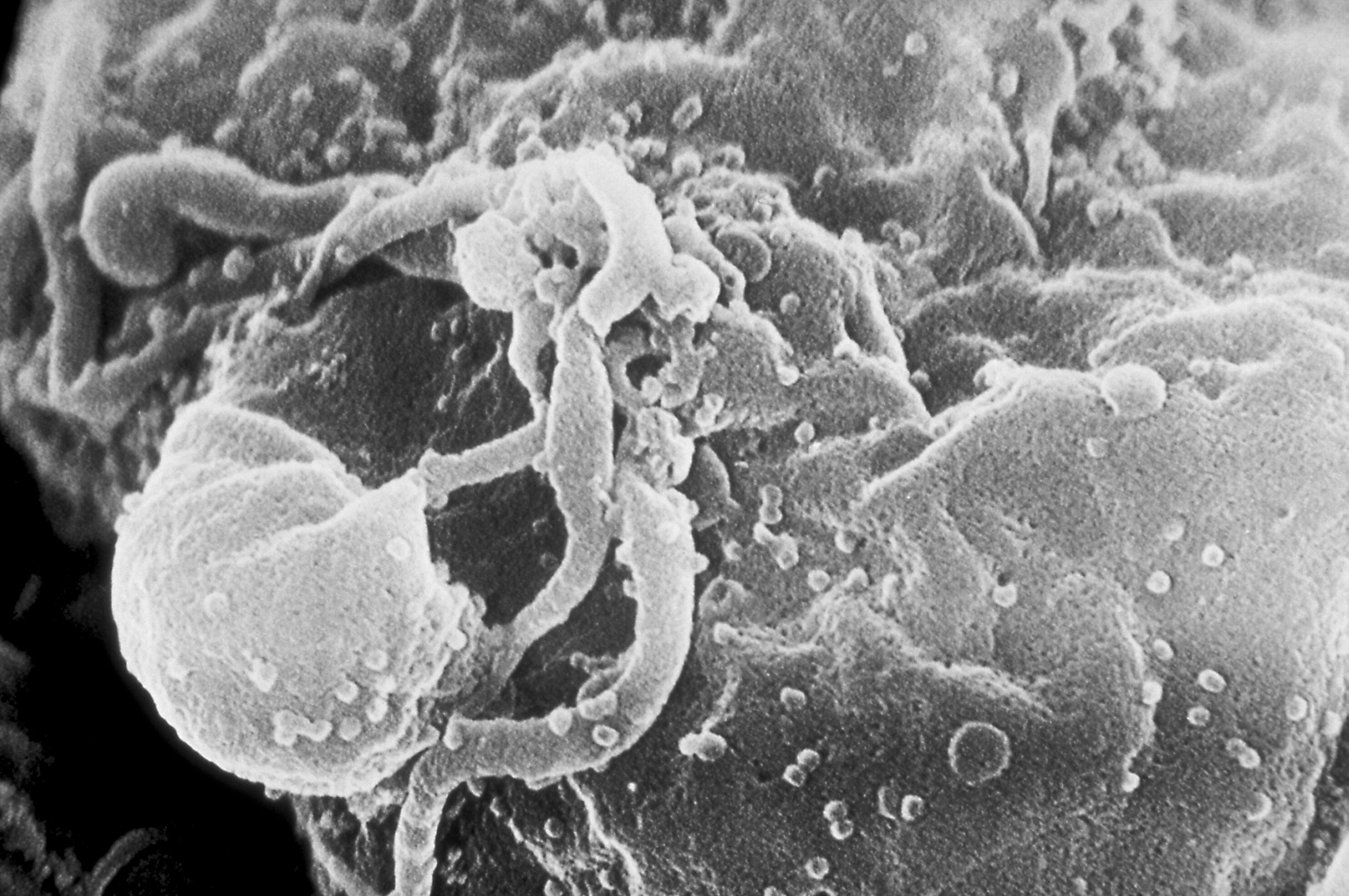
Photograph: CDC/C. Goldsmith, P. Feorino, E. L. Palmer, W. R. McManus, Public domain, via Wikimedia Commons.
Comments