


A fetus is, immunologically speaking, half foreign. Half of its genes come from the father, which means the mother's immune system has every reason to treat the growing pregnancy as an intruder. It usually does not. How the maternal immune response gets talked down at the placenta has been one of reproductive biology's stubborn puzzles. A study published in Cell points to an unexpected source of that restraint: the bacteria living in the mother's gut, several inches and one organ system away from where the decision is made.
Julia A. Brown, Melody Y. Zeng, and colleagues at Weill Cornell Medicine worked with pregnant mice raised without any microbes, plus mice whose gut communities were knocked back with antibiotics. In both cases the maternal immune system at the maternal-fetal interface tipped toward aggression. Two inflammatory signals, interferon-gamma and interleukin-17, climbed higher than they should. The consequence was blunt: fetal resorption, the rodent version of pregnancy loss.
A chemical message that travels from gut to placenta
The link between the two sites turned out to be chemistry. Gut bacteria break down the amino acid tryptophan into a family of derivative molecules, and those derivatives were doing the calming. The researchers traced how these compounds suppressed the two troublesome T cell populations at the placenta. They did it indirectly, by priming two kinds of restraining cells: myeloid-derived suppressor cells, which held down the interferon-gamma response, and a gut-derived population of regulatory T cells marked by the protein RORgammat, which reined in the interleukin-17 side.
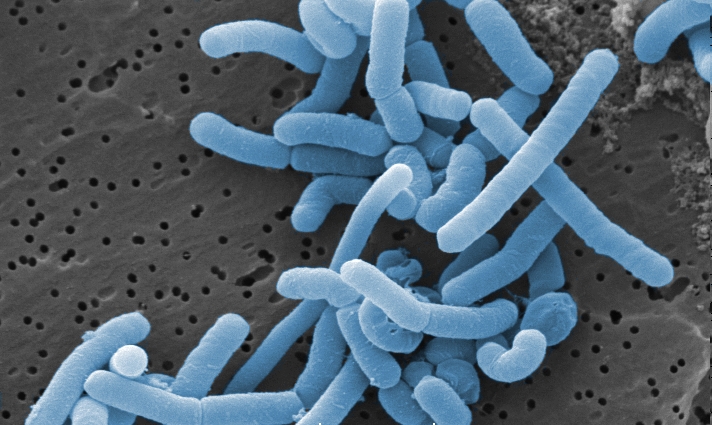
When the team put the missing chemistry back, the system recovered. Feeding germ-free mice the tryptophan derivative indole-3-carbinol rebalanced the T cell response and cut fetal resorption. So did colonizing the animals with a single tryptophan-metabolizing gut species, Lactobacillus murinus. One bacterium, doing one metabolic job, was enough to move the outcome. That is a striking amount of leverage for a microbe that never goes anywhere near the uterus.
Why the human data matters most
Mouse pregnancy and human pregnancy are not the same, and it would be easy to file this under interesting-but-distant rodent work. The authors did not stop there. They examined tissue from human recurrent miscarriage cases and found the same players out of tune: the suppressor cells, the RORgammat regulatory T cells, and the microbiota-dependent tryptophan derivatives were all dysregulated at the maternal-fetal interface. The parallel does not prove the bacteria cause human miscarriage. But it means the axis the mice revealed is not a rodent-only quirk. Something structurally similar appears to be operating, or failing to operate, in people.
This fits a broader shift in how biologists think about the microbiome. For years the story was mostly about digestion and local gut immunity. Increasingly the gut reads more like a chemical factory whose products reach distant organs and set the tone for events there. A gut-placenta axis, wired through tryptophan metabolites, is a concrete example of that long-distance influence during one of the body's most delicate negotiations.
What the study does not yet show
The heavy lifting here was done in mice, and the causal chain, from bacterium to metabolite to specific immune cell to pregnancy outcome, was mapped in animals. The human side is a correlation. It shows the same signatures are disturbed in recurrent miscarriage, not that restoring them would prevent loss. Nobody should read this as a reason to start taking probiotics or indole-3-carbinol during pregnancy; the doses, timing, and safety in humans are entirely untested, and the biology of tryptophan metabolites is easy to get wrong. What the work does is identify a mechanism worth pursuing, and a set of measurable molecules that could, with a lot more study, become something clinicians look at.
The appeal of the finding is its economy. A pregnancy holding or failing may hinge partly on whether a mother's gut bacteria are producing the right breakdown products of a single amino acid. It reframes prenatal health as something that includes the microbial tenants of the digestive tract, and it hands researchers a specific molecular thread to follow next.
Brown, J. A. et al. "Gut microbiota promotes immune tolerance at the maternal-fetal interface." Cell, 2026. doi.org/10.1016/j.cell.2025.11.022
PubMed PMID: 41412123.
Photograph: Dr. Horst Neve, Max Rubner-Institut, CC BY-SA 3.0, via Wikimedia Commons.
Comments