

The colon is not one uniform tube. Its front end, closer to the small intestine, does different work from its tail end, and the cells lining each stretch carry a distinct molecular signature. That front-to-back organization matters for medicine, because some diseases prefer one region over another. Ulcerative colitis, for instance, tends to strike the distal colon first. Nobody has had a good account of where this regional layout comes from, or what keeps it in place.
A study published in Cell on March 10 argues that part of the answer lives in the gut, but not in the tissue itself. It lives in the bacteria. Jeremie Rispal and colleagues found that the community of microbes packed into the colon helps set the identity of the cells lining it, and they pinned down one specific molecule doing the work.
Germ-free mice lose the pattern
The team started with a blunt comparison. They looked at mice raised with a normal microbiome and mice raised germ-free, with no gut bacteria at all. In the germ-free animals, the proximo-distal identity of the colonocytes, the cells that line the colon, was disrupted. The cells near the front of the colon no longer looked convincingly like front cells. The map had smeared.
So something the bacteria produce was involved. The researchers zeroed in on the proximal colon, the section nearest the small intestine, and found that the microbes living there churn out high levels of nicotinic acid. This is a form of vitamin B3, a small molecule that mammalian cells can sense and respond to. When that nicotinic acid reaches the colonocytes, it switches on a gene called PPARalpha. And PPARalpha, the team showed, is what stamps those cells with their proximal identity.
It is a tidy chain of cause and effect. Bacteria in one region make a vitamin. The vitamin turns on a specific gene. That gene tells the local cells which part of the colon they belong to.
Identity that protects tissue
The more striking part is what this identity is good for. The researchers report that microbiome-driven proximal identity confers protection against tissue injury in the mouse. In other words, having the right regional character is not just a cosmetic label on the cells. Cells that correctly know they are proximal colon appear to weather damage better than cells that have lost that sense.
That reframes regional identity as something functional rather than incidental. If the microbiome helps establish the pattern, and the pattern helps the tissue survive insults, then the bacteria are quietly contributing to how well the colon holds up.
The work did not stay in mice. The team went on to show that the human colon is regionalized in a comparable way, and, importantly, that it loses its proximal identity during certain disease states. When the tissue gets sick, the map starts to fade. Whether that loss is a cause of disease or a consequence of it is not something this study settles, and that distinction will matter a lot for anyone hoping to act on the finding.
What the study does not claim
A few limits are worth stating plainly. Most of the mechanism here rests on mouse experiments, and the germ-free mouse is an extreme setup that no human ever matches. The human side of the paper establishes that regional identity exists and erodes in disease, but it does not demonstrate that boosting nicotinic acid would restore anything or help a patient. The molecule sits inside a chain the authors mapped in animals; translating that into a treatment is a separate and much harder problem.
There is also the question of the rest of the microbiome. Nicotinic acid is one signal the team could isolate and test, but a real colon is bathed in thousands of bacterial products at once. This paper does not rule out that other microbial molecules feed into regional identity too, or that the picture shifts with diet, age, or which bacteria happen to be present.
Still, the core idea is clean and testable. The lining of your colon carries an address, that address helps it survive, and the bacteria in your gut are part of what writes it down. It is a reminder that the boundary between host tissue and resident microbes is less a wall than a conversation, and that the cells doing the talking may not all share your DNA.
Rispal, J. et al. "Microbiome-produced nicotinic acid controls colon regional identity and injury susceptibility." Cell, 2026. doi.org/10.1016/j.cell.2026.02.007
PubMed PMID: 41812662.
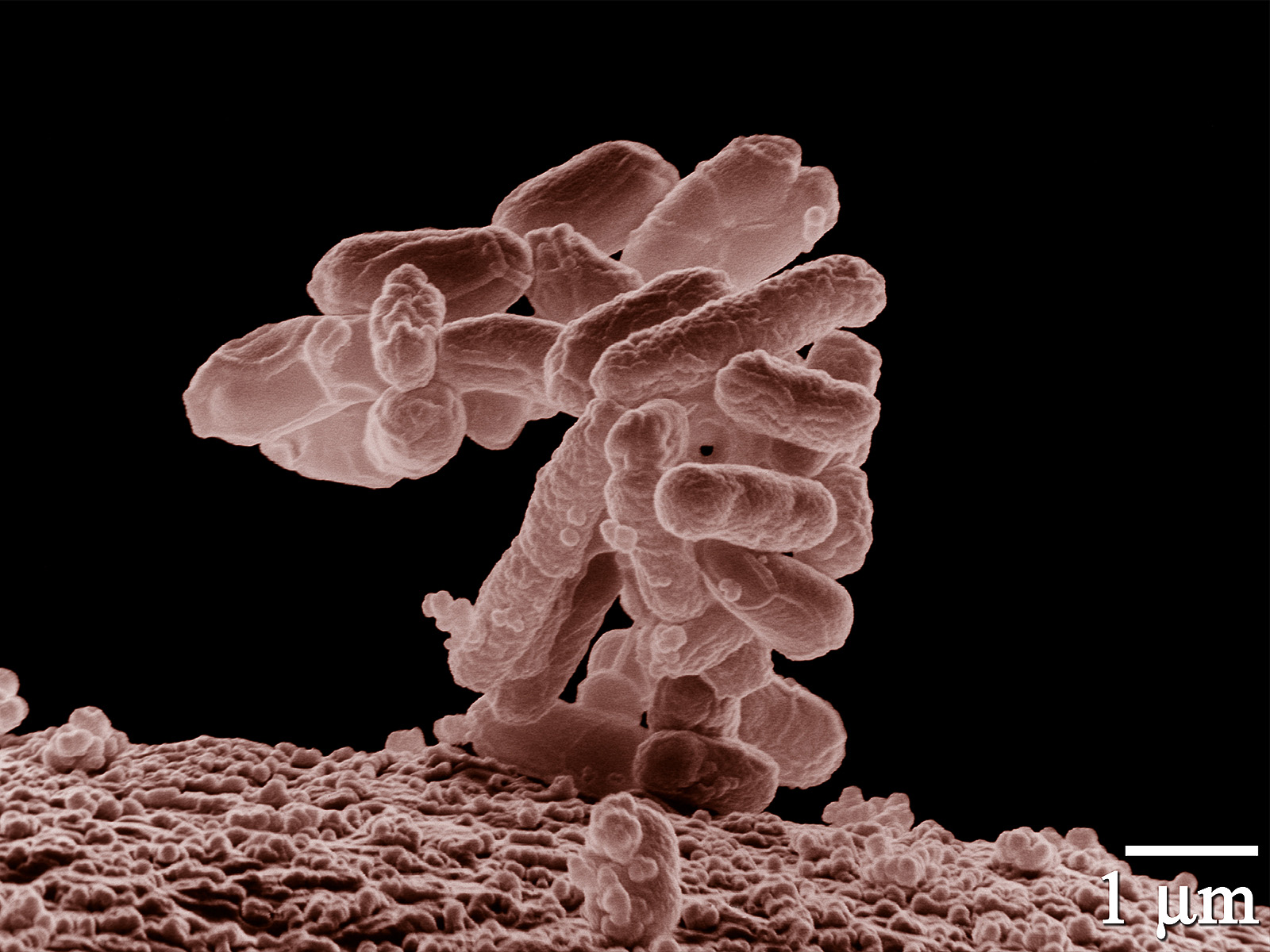
Photograph: Eric Erbe, digital colorization by Christopher Pooley, USDA ARS, Public domain, via Wikimedia Commons.
Comments