
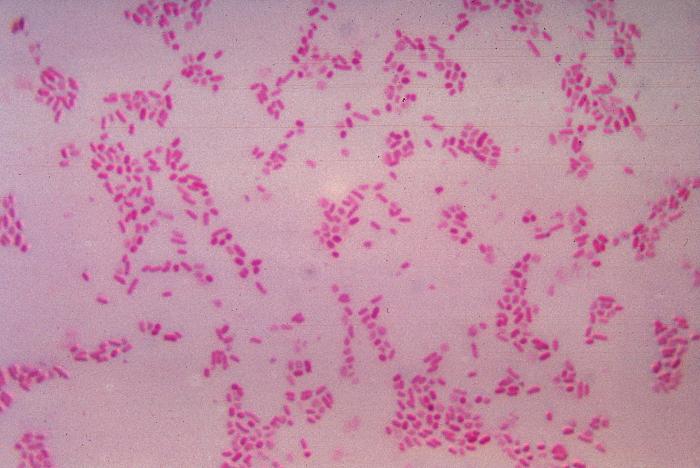
Bacteroides fragilis is one of the more agreeable tenants of the human gut. Among its useful habits is making a fatty molecule called an alpha-galactosylceramide, which acts like a chemical memo to a small squad of immune cells in the colon. The memo says, roughly: stand down. Those cells, called natural killer T cells, calibrate how touchy the gut lining is. A microbe that can dial them down is doing the host a favor.
Until now the details of how B. fragilis builds that molecule were murky, and so was the question of whether it is alone in the trick. A team led by researchers at Brigham and Women's Hospital and Harvard Medical School set out to fill in both gaps. What they found is a small molecular arms race playing out in the guts of infants, where nearly identical fat molecules push the same immune cells in opposite directions.
One enzyme does the whole job
The group first mapped how B. fragilis assembles its sphingolipids, the class of fats its immune-signaling molecule belongs to. They pinned the key step on a single enzyme, an alpha-galactosyltransferase they call AgcT, encoded by the gene agcT. Delete it and the bacterium loses its ability to regulate colonic natural killer T cells in mice. Add it back and the ability returns. In their words, the enzyme is both essential and sufficient for that job.
Then came the surprise. When they looked for agcT across gut bacteria, it turned out to be rare, present in only a handful of species within the Bacteroidales group. So a molecule with real influence over gut immunity comes from a narrow slice of the microbiome. That would be a tidy story on its own. It is not the whole story.
A widespread look-alike that says the opposite
AgcT has structural relatives. One of them, an enzyme named BgsB, is scattered widely across gut bacteria, and it shows up especially in Enterococcus. BgsB does not make the same product. It makes a related class of fats called alpha-glycosyldiacylglycerols. Structurally these are cousins of the B. fragilis molecule. Functionally they are rivals.
In cell and animal experiments, these Enterococcus-type fats behaved as antagonists. They occupied the same immune machinery that the B. fragilis molecule uses to activate natural killer T cells, but instead of triggering the cells they blocked the activation. Two bacterial products, built by related enzymes, tugging on the same immune switch in opposite directions.
The infant gut is where this competition looks most consequential. The researchers combed through metagenomes from babies across different study groups. B. fragilis reliably accounted for the agcT gene wherever it appeared. The bgsB gene, by contrast, came from a shifting cast of species, and its presence changed as babies aged. Early life is exactly when the immune system is learning what to tolerate, so which of these signals dominates could matter more then than later.
What this does and does not settle
The work is careful about its own limits. Showing that a molecule antagonizes a receptor in a dish, and even in a mouse, is not the same as showing it shapes a child's long-term immune health. The infant metagenome analysis is a snapshot of who carries which gene, not proof that the fats those genes produce are doing anything decisive in a real gut. And natural killer T cells are one thread in a much larger immune fabric. The paper does not claim otherwise.
Still, the framing is worth sitting with. We often talk about the microbiome as a bag of good bugs and bad bugs. Here the same enzyme family, inherited and reshuffled across unrelated bacteria, produces near-twin molecules that mean different things to the host. The identity of a microbe matters less than the exact chemistry it happens to carry. For anyone trying to design probiotics or read a stool sample as a health signal, that is a useful and slightly humbling correction. Two bacteria can look similar on paper and speak to your immune system in flatly contradictory ways.
Yoo, J.-S. et al. "Human gut bacteria produce structurally related monoglycolipids with contrasting immune functions." Nature Microbiology, 2025. doi.org/10.1038/s41564-025-02141-1
PubMed PMID: 41073663.
Photograph: CDC/Dr. V.R. Dowell, Jr., Public domain, via Wikimedia Commons.
Comments