

Bacteroides fragilis is an anaerobe. Textbook definition: it grows where there is no oxygen, and oxygen is supposed to be a problem for it. The large intestine, packed with hundreds of species competing for every scrap of nutrient, is one of the most crowded places on Earth for a microbe to make a living. So how does an oxygen-averse bacterium carve out space for itself and, in some people, help drive disease? A team led by researchers at Vanderbilt University Medical Center has an answer that flips the usual logic. The bacterium builds the niche it wants by forcing its host to hand over oxygen.
The study, published in Cell, focuses on enterotoxigenic Bacteroides fragilis, usually shortened to ETBF. This is a strain that carries a specific weapon: Bacteroides fragilis toxin, or BFT. ETBF has been tied to colitis and to colorectal cancer, and researchers have long wanted to know exactly what the toxin does to the gut once the bacterium settles in.
Turning the gut lining into a fuel station
The finding centers on what BFT does to the cells lining the colon. Normally those epithelial cells run on oxidative phosphorylation, the oxygen-hungry way of making energy that keeps the gut surface low in oxygen and friendly to anaerobes. The toxin changes that. It manipulates signaling in the colonic epithelium and interferes with the bile acid recycling pathway, and the combined effect pushes those cells to switch their metabolism toward glycolysis instead.
That switch has consequences the bacterium can use. When the lining stops burning oxygen so hard, oxygen builds up locally. And glycolysis floods the surrounding tissue with lactate. Both of those are exactly what ETBF needs. The bacterium, supposedly anaerobic, turns around and uses that lactate and oxygen to run oxidative metabolism of its own. In effect it engineers a small pocket of the gut where the chemistry has been rewritten in its favor.
This reframes what "anaerobe" even means for a bug like this one. ETBF is not simply tolerating a bad environment. It is remodeling the host to create a better one, then metabolizing the products the host releases. The nutrient niche is not something the bacterium finds. It is something it constructs.
Why an oxygen pocket matters for disease
The disease angle is what gives the mechanism weight. A low-oxygen gut surface is one of the things that keeps the microbial community balanced and keeps troublemakers in check. When ETBF cracks that open and creates a locally oxidative patch, it does more than feed itself. It changes the ground rules for everything growing nearby. That kind of shift toward an oxygen-rich, inflamed surface is a pattern researchers keep seeing in inflammatory bowel disease and in the tissue changes that precede colorectal cancer.
So the toxin is not just a blunt instrument that damages cells. It is a tool for niche construction, and the niche it builds happens to be the sort of environment that goes hand in hand with inflammation and tumor risk. Understanding the wiring, from toxin to epithelial signaling to bile acid handling to the metabolic flip, points at specific steps that a drug might one day interrupt.
What the paper does not yet settle
This is mechanistic work, and it leaves the obvious questions open. The authors lay out how ETBF generates and exploits its oxidative niche, but the abstract does not report human patient outcomes or a therapy that blocks the pathway. Whether interrupting the bile acid step or the epithelial metabolic switch would actually slow colonization or reduce cancer risk in people is a separate question that this study does not answer. The strength here is the map, not a treatment.
Still, the core idea is worth sitting with. We tend to picture gut bacteria as passive tenants sorting themselves into whatever conditions they find. This one is a contractor. It reaches into host metabolism, redirects how our own cells make energy, and pockets the byproducts. For a field that increasingly treats the microbiome as a system of negotiations between host and microbe, ETBF is a reminder that some of those negotiations are closer to a hostile takeover.
Spiga, L. et al. "An anaerobic pathogen rewires host metabolism to fuel oxidative growth in the inflamed gut." Cell, 2026. doi.org/10.1016/j.cell.2026.04.012
PubMed PMID: 42066751.
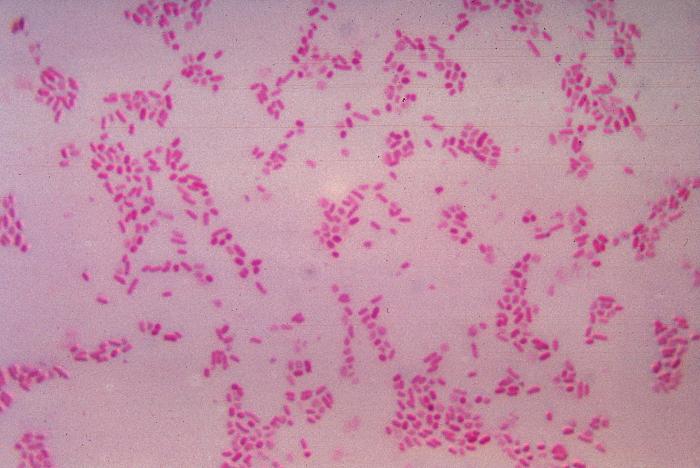
Photograph: CDC/Dr. V.R. Dowell, Jr., Public domain, via Wikimedia Commons.
Comments