


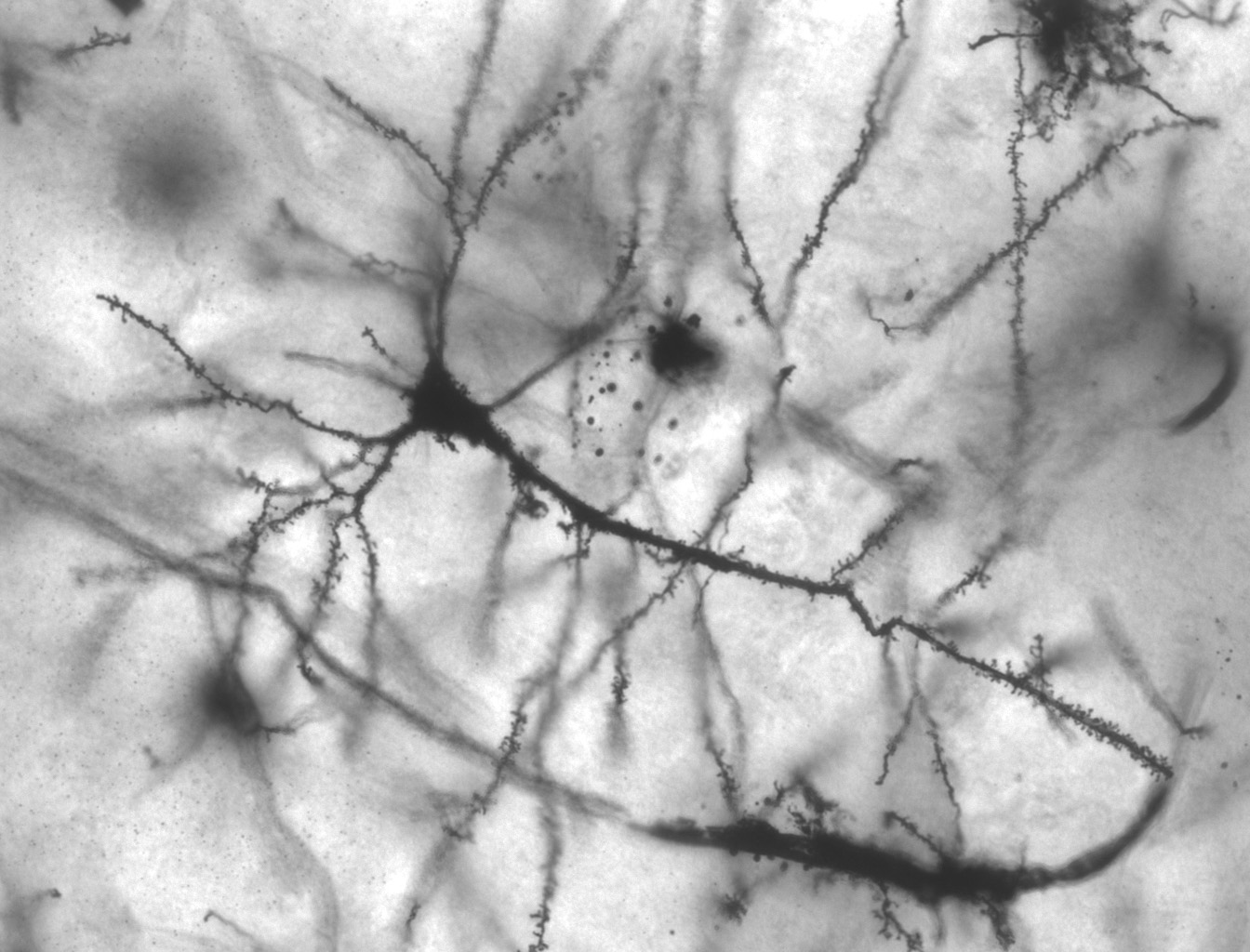
A brain tumor is not a lump sitting quietly inside inert tissue. Gliomas send tendrils into healthy cortex, wire themselves into working circuits, and receive electrical signals from the very neurons they are killing. That much has been clear for a few years. What has been harder to pin down is whether this electrical relationship actually changes as a tumor becomes more dangerous. A new study did something rare to find out: it recorded from living human brain tissue, neuron by neuron, straight out of the operating room.
The team, led by Heidi McAlpine at the Florey Institute of Neuroscience and Mental Health in Melbourne, worked with tissue removed during surgery from people with either low-grade or high-grade glioma. Low-grade and high-grade is the rough clinical divide between tumors that grow slowly and those that grow fast and tend to be lethal. Using patch-clamp electrophysiology, a technique that measures the electrical behavior of a single cell through a tiny glass pipette, the researchers listened in on both the pyramidal neurons woven through the tumor and the glioma cells themselves.
The neurons next door were louder in aggressive tumors
The pyramidal neurons sitting inside high-grade glioma tissue were more excitable than those inside low-grade tissue. In plain terms, they fired more readily. This is a property of the healthy-ish neurons caught up in the tumor, not of the cancer cells, and it tracked with how aggressive the tumor was. The biophysical fingerprint of a neuron changed depending on the grade of the cancer growing around it.
The glioma cells behaved differently across grades too. In high-grade tumors, the glioma cells showed synaptic responses that were smaller but longer in duration. Gliomas form functional synapse-like connections that let neurons pass signals to them, and the shape of those signals was not the same in slow tumors and fast ones. So both halves of the neuron-glioma conversation shifted with grade, not just one.
More firing, more tumor
The part that ties it together is proliferation. When the researchers looked at high-grade tumor tissue with its more excitable neurons and more active neuron-glioma network, they found more glioma proliferation. Cancer cells were dividing more where the electrical activity was higher. The authors read this as a causal thread: hyperexcitable pyramidal neurons in high-grade glioma may be feeding tumor growth through the electrical activity they generate.
That reframes the tumor grade as something partly written in the local circuitry. High- and low-grade gliomas, the authors conclude, hijack neural networks in different ways. A slow tumor and a fast tumor are not just different collections of mutated cells. They sit inside differently wired, differently excitable pieces of brain, and that wiring appears to be part of what sets their pace.
What the recordings can and cannot say
These are measurements from human tissue that had already been surgically removed, which is both the strength and the boundary of the work. The samples are precious and hard to obtain, so studies like this run on small numbers of patients rather than large cohorts, and the tissue is studied outside the body where longer-range influences are gone. A correlation between excitability and proliferation in cut tissue is strong evidence that the two travel together, but it does not by itself prove that quieting the neurons would slow a tumor in a living person. That test belongs to future work.
Still, the direction is worth sitting with. If a tumor grows faster because the neurons around it fire harder, then the electrical state of the brain becomes a possible target, not only the genetics of the cancer. Drugs that dampen neuronal excitability already exist, developed for epilepsy and other conditions. Whether any of them could be turned against glioma is unknown, but this study sharpens the reason to ask. The cancer is listening to the brain. It may be time to change what the brain is saying.
McAlpine, H. et al. "Increased neural excitability and glioma synaptic activity drives glioma proliferation in human cortex." Nature Neuroscience, 2026. doi.org/10.1038/s41593-025-02149-0
PubMed PMID: 41298888.
Photograph: MethoxyRoxy, CC BY-SA 2.5, via Wikimedia Commons.
Comments