


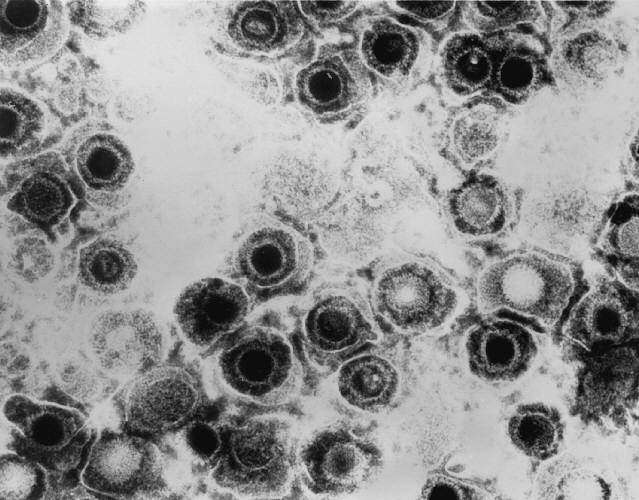
Almost everyone carries Epstein-Barr virus. By adulthood, more than nine in ten people have been infected, usually without ever noticing. The virus settles in for life, mostly quiet. But it is also linked to a long list of serious diseases: several lymphomas, some stomach cancers, and nasopharyngeal carcinoma, a cancer of the tissue behind the nose. For a pathogen this common and this consequential, one basic question stayed stubbornly open. How does it actually get into the epithelial cells that line the mouth and throat?
A team led by researchers reporting in Nature Microbiology now has a concrete answer. The virus grabs onto a protein called desmocollin 2, which normally acts like a rivet holding neighboring skin and lining cells together. That protein turns out to be the main door EBV uses to break in.
Why the epithelial route was so hard to pin down
EBV infects two kinds of cells: B cells of the immune system and epithelial cells. The B-cell side has been mapped in detail for years. The epithelial side stayed murky, and part of the reason is that free-floating virus barely infects these cells at all. Drop purified EBV onto oral lining cells in a dish and very little happens.
What works instead is contact. When an infected B cell touches an epithelial cell directly, transfer becomes highly efficient. The authors argue this cell-to-cell handoff is probably the dominant way the virus spreads into the lining of the airway and gut. That made the search harder, because the relevant biology only shows up when two living cells are pressed together, not when you soak cells in virus.
To get around that, the group ran a genome-wide CRISPR screen. They systematically switched off genes across the genome and watched which knockouts made cells resistant to infection. Desmocollin 2, abbreviated DSC2, rose to the top. A close relative, DSC3, showed up as a helper.
Knock it out, block it, and the virus stalls
The follow-up experiments are what make the case. Deleting both DSC2 and DSC3 in normal oral keratinocytes sharply cut infection, whether the virus arrived free-floating or through direct cell contact. Force those same proteins to appear in cells that normally lack them, and the cells became infectable. The door had to be present for the virus to enter.
Then the team went after it with antibodies. Antibodies aimed at DSC2 blocked infection across several models: standard oral keratinocytes, primary cells taken from donors, and head and neck epithelial organoids, which are miniature clumps of tissue grown to mimic the real thing. Combining antibodies against DSC2 and DSC3 shut down the contact route of infection efficiently.
Mechanistically, DSC2 latches onto a viral surface protein pair called gH/gL and helps the viral and cell membranes fuse. There was also a telling negative result. A protein called EphA2 had been proposed as an EBV epithelial receptor. Here, cranking up EphA2 could not rescue infection in cells missing DSC2 and DSC3. In this system, the older candidate depended on the new one.
What this does and does not settle
The appeal of a receptor is that it is a target. Block the door and you may block the disease, at least in the tissues where that door matters. The authors frame DSC2 as a handle for vaccines and antibody-based therapies against EBV-linked epithelial cancers.
Keep the scope in mind, though. This work maps entry into epithelial cells. It does not rewrite how the virus enters B cells, which use different receptors. The infection-blocking evidence comes from cultured cells and organoids, not from people or even whole animals, so how well antibody blockade holds up in a living airway is untested here. Desmocollins also do real structural work in healthy tissue, which means any therapy aimed at DSC2 will have to thread past its normal job of keeping cells stuck together. And EBV is a large, patient virus with a habit of finding backup routes; one dominant receptor in the lab may not be the whole story in every tissue.
Still, a virus that most of humanity carries just gave up a central secret. For a pathogen tied to cancers that are hard to treat once established, knowing the way in is a real place to start.
Wang, H. et al. "Epstein-Barr virus exploits desmocollin 2 as the principal epithelial cell entry receptor." Nature Microbiology, 2025. doi.org/10.1038/s41564-025-02126-0
PubMed PMID: 41006833.
Photograph: CDC/Dr. Erskine Palmer, Public domain, via Wikimedia Commons.
Comments