


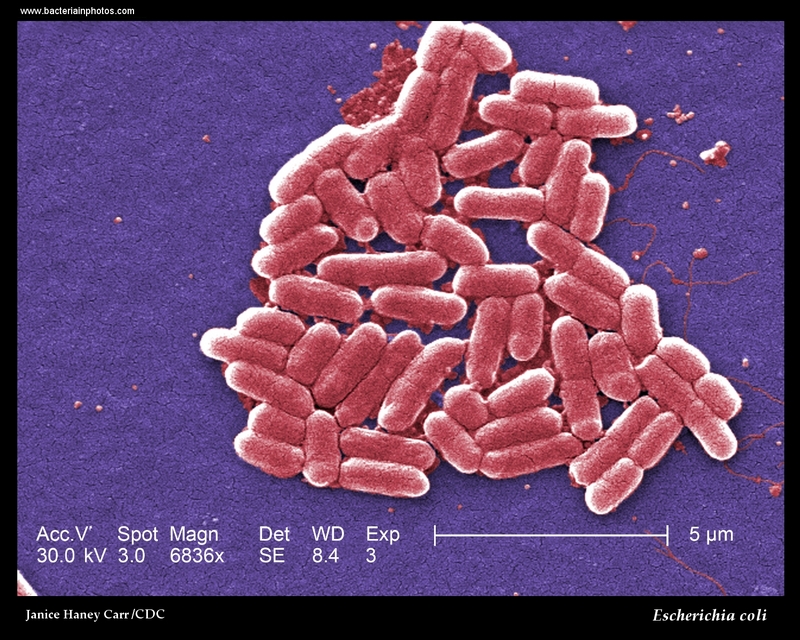
Doctors treating enterohemorrhagic Escherichia coli face a nasty catch. The bug, known as EHEC, can trigger hemolytic uremic syndrome, a kidney-damaging complication that hits children hardest. But hitting it with antibiotics can make things worse. Stressed bacteria dump their Shiga toxin as they die, and the drugs churn up the rest of the gut community along the way. So the standard advice for a serious EHEC infection is mostly to wait and support the patient.
A team based at institutions in Beijing, Tianjin, and Guangzhou has taken a different route. Instead of killing EHEC, they built a system to outcompete and quiet it. According to PubMed, the work appeared in Nature Communications on 3 February 2026 (doi.org/10.1038/s41467-026-69126-4).
Turning a probiotic into a two-part weapon
The starting material is a familiar one. E. coli Nissle 1917 is a harmless strain that has been sold as a probiotic for over a century. The researchers modified it into a version they call EcN3 and gave it a single new job: produce an enzyme, alpha-L-fucosidase, that chops up a specific sugar.
That sugar is 2'-fucosyllactose, or 2-FL, one of the most abundant sugars in human breast milk. On its own it does little against EHEC. But when EcN3 breaks it down, it yields lactose and fucose, and both pieces do work. The lactose pushes the gut microbes to burn through glucuronic acid, a nutrient EHEC leans on, effectively starving the pathogen of a preferred food. The fucose does something cleverer. It switches on a bacterial signaling system called FusKR, which the researchers used to turn down EHEC's virulence genes. The pathogen is still there, but it is muffled.
Getting both agents to the right place matters. Stomach acid would wreck a naked dose of bacteria and sugar, so the team packaged everything into what they call multicompartment microspheres. These shield the cargo through the stomach and release it in the colon, where EHEC sets up shop, so the enzyme and its substrate arrive together rather than drifting apart.
What happened in the animals
The group tested the system in two models. Female mice were challenged with Citrobacter rodentium, a mouse-adapted stand-in that behaves much like EHEC, and infant rabbits were challenged with EHEC itself. In both, the treatment cut how heavily the pathogen colonized the intestine, lowered virulence gene expression, and reduced damage to the gut lining.
Two results speak directly to the antibiotic problem. The approach did not provoke Shiga toxin production, which is the exact failure mode that makes antibiotics risky here. And it left the beneficial residents largely intact, preserving the relative abundance of Lactobacillus while supporting the integrity of the intestinal barrier. That is roughly the opposite of what a broad antibiotic does to a gut.
Promising, but early
This is a proof of concept in animals, and the gap to a human therapy is wide. The mouse experiments used Citrobacter rather than EHEC, and infant rabbits are a model, not a clinic. A living engineered bacterium raises its own set of questions that this study does not resolve, including how long the strain persists, whether it behaves consistently across different people's microbiomes, and how regulators would view releasing a modified organism into a patient's gut. The microsphere delivery adds a manufacturing layer that will need to hold up at scale.
Still, the logic here is worth sitting with. Rather than trying to sterilize an infection, the researchers designed a microbe to compete for food and jam the enemy's signals, using a milk sugar as the fuel. For a pathogen where the usual drugs can backfire, a strategy that avoids killing may be exactly what is called for. Whether it survives contact with human trials is the next question.
Ma, G. et al. "Engineered bacterial therapy suppresses Enterohemorrhagic Escherichia coli through metabolic competition and virulence silencing." Nature Communications, 2026. doi.org/10.1038/s41467-026-69126-4
PubMed PMID: 41633995.
Photograph: Janice Haney Carr, CDC, Public domain, via Wikimedia Commons.
Comments