


When the liver fails, the brain often goes with it. In advanced liver disease, the organ stops clearing ammonia from the blood, and that ammonia crosses into the brain. Patients get confused, disoriented, sometimes comatose. Doctors call it hepatic encephalopathy, and the current playbook is blunt. Lactulose to flush the gut, and rifaximin, an antibiotic that tamps down the bacteria producing the ammonia in the first place. Both help. Neither fixes the underlying chemistry.
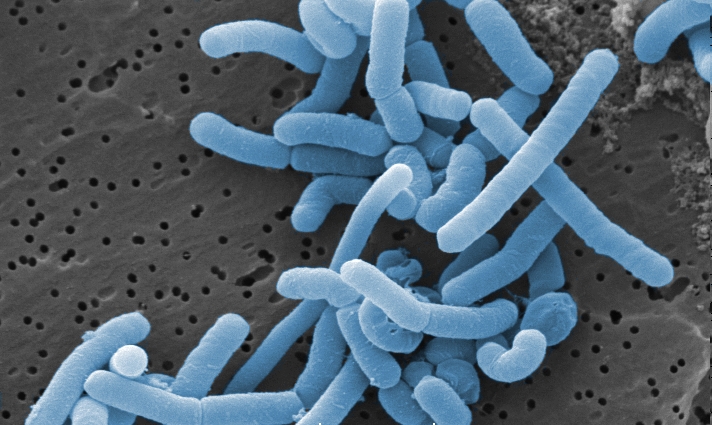
A team at the National University of Singapore tried a different tack. Instead of killing gut microbes, they rebuilt one. In a paper published this week in Cell, researchers led by Matthew Wook Chang describe strains of a common gut bacterium reprogrammed to do the liver's failing job from inside the intestine. The bug in question is Lactobacillus plantarum WCFS1, a well-characterized commensal already found in fermented foods and human guts.
Treating a chemistry problem, not a bacterial one
Hepatic encephalopathy is not just about too much ammonia. It also involves an imbalance in amino acids, with branched-chain amino acids running low and others, like glutamine, mismanaged. So the group engineered two versions of the bacterium, each aimed at a different part of the tangle.
One strain couples ammonia assimilation to the production of branched-chain amino acids. It grabs ammonia out of its surroundings and, in the same metabolic breath, uses it to build the amino acids that patients are missing. The second strain leans on L-glutamine metabolism to cut down how much ammonia gets generated in the first place. Together they attack the problem from two directions: mopping up the toxin and rebalancing the amino acids that go haywire alongside it.
Tenfold less ammonia, and calmer mice
The numbers from the animal work are what make this interesting. Across two preclinical mouse models of hepatic encephalopathy, the engineered strains lowered systemic ammonia by as much as tenfold. They restored the balance of branched-chain amino acids and L-glutamine. And the mice behaved better, showing less anxiety-like behavior and improved performance on cognitive tests. This matters because the whole point of clearing ammonia is what happens in the brain, not just the blood.
The comparison the authors draw is pointed. Their engineered bacteria outperformed rifaximin, the antibiotic that is standard care. And they did it without wrecking the rest of the gut. Rifaximin, like any antibiotic, reshapes the microbial community it acts on. The engineered Lactobacillus preserved microbiota diversity. That is a meaningful distinction for a condition patients live with for years, where repeatedly nuking the gut carries its own costs.
How far the mouse data can be pushed
What the study does not do is treat a single human being. This is mouse work, two models, and the leap from rodent guts to human patients is where a lot of promising microbial therapies have stalled. Engineered bacteria have to survive the journey through a real human digestive tract, hold onto their inserted genes, and keep performing without being outcompeted or triggering an immune reaction. The paper shows the strains work in mice and beat a real drug in mice. It does not show they are safe or durable in people, and questions of biocontainment, how you keep an engineered organism from spreading where it should not, remain open for any living therapeutic.
Still, the framing is worth sitting with. Most drugs are fixed molecules. You take them, they act, they clear. A living bacterium is closer to a tiny, self-sustaining factory that can run multiple reactions at once and, in principle, respond to conditions in the gut. The Singapore group treats that as the selling point. Their strains do not just lower one number. They modulate several metabolites at the same time along what the authors call the gut-liver-brain axis, the loop of signals connecting digestion, the liver, and the brain.
Whether that translates to the clinic is the open question, and it is a big one. But as a proof of concept, it reframes what a probiotic could be. Not a vague wellness supplement, but a programmable metabolic tool aimed at a specific, dangerous failure of human physiology.
Aggarwal, N. et al. "Engineered commensals for metabolic modulation of the gut-liver-brain axis." Cell, 2026. doi.org/10.1016/j.cell.2026.03.048
PubMed PMID: 42034052.
Photograph: Dr. Horst Neve, Max Rubner-Institut, CC BY-SA 3.0 de, via Wikimedia Commons.
Comments