


Monoclonal antibodies are among the most precise tools in medicine. They are also among the most expensive and awkward to deliver. Each one has to be grown in vats of engineered cells, purified, kept cold, and injected in large amounts. During the pandemic, antibody drugs for COVID-19 existed, but getting them to people at scale was a logistical headache. A team led by researchers at the Wistar Institute and the University of Pennsylvania asked a different question. What if you skipped the factory and let the body make the antibody itself?
Their answer, published on 21 October in Nature Medicine, is a small phase 1 trial that hands the manufacturing job to a person's own muscle. Instead of injecting a purified antibody, the researchers injected a ring of synthetic DNA carrying the instructions to build one. The cells read those instructions and started churning out the protein.
Two antibodies, written into a plasmid
The DNA cocktail encoded modified versions of tixagevimab and cilgavimab, the two neutralizing antibodies that made up AstraZeneca's Evusheld. Volunteers received the plasmid DNA by intramuscular injection, followed by a jolt from a device called CELLECTRA that briefly opens pores in nearby cells so the DNA can slip inside. This electroporation step is the trick that makes the whole thing work; naked DNA on its own gets taken up poorly.
Forty-four healthy adults enrolled, and every one of them received at least one dose. The design escalated across dose levels, with some participants getting up to four injections. The primary goals were modest and appropriate for a first human test: was it safe, and did any antibody actually show up in the blood?
On both counts the results were clean. Antibodies were detectable in all 39 participants who could be evaluated. There were no product-related serious adverse events. And across roughly a thousand blood samples checked with validated assays, the researchers found no anti-drug antibodies, meaning the immune system did not turn against the therapy it was being asked to produce.
Slow to build, but it stayed
The headline number is duration. Antibody levels held up across the full 72 weeks of follow-up, close to a year and a half from a course of injections. For a technology meant to replace repeated infusions of a costly biologic, that persistence is the point.
The blood levels tell a more sober story. The peak serum concentration reached about 1.61 micrograms per milliliter. That is real, measurable, and consistent, but it sits well below the concentrations delivered by a standard infusion of manufactured antibody, which land in the tens or hundreds of micrograms per milliliter. The team confirmed that the body-made antibodies bound several SARS-CoV-2 spike variants and neutralized virus in a pseudovirus assay, so the molecules folded and worked. Whether the amount produced is enough to prevent infection in the real world is a question this trial was not built to answer.
What a proof-of-concept does and does not show
It is worth being precise about what happened here. This is, by the authors' account, the first time synthetic plasmid DNA has been shown to drive durable production of a functional antibody cocktail in people. That is a genuine milestone for the platform. It is not evidence that the approach protects against COVID-19, and the specific target matters less than the method. SARS-CoV-2 was a convenient, well-characterized proving ground.
The caveats stack up quickly. Forty-four people is a small group, all healthy adults, followed without a real-world exposure test. The expression levels, while sustained, are low. Electroporation is more involved than a plain shot and needs specialized hardware. And a phase 1 trial is designed to catch obvious safety problems, not rare ones or long-term effects.
Still, the logic behind the effort is hard to dismiss. An antibody you encode as DNA does not need a bioreactor, does not need a cold chain, and could in principle be redirected at a new pathogen by rewriting a sequence. Those are the exact bottlenecks that slowed antibody drugs during the last pandemic. This trial does not prove the platform is ready. It shows the basic biology holds together in humans, which is the first thing that has to be true before any of the rest can follow.
Tebas, P. et al. "Safety and pharmacokinetics of SARS-CoV-2 DNA-encoded monoclonal antibodies in healthy adults: a phase 1 trial." Nature Medicine, 2025. doi.org/10.1038/s41591-025-03969-0
PubMed PMID: 41120767.
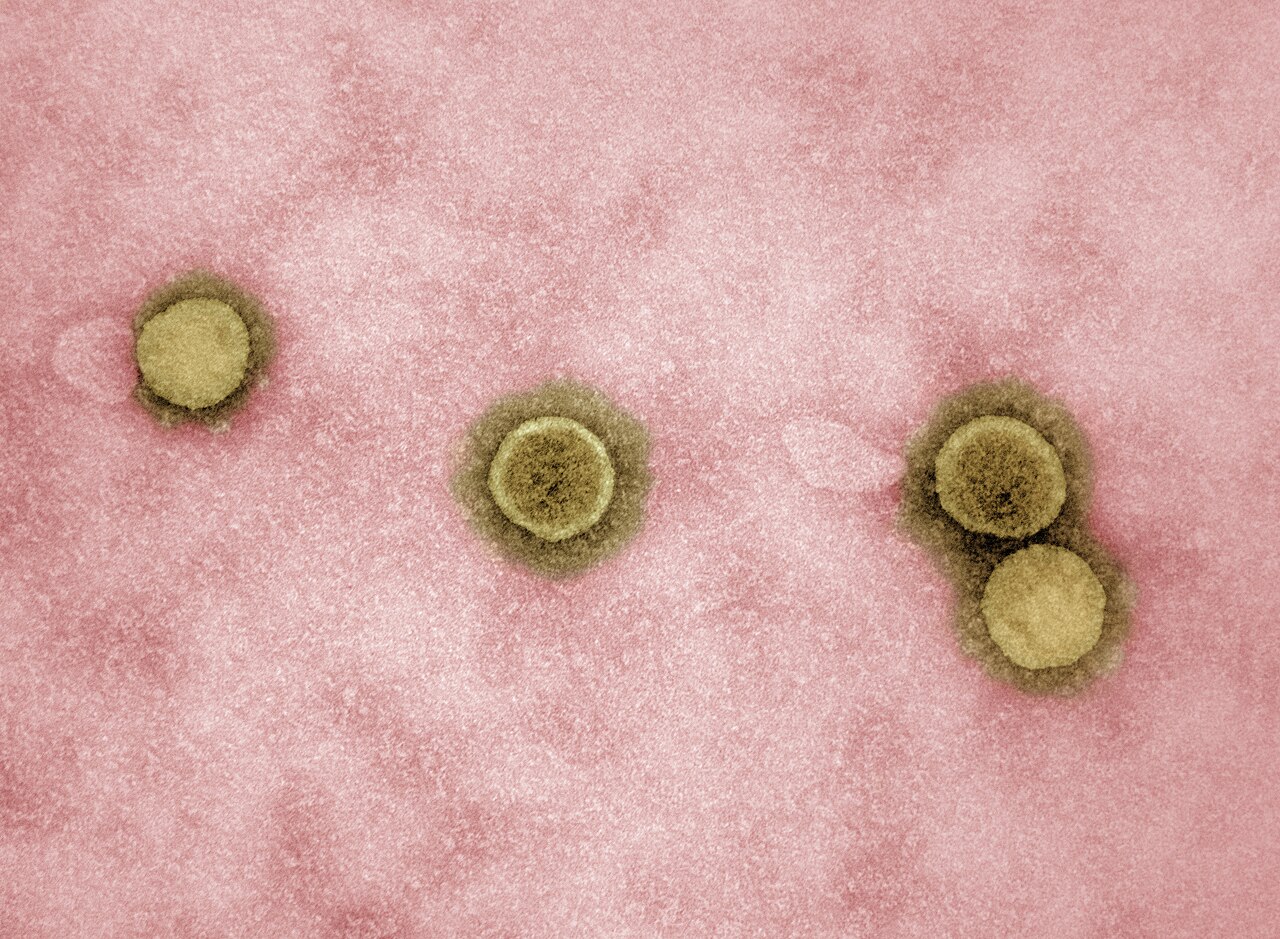
Photograph: NIAID, CC BY 2.0, via Wikimedia Commons.
Comments