


Most of what makes a cancer cell dangerous happens where a T cell can never look. The mutated proteins that drive a tumor sit inside the cell, and antibodies and standard CAR-T cells only read what is on the outside. That leaves a huge fraction of cancer biology off-limits to the immune therapies that have worked best so far.
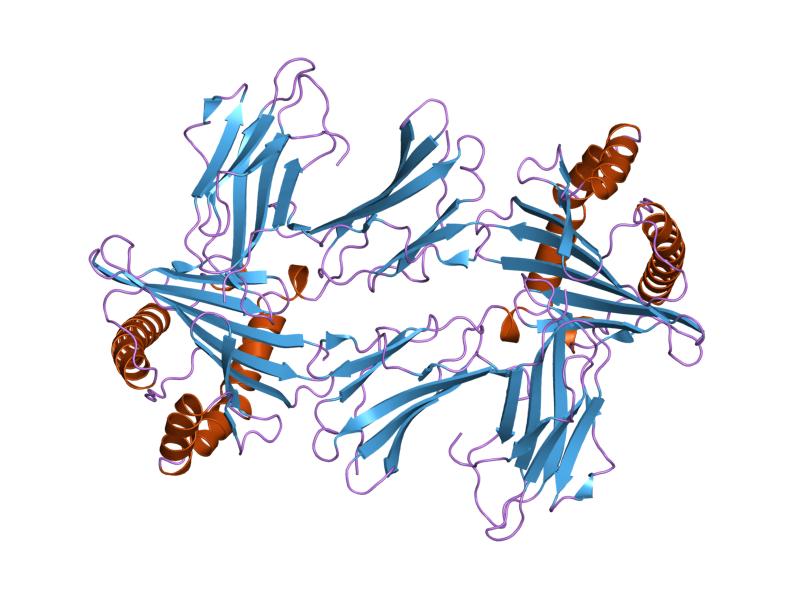
The body has its own workaround. Cells constantly chop up their internal proteins and hang the fragments, short peptides, on a surface molecule called MHC class I. A passing T cell inspects that display and, if a peptide looks foreign or mutated, attacks. The problem for drug designers is that these peptide-MHC combinations are notoriously hard to grab onto with precision. The peptide barely pokes out, and the MHC scaffold underneath is present on nearly every cell in the body. Aim slightly wrong and you build a weapon that hits healthy tissue.
A team led by Bingxu Liu and David Baker at the University of Washington's Institute for Protein Design reported in Science that they can now design proteins to solve this exact problem from scratch. Working with collaborators at Stanford and Memorial Sloan Kettering, they made custom binders for eleven different peptide-MHC targets and turned eight of them into working immune-cell receptors.
Designing a grip for a peptide that barely shows
The tool at the center of the work is RFdiffusion, a generative model that starts from a target's shape and invents a new protein predicted to fit against it. The researchers pointed it at peptide-MHC structures, some solved experimentally, some only predicted by software, and asked it to produce proteins that press hard against the peptide itself rather than the MHC platform beneath.
That distinction is the whole game. A binder that mostly touches MHC would react to any cell, since MHC is everywhere. By forcing the designed proteins to make contact with the outward-facing amino acids of the disease-linked peptide, the team steered them toward reading the part that actually differs between a tumor cell and a normal one. When they tested the designs, the binders could tell apart peptides that differed by only a residue or two.
From a lab protein to a cell that acts on it
A binder in a test tube is not a therapy. To show the designs could do real biological work, the group dropped them into chimeric antigen receptors, the engineered proteins that give CAR-T cells their aim. In this setup the designed binder becomes the business end of the receptor, the part that scans other cells.
For eight of the targets, T cells carrying these receptors switched on only when they met a cell showing the correct peptide. The activation tracked the intended target and largely ignored the wrong ones. That is the behavior you want from a cell therapy: a trigger that fires on the tumor's internal signature and stays quiet elsewhere. Because the peptides on display come from proteins inside the cell, this approach opens a door to intracellular cancer drivers that surface-reading therapies have never been able to touch.
What makes the result notable is less any single binder than the fact that the pipeline is general. The same computational recipe produced specific binders across a range of targets, starting in some cases from a purely predicted structure, without the years of animal immunization and screening that antibody discovery usually demands.
What the study can't say yet
This is a design-and-characterize paper, not a clinical result. The tests ran in cultured cells and biochemical assays. Nothing here has been given to an animal with a tumor, let alone a person, and the gap between a T cell that lights up in a dish and a therapy that safely clears cancer is wide and littered with failures.
Specificity in the lab also has limits. The designs were checked against panels of related peptides, but the human body presents an enormous and shifting collection of peptide-MHC combinations, and a binder that looks clean against a curated set could still cross-react with something the assays never included. MHC also comes in thousands of genetic variants across people, so a binder built for one version may not work for the next patient. And the eleven targets here are a proof of principle, not a finished catalog of the mutations that matter in real tumors.
Still, the direction is clear. Designing proteins that read the peptides on a cell's surface, rather than fishing for antibodies and hoping, turns one of immunology's hardest targeting problems into something closer to an engineering task. If the specificity holds up in tougher tests, it points toward immune therapies aimed at the mutations that were, until now, hidden inside the cell.
Liu B, et al. "Design of high-specificity binders for peptide-MHC-I complexes." Science, 2025. doi.org/10.1126/science.adv0185
PubMed PMID: 40705892.
Photograph: Jawahar Swaminathan and MSD staff at the European Bioinformatics Institute, Public domain, via Wikimedia Commons.
Comments