


Most tools for watching genes turn on and off give you a snapshot. You fix the tissue, stain it, and read out what was happening at that single instant. But cells do not work in snapshots. A neuron might fire, quiet down, fire again, and integrate signals over hours or days. Catching that whole history inside one living cell has been out of reach.
A team led by Lirong Zheng at the University of Michigan built something that gets closer. Writing in Nature, they describe CytoTape, a genetically encoded protein that acts like a molecular ticker tape. It records a cell's gene regulation activity continuously for up to three weeks, at a resolution that can reach the minute scale, without killing the cell to read it.
Writing the log with a growing thread
The core idea is a protein that self-assembles into a long, thread-like filament inside the cell. That filament keeps elongating over time, so its length becomes a clock. Whenever a gene of interest is active, the cell adds a distinguishable marker onto the growing thread. Read the thread later under a microscope and you get an ordered record: this signal was on early, that one came later, this one pulsed in between.
Zheng and colleagues did not stumble onto this filament by luck. They engineered it through computationally assisted rational design, building on an earlier method the group had developed called XRI. The result is what they call a modular protein tape recorder, and modular is the operative word. It is not locked to one readout.
In cultured mammalian cells, CytoTape logged five things at once: the activity of several transcription factors alongside the transcription of specific genes. That multiplexing matters. Gene regulatory networks are not single wires. They are tangles of interacting parts, and watching one component in isolation tells you little about how they coordinate. Recording five in the same cell, in order, starts to reveal the choreography.
What the recordings revealed
The data were not just a technical demonstration. When the team looked at the logs, cells that ended up in different transcriptional states turned out to have different histories written into their tapes. Where a cell landed correlated with what it had experienced and how it had integrated incoming signals over time. The researchers also found that immediate early genes, the fast-responding genes that switch on within minutes of stimulation, showed complicated temporal relationships with each other inside single cells. Those patterns would be invisible to a method that only captures one moment.
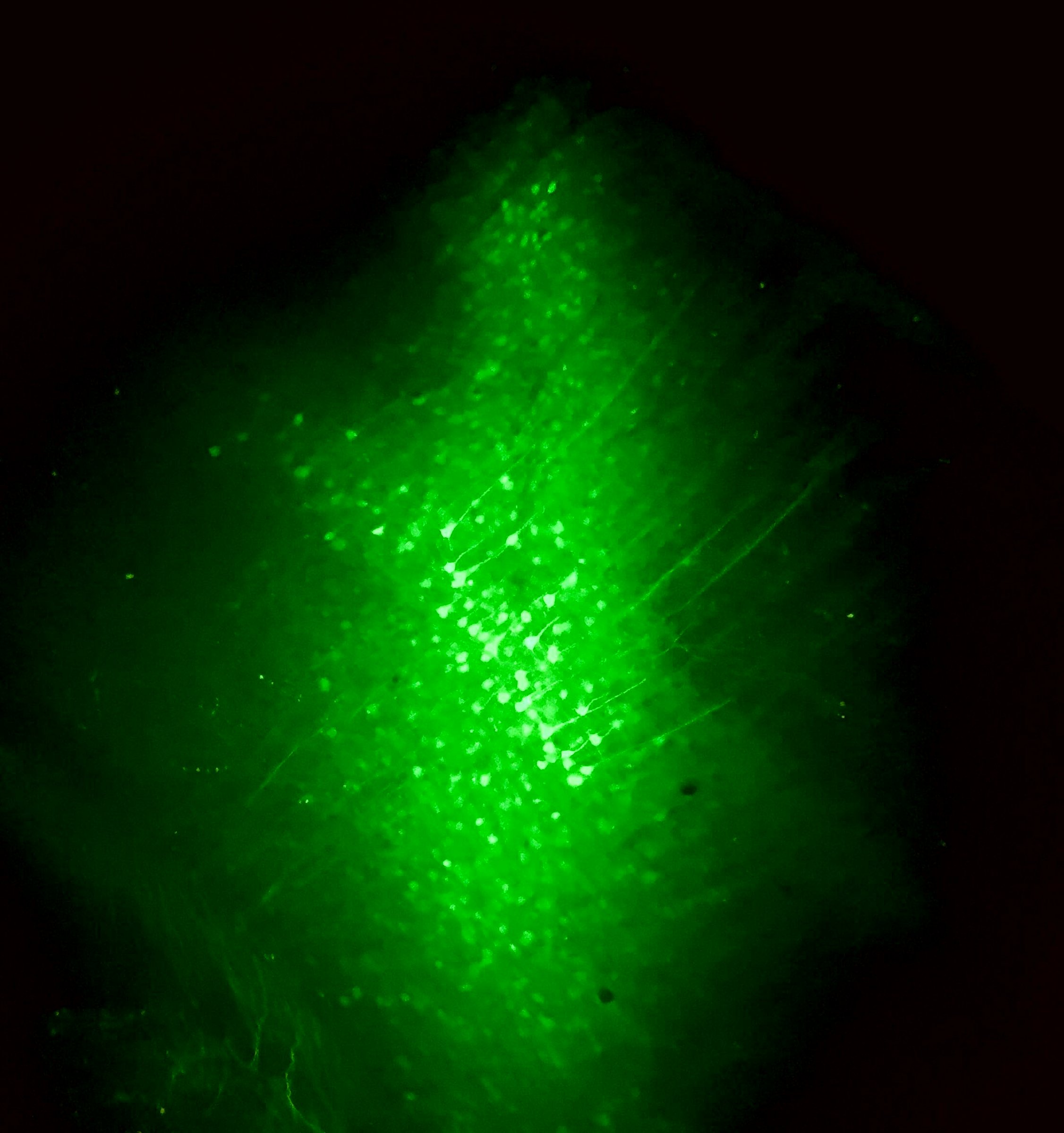
Then they took it into a living brain. A version called CytoTape-vivo recorded gene expression histories in mice over weeks. In one experiment it simultaneously tracked a drug-controlled promoter and an immediate-early-gene promoter across as many as 14,123 neurons in a single animal, spanning several brain regions. That is a lot of cells, each carrying its own multi-week diary of activity, all readable at single-cell resolution.
The honest limits
This is a first demonstration, and it comes with real caveats. The readout is retrospective. You still have to end the experiment and image the tissue to recover what CytoTape stored, so it is not live monitoring in the sense of a fluorescent sensor you watch in real time. The three-week window and minute-scale resolution are impressive, but they are ceilings the authors reached under their conditions, not guarantees for every cell type or every gene. Five simultaneous channels is a big step up, yet gene networks involve far more than five players. And moving from mouse neurons to other tissues, or to human systems, will take its own validation. The paper shows the platform works and is versatile; it does not claim to have mapped any particular network in full.
Still, the direction is worth noticing. Biology has plenty of ways to see where molecules are. It has far fewer ways to see when things happened, in the right order, without freezing the cell first. A protein that quietly writes down a cell's regulatory history and hands it back later is a different kind of instrument. If it generalizes, it could turn questions about timing and causality in gene networks from guesswork into something you can actually read off a thread.
Zheng, L. et al. "Scalable and multiplexed recorders of gene regulation dynamics across weeks." Nature, 2026. doi.org/10.1038/s41586-026-10156-9
PubMed PMID: 41588170.
Photograph: Luisa Demarchi, Ilaria Bertocchi, Alessandra Oberto, CC BY-SA 4.0, via Wikimedia Commons.
Comments