


When a baby was born last year with a rare and often fatal metabolic disease, the usual playbook had almost nothing to offer. The infant could not process the nitrogen that builds up when the body breaks down protein. Left unchecked, ammonia climbs in the blood and poisons the brain. About half of children with the most severe form die in early infancy. So a team at the Children's Hospital of Philadelphia and their collaborators tried something that had never been done for a named patient: they built a gene-editing drug from scratch, just for this one child, and got it into his body before he turned nine months old.
The case, reported by Kiran Musunuru and colleagues in the New England Journal of Medicine, is being read as a marker of where genetic medicine is heading. Not a therapy for thousands. A therapy for exactly one person, assembled at a speed that would have sounded reckless a few years ago.
The disease and the fix
The child had severe carbamoyl-phosphate synthetase 1 deficiency, usually shortened to CPS1 deficiency. The CPS1 gene makes an enzyme that kicks off the urea cycle, the chemical assembly line the liver uses to convert toxic ammonia into urea that leaves the body in urine. When the gene carries the wrong instructions, that first step stalls. Families manage the condition with a punishingly low-protein diet and drugs that mop up nitrogen, and even then a single infection can tip a child into a dangerous crisis.
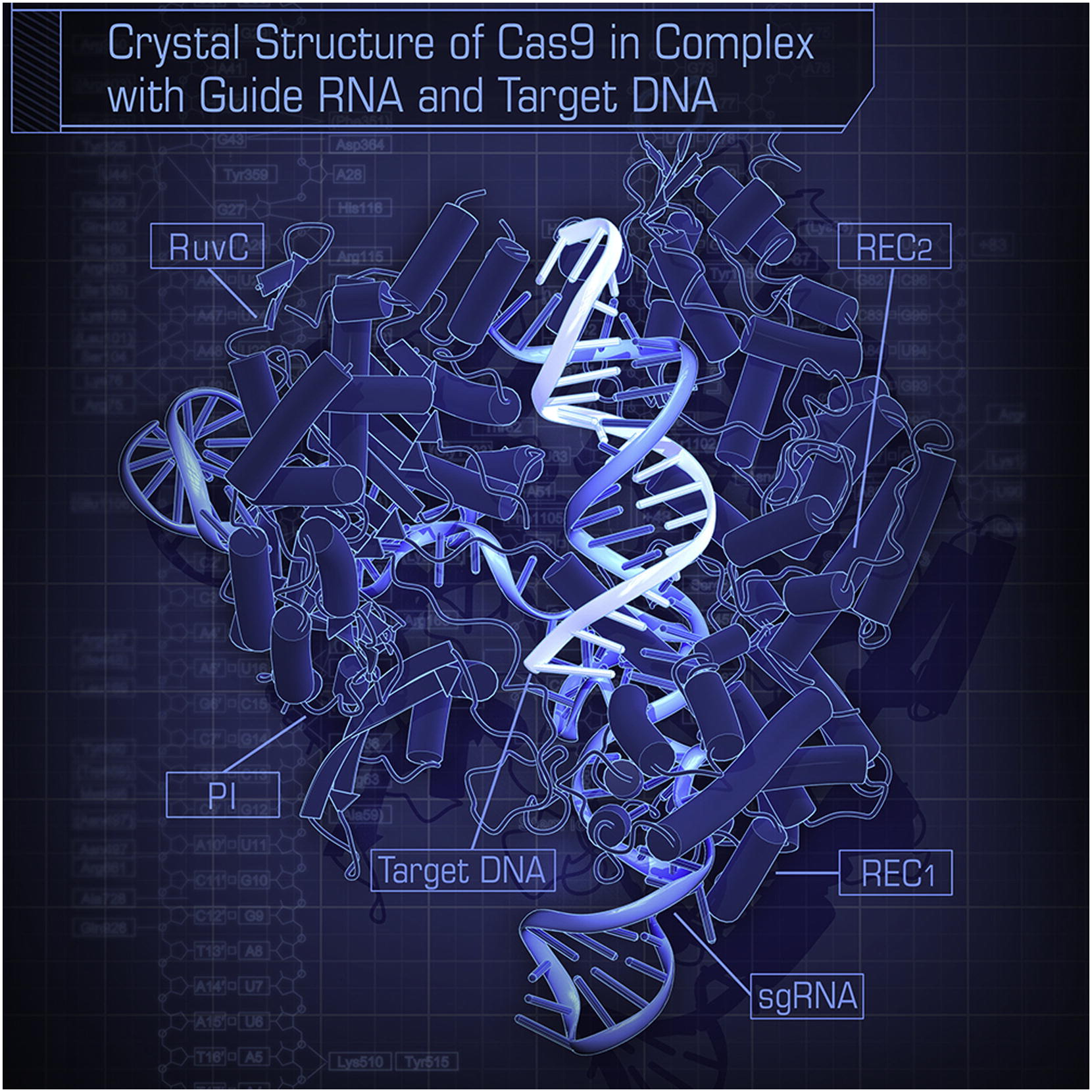
The team did not cut the gene or replace it. They used base editing, a technique that rewrites a single letter of DNA without slicing the double helix in two. A base editor is built on a disabled version of the Cas9 protein, the same search tool used in standard CRISPR, but instead of a molecular scissor it carries an enzyme that chemically converts one DNA letter into another. The editor was packaged inside lipid nanoparticles, the tiny fat bubbles that carried the COVID mRNA vaccines, and those particles home to the liver when infused into the blood. That matters here because the liver is exactly where the broken urea cycle lives.
What happened after the infusions
The infant received two infusions, at roughly seven and eight months of age, after regulators signed off on the bespoke therapy. In the seven weeks after the first dose, his care team was able to feed him more dietary protein and cut his nitrogen-scavenger medication to half the starting amount. He got through several viral illnesses during that window, the kind of ordinary childhood infections that can be perilous for these patients, without an unacceptable reaction. The authors report no serious adverse events.
What impressed people in the field was less the biology than the calendar. The diagnosis came in a newborn, and the team began developing the customized therapy immediately. Designing the editor, manufacturing it to a standard fit for a human infant, running safety checks, and clearing the regulatory path all happened in a matter of months. That compressed timeline is the part that could generalize, even if this exact drug never treats anyone else.
What the study can't say yet
This is one child, followed for a short time. A single case with a few weeks of data cannot tell you how durable the correction is, whether the benefit holds as the child grows, or whether rare side effects show up later. The authors say plainly that longer follow-up is needed to judge both safety and efficacy. Base editors can also make unintended edits elsewhere in the genome, and while the team screened for that, no test rules out every off-target change over a lifetime.
There is also the hard question of cost and access. A therapy designed, manufactured, and approved for one patient does not slot neatly into a health system built around drugs made for large populations. The scientific proof that a personalized editor can be built quickly is not the same as a path to doing it affordably, or often.
Still, the direction is hard to miss. For decades, a diagnosis of a severe single-gene disease came with a fixed set of options, most of them about managing decline. Here a team read a specific child's mutation and answered it with a drug written to match. It worked well enough, fast enough, to let a baby eat more protein and take less medicine during the most dangerous months of his life. Whether that becomes a routine of medicine or stays a rare feat of coordination is the open question the next few years will settle.
Musunuru et al. "Patient-Specific In Vivo Gene Editing to Treat a Rare Genetic Disease." The New England Journal of Medicine, 2025. doi.org/10.1056/NEJMoa2504747
PubMed PMID: 40373211.
Photograph: Hiroshi Nishimasu, F. Ann Ran, Patrick D. Hsu, Silvana Konermann, Soraya I. Shehata, Naoshi Dohmae, Ryuichiro Ishitani, Feng Zhang, and Osamu Nureki, CC BY-SA 3.0, via Wikimedia Commons.
Comments