


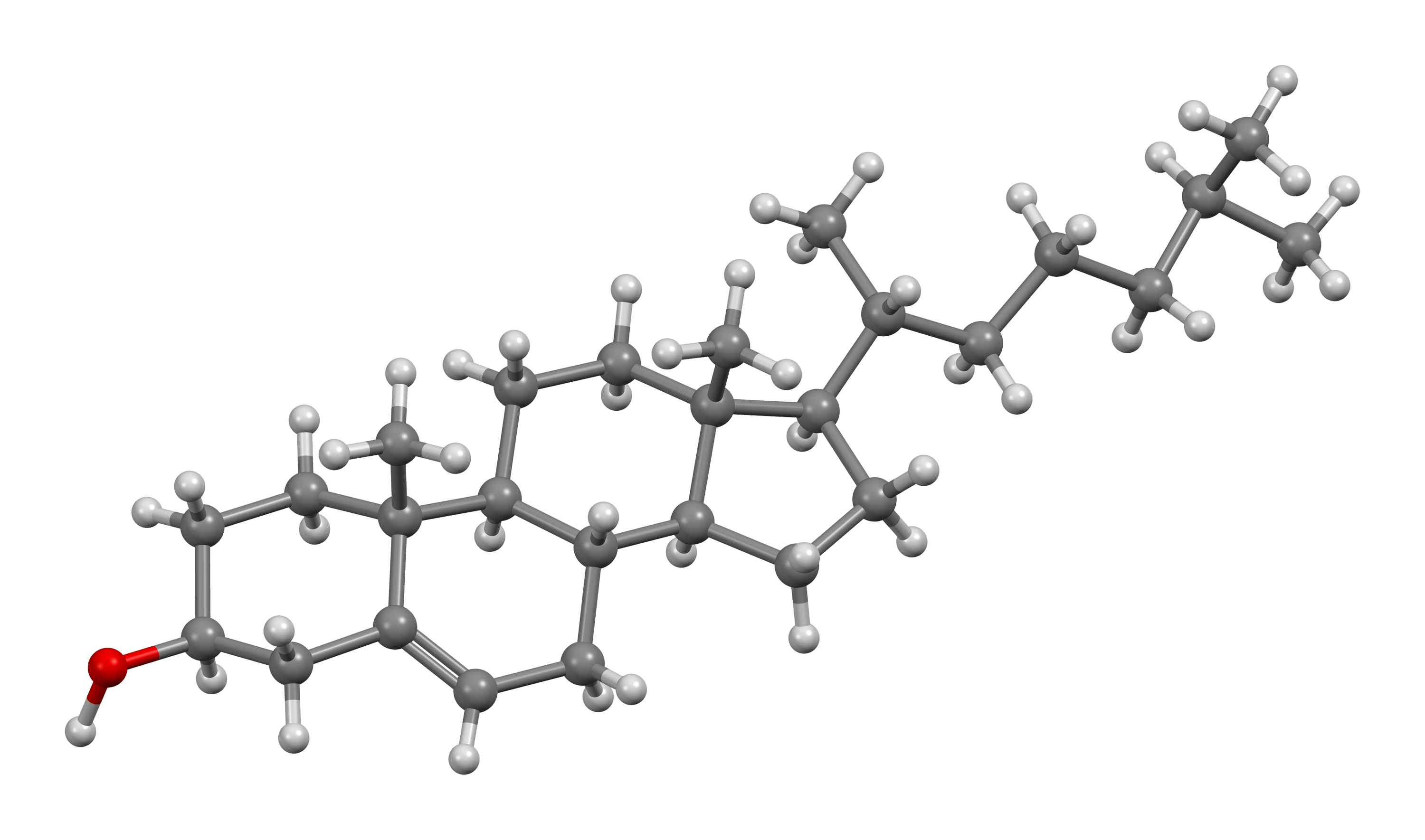
Most cholesterol drugs work like a stuck accelerator. You take a pill or an injection, and it pushes your LDL down whether your body needs the push that day or not. A statin does not know if you ate a salad or a plate of bacon. It just keeps working at whatever dose you were prescribed until the next appointment.
A team at ETH Zurich decided to try something closer to how the body actually runs itself. Instead of a fixed dose, they built a genetic circuit that behaves like a thermostat. It measures how much cholesterol is around, and only acts when the number gets too high. They call it CHARM, short for cholesterol homeostasis and regulation module, and in mice it held cholesterol steady for months.
Borrowing the cell's own cholesterol sensor
Cells already keep tabs on cholesterol. When there is plenty of it, a protein named SREBP stays parked and quiet. When cholesterol runs low, SREBP travels to the nucleus and switches on genes that make more. The Zurich group, led by Martin Fussenegger, essentially spliced into that native wiring and reversed its logic.
They fused SREBP to a silencing domain called KRAB, turning it into a switch that responds to sterol levels. Then they put a therapeutic gene under the control of the same sensor. When cholesterol is high, the circuit reads that signal and produces a protein that helps clear LDL from the blood. When cholesterol falls back toward normal, the output eases off on its own. There is no external trigger, no pill to remember. The cell senses the problem and responds in real time, which is what makes it a closed loop rather than a one-way drug.
From a circuit to an implant
A clever circuit is not much use if it lives only in a dish. To make it a treatment, the researchers moved CHARM into human cells and sealed those cells inside tiny porous capsules. The capsule lets nutrients, cholesterol signals, and the therapeutic protein pass through, but hides the foreign cells from the immune system, which would otherwise attack them.
They implanted these microcapsules into mice bred to have high cholesterol. The animals' LDL dropped quickly, and here is the part that matters most: it stayed down and stable. Rather than swinging between too high and overcorrected, the mice settled into a steady range and held there over an extended period. The circuit was doing exactly what a thermostat is supposed to do, nudging the system back toward a set point and then holding it.
What the study can't say yet
This is a mouse result, and mice are not small people. Their cholesterol biology differs from ours in ways that have tripped up promising treatments before. A circuit that reads sterol levels cleanly in a mouse may need retuning for the noisier signals in a human bloodstream.
Then there is the implant itself. Encapsulated-cell therapies have a long and frustrating history. Capsules can get walled off by scar tissue over time, and the cells inside can lose steam. The paper shows durable control across the study window, but that is not the same as years of reliable function in a patient. Longevity, immune tolerance, and what happens when a capsule eventually fails are all open questions. And any therapy built from engineered human cells faces a heavy regulatory road before it goes anywhere near a clinic.
It is also worth being honest about the target. Cheap, effective cholesterol drugs already exist, and newer antibody treatments hit LDL hard. A living implant has to justify its complexity against those options, most likely for people who do not respond well to standard care or who struggle to keep up with regular dosing.
Why the approach is the real news
The specific goal here is cholesterol, but the interesting idea is the design pattern. CHARM is a proof that you can wire a cell to sense a metabolic signal and respond with a matched therapeutic output, all without a doctor or a device in the loop. That template could in principle be pointed at other conditions where the body's own set point drifts, from blood sugar to hormone levels.
Fussenegger's lab has spent years building these designer-cell systems, and each one chips away at the same question: can we hand some of the moment-to-moment work of medicine back to the body, done by cells that measure and adjust the way healthy tissue already does? A thermostat for cholesterol is a small answer. It is also a real one.
Unal et al. "A closed-loop cholesterol shunt controlling experimental dyslipidemia." Cell Metabolism, 2025. doi.org/10.1016/j.cmet.2025.08.011
PubMed PMID: 40972574.
Photograph: Ben Mills, Public domain, via Wikimedia Commons.
Comments