


The usual way to check whether a malaria drug is working is to smear a drop of blood on a glass slide and look for parasites under a microscope. It is cheap, it is fast, and it has been the standard for a century. It also misses a lot. A slide reader can walk right past an infection that is simmering below the threshold their eyes can catch. So when a lab-made antibody called CIS43LS looked protective in an earlier trial in Mali, one honest question stayed open: had it merely kept infections low, or had it actually stopped them?
A team led by researchers at the U.S. National Institute of Allergy and Infectious Diseases went back to the same trial and answered that question with a far sharper tool. Their report, published in Nature Medicine, used a PCR test roughly 2,000 times more sensitive than the microscope. The picture it returned was cleaner than anyone had a right to expect.
What the antibody does
CIS43LS is not a vaccine. A vaccine teaches your own immune system to make protective molecules. This is the protective molecule itself, manufactured and dripped in through an IV. It is a monoclonal antibody, meaning every copy is identical and aimed at one target: a protein called circumsporozoite protein that coats the sporozoite, the needle-thin form of Plasmodium falciparum that a mosquito injects when it bites. The antibody grabs the sporozoite in the skin and bloodstream, in the narrow window before it reaches the liver and multiplies. Catch it there and the infection never gets going.
The trial enrolled 330 healthy adults in Mali and split them three ways: a placebo, a 10 milligram-per-kilogram dose, or a 40 milligram-per-kilogram dose, each as a single infusion. Everyone got a course of standard antimalarial pills first to clear any lurking parasites, so the clock started with clean blood. Then the researchers followed them through a full six-month rainy season, when transmission peaks, collecting dried blood spots every two weeks.
The numbers the microscope had hidden
Across more than 5,000 blood spots run through the sensitive assay, the high dose prevented 87 percent of infections over six months. The lower dose came in at 77 percent. These are not "fewer symptoms" figures. Because the PCR test can see parasites the microscope cannot, an infection that scores negative here is genuinely absent, not just quiet. That is the difference between suppressing disease and blocking it outright, and it is the result the earlier slide-based analysis could not deliver.
There was a second finding with a longer reach. Using an assay tuned to detect gametocytes, the parasite stage that a mosquito picks up and carries to the next person, the team saw the antibody cut that stage by 88 percent at the high dose. In plain terms, the people who did not get infected also did not become sources of new infections. An intervention that protects the individual and also chokes off transmission is the kind of thing malaria programs have wanted for a long time.
What the study can't say yet
This was a phase 2 trial in healthy adults, and the honest limits matter. Adults in a malaria-endemic region carry years of partial immunity that infants and young children do not, and children are who die from this disease. A result in Malian adults is a strong signal, not a promise that the same shot works the same way in a two-year-old. The follow-up ran six months, which covers one season but says nothing about the season after that, and antibody levels fade over time. There is also the delivery problem. An intravenous infusion is not a village-clinic procedure, and cost per dose for a manufactured antibody is not trivial. The transmission-blocking result, striking as it is, was a post hoc analysis, meaning the researchers went looking for it after the fact rather than setting out to test it, so it needs its own dedicated trial before anyone leans on it.
None of that dulls the core point. For decades malaria control has rested on bed nets, insecticides, pills, and more recently two modestly effective vaccines. A single antibody infusion that delivers season-long, near-sterile protection is a genuinely different lever. The next trials, already underway, will test whether it holds up in the children who need it most, and whether the dose can be shrunk and pushed under the skin rather than into a vein. If it does, the humble glass slide will have helped retire itself, having pointed the way to something it could never have measured on its own.
Skinner et al. "Anti-sporozoite monoclonal antibody for malaria prevention: secondary efficacy outcome of a phase 2 randomized trial." Nature Medicine, 2025. doi.org/10.1038/s41591-025-03739-y
PubMed PMID: 40461818.
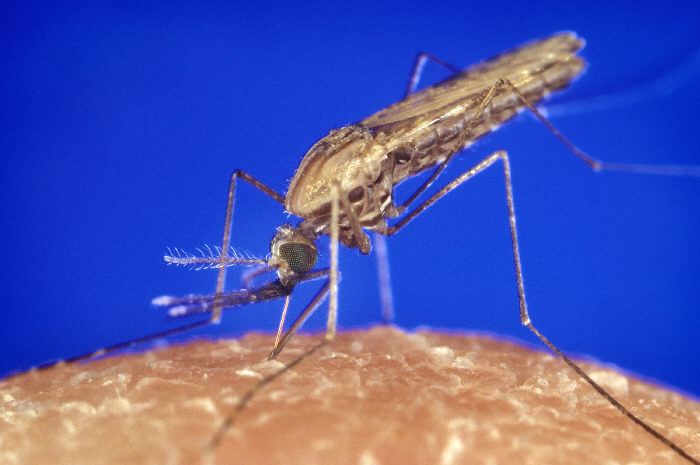
Photograph: CDC/James Gathany, Public domain, via Wikimedia Commons.
Comments