

Gene therapy is supposed to deliver one clean instruction and then fade into the background. A modified virus carries a working copy of a gene into cells, the cells start making the missing protein, and the empty viral shells break down. That is the promise. But for a subset of children treated with adeno-associated virus (AAV) therapies, something goes wrong in the liver. They develop hepatitis, sometimes severe. Doctors have known this happens. They have not known why.
A team led by researchers in the UK went looking for an answer in the one place that could hold it: the liver of a child who did not survive. The child had spinal muscular atrophy type 1, the most severe form, and had been treated with onasemnogene abeparvovec, the AAV therapy sold as Zolgensma. Afterward the child developed substantial liver inflammation. The researchers sequenced the liver tissue in detail, reading both long and short stretches of DNA, and found that the genetic material inside those cells was far messier than the therapy was meant to leave behind.
DNA that should never have been there
Two findings stand out. First, the liver contained sequences from the manufacturing plasmids used to produce the virus. These are circular pieces of DNA that factories use as templates when building AAV particles. They are not supposed to end up in a patient. Here they did, and not as clean copies. The plasmid sequences showed complex structures and signs of recombination, meaning fragments had broken and rejoined in unexpected ways.
Second, the therapeutic vector genomes themselves were badly disrupted. Instead of tidy single copies, the researchers found extensive concatemerization, where many copies link end to end into long chains. They also found numerous fusion junctions where vector DNA had joined directly to the child's own human DNA. So the picture inside the liver was not one gene delivered cleanly. It was a tangle of stitched-together viral, plasmid, and human sequence.
An uninvited virus
There was one more thing in the tissue. The sequencing picked up human betaherpesvirus 6B, a common virus that many people carry silently and that can reactivate when the immune system is stressed or suppressed. Whether it played any role in the liver damage is an open question. Its presence matters because AAV concatemers can form more readily in the company of helper viruses, and a herpesvirus in the liver is exactly the kind of guest that could nudge that process along.
Put together, the results sketch a plausible chain of events. Contaminating DNA and a helper virus create conditions where vector genomes recombine, pile up into long concatemers, and fuse with the host genome. That abnormal DNA load, rather than the intended gene, may be what provokes the liver.
One patient, and the limits that come with that
The authors are careful, and readers should be too. This is a single case. A study of one child cannot prove that plasmid contamination or the herpesvirus caused the hepatitis, only that both were present alongside heavily rearranged DNA. It is entirely possible that some of these features show up in patients who do fine, and that would change the interpretation. The researchers say plainly that more patients need to be examined before anyone can claim these DNA structures drive toxicity.
What the work does offer is a concrete list of suspects and a method sensitive enough to catch them. Manufacturing purity, helper virus status, and the tendency of vector genomes to recombine in the liver are now things that can be measured directly in tissue rather than guessed at. For a field treating more children every year with one-time AAV doses, knowing where to look is its own kind of progress. The next step is to look in many more livers and find out which of these findings are the cause and which are just along for the ride.
Buddle, S. et al. "Contaminating plasmid sequences and disrupted vector genomes in the liver following adeno-associated virus gene therapy." Nature Medicine, 2026. doi.org/10.1038/s41591-025-04073-z
PubMed PMID: 41545588.
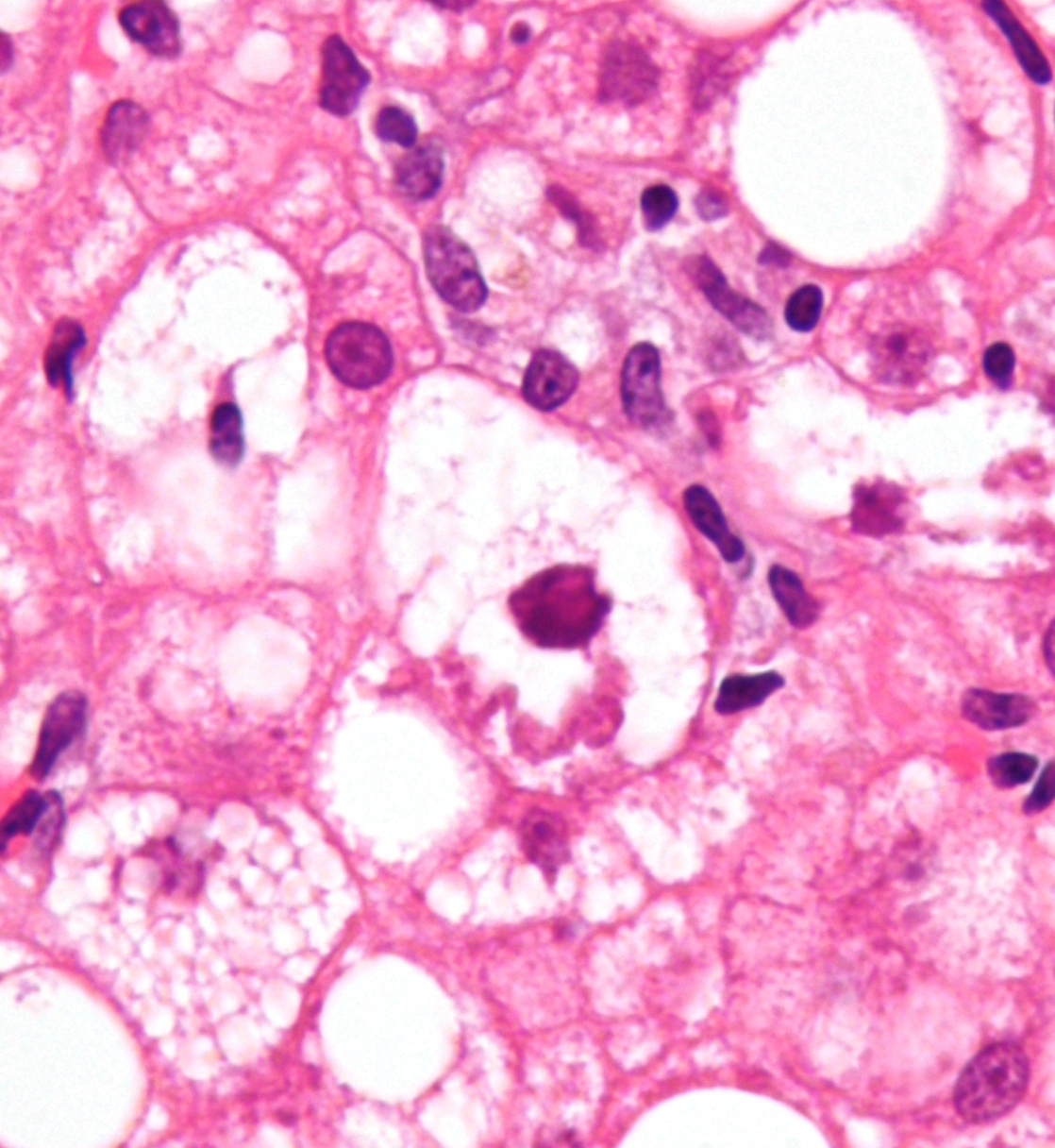
Photograph: Nephron, CC BY-SA 3.0, via Wikimedia Commons.
Comments