Biology's method for moving electrons has looked settled for decades. Proteins are insulators, so conduction requires stepping stones: iron-bearing cofactors, haems or iron-sulphur clusters, spaced closely enough that an electron can tunnel from one to the next. The process is incoherent and thermally activated, the electron losing its phase at every stop. It works over nanometres. It is slow, and it is assumed to be universal.
Cable bacteria have been an awkward exception since their discovery. These filaments, made of thousands of cells joined end to end, carry current across centimetres of seafloor sediment, linking sulphide oxidation at depth to oxygen at the surface. Their cell envelopes contain 20 to 70 protein fibres running the full length of the filament, and those fibres conduct at up to 500 siemens per centimetre, comparable to the inks used in printed electronics. A group at the University of Antwerp has now worked out what is inside them, and it is not a chain of iron cofactors. It is a nickel-organic framework: planar nickel complexes stacked into nanoribbons that run unbroken down the fibre, a structure with no precedent in biology and a close resemblance to materials chemists synthesise on purpose.
Why it matters: Bio-based electronics has been stuck because biological materials do not conduct well enough to compete with metal inks. This describes a biological design that does, and explains why.
The work, by Meysman et al., appears in Nature Communications. Stripping filaments of membranes and cytoplasm leaves a fibre skeleton that stays as conductive as the intact cell, which is what makes the structure approachable: whatever carries the current survives the extraction.
Following the nickel
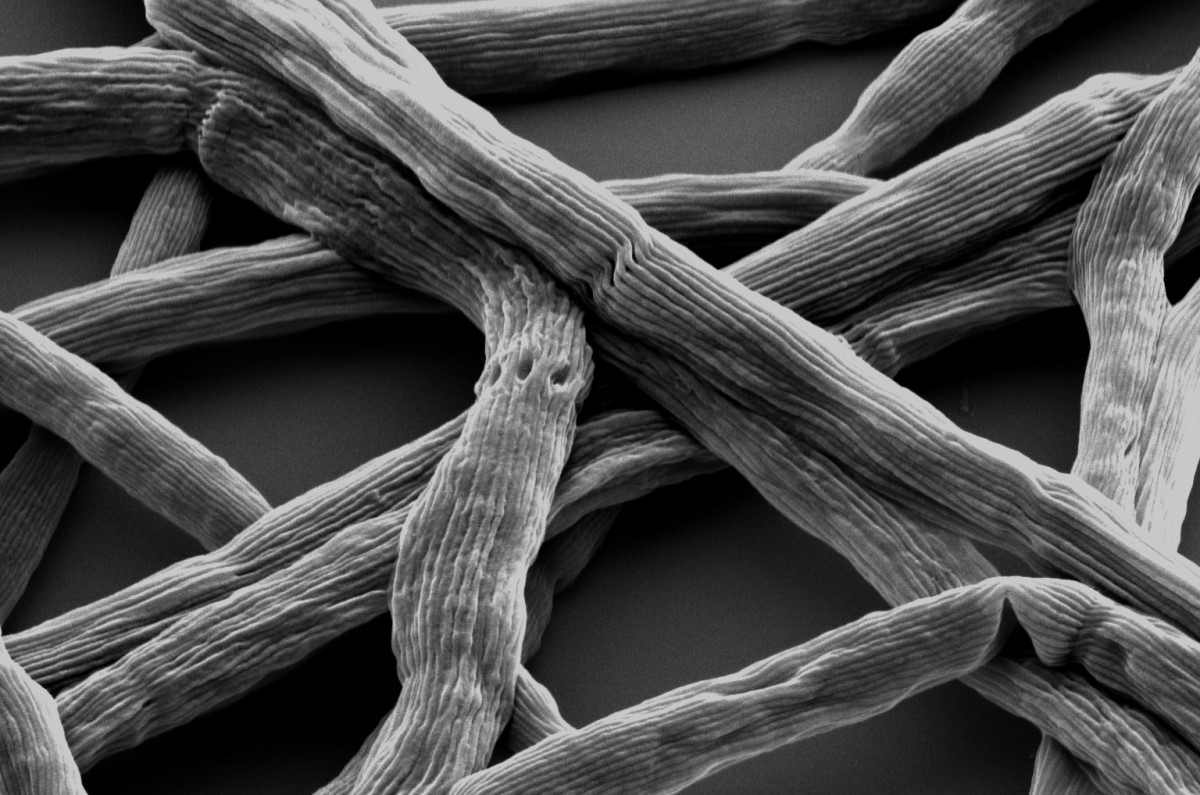
X-ray fluorescence mapping of those skeletons showed parallel lines of nickel spaced 147 nanometres apart, matching the ridges visible under an electron microscope and the 49-nanometre fibres seen in cross-section. The lines ran continuously across cell-cell junctions, which is the first surprising part: the conductor does not stop at cell boundaries. The junctions themselves held a different metal, copper, arranged in a spoked "cartwheel" that connects the fibres to one another and gives the network redundancy.
The quantities are extreme. A single cell holds roughly 18 million nickel atoms, more than 95% of them in the fibres, far above what ordinary bacteria carry and well above even methanogens, which run several nickel-dependent enzymes. Nickel appears in only nine known enzymes, and in every one of them it does catalysis, not electron relay.
Higher-resolution imaging resolved the fibre interiors into about 11 nanoribbons each, roughly 1.4 nanometres across, confined to a central zone about 30 nanometres wide and weaving around one another along the fibre's length. Raman spectroscopy gave the chemical identity: an oligomeric nickel bis-dithiolene complex, matching synthetic coordination polymers rather than any known enzyme cofactor. Magnetic resonance found only 0.12 unpaired spins per nickel atom, which fits a long chain whose radicals sit on the end units, and the measured sulphur-to-nickel ratio of 3 to 4.6 selected one candidate chemistry over another that would have required twice as much sulphur.
From there the geometry falls out arithmetically. Nickel centres sit 0.603 nanometres apart, the fibres hold about 45 of these chains side by side, and dividing among 11 nanoribbons leaves roughly four chains per ribbon, stacked about 0.35 nanometres apart into something 1.4 nanometres tall, which is what the microscope shows. Polarised light confirmed the alignment: the characteristic vibrations appear only when the light is polarised along the fibre, as expected of flat molecules stacked face to face and pointing the same way.
Why the architecture wins
Stacking flat conjugated units creates overlapping electron clouds, so charge is delocalised along and between the chains rather than hopping between isolated islands. The molecules are rigid, with no rotatable bonds, and the surrounding protein shields them from water. Both lower the energy cost of moving an electron, which matches the unusually low reorganisation energy measured previously in these fibres and the fact that their conductance survives below 20 kelvin.
The authors' framing is that this is a one-dimensional metal-organic framework, a class of material that chemists build and biology was not thought to make. As they put it, A metal-organic framework configuration has not been previously seen in biology, but explains the unusual electric properties that are documented for cable bacteria fibres. They note the assembly resembles something familiar: This multi-level, supramolecular structure bears a striking analogy to the braided copper wires used in the power cords of household appliances, and the purpose and advantages may be similar. Cable bacteria move and bend sharply, and a braided conductor stays flexible without breaking.
What the study can't say yet
The headline conductivity figure needs care. The often-quoted 5 to 500 siemens per centimetre was calculated across the whole fibre. If the current in fact runs only through the nanoribbons, the same measurements imply 150 to 15,000 siemens per centimetre for the ribbons themselves. That is a recalculation over a smaller assumed cross-section, not a new measurement, and it inherits every assumption about which parts conduct.
No structure was solved directly. The chemistry is assembled from spectroscopic fingerprints, comparison with synthetic reference compounds and density-functional calculations. The chain length is only loosely bounded, somewhere between 5 and 20 nickel centres, and the authors say the stacking arrangement and layer count need further work. Establishing the sulphur-to-nickel ratio also required subtracting the sulphur contributed by surrounding protein.
"Biosynthetic" here means the bacterium makes it, not that anyone knows how. No enzyme or pathway is identified; the genomic evidence is an expanded set of nickel transporters. Nothing has been synthesised in vitro, and no device was built. The promise for sustainable electronics is an argument from the material's properties, not a demonstration.
Quick questions
What is a metal-organic framework? A repeating lattice of metal atoms joined by organic linkers. Chemists make them for gas storage, catalysis and electronics. Finding one grown by a cell is the unexpected part.
Why does the iron-versus-nickel distinction matter? Iron cofactors are discrete stepping stones and impose hopping, which is slow. A continuous nickel-organic conduit lets charge delocalise instead, which is the only way to reach these speeds over centimetres.
What's the one-line takeaway? The wiring in cable bacteria is a stacked nickel-organic framework running unbroken along the filament, an architecture borrowed from materials chemistry rather than from the iron-based toolkit biology was thought to be limited to.
Meysman FJR, Smets B, Hidalgo-Martinez S, et al. "Highly efficient long-range conduction through a biosynthetic nickel-organic framework." Nature Communications, 2026;17(1). doi.org/10.1038/s41467-026-76989-0
PubMed PMID: 42680761.
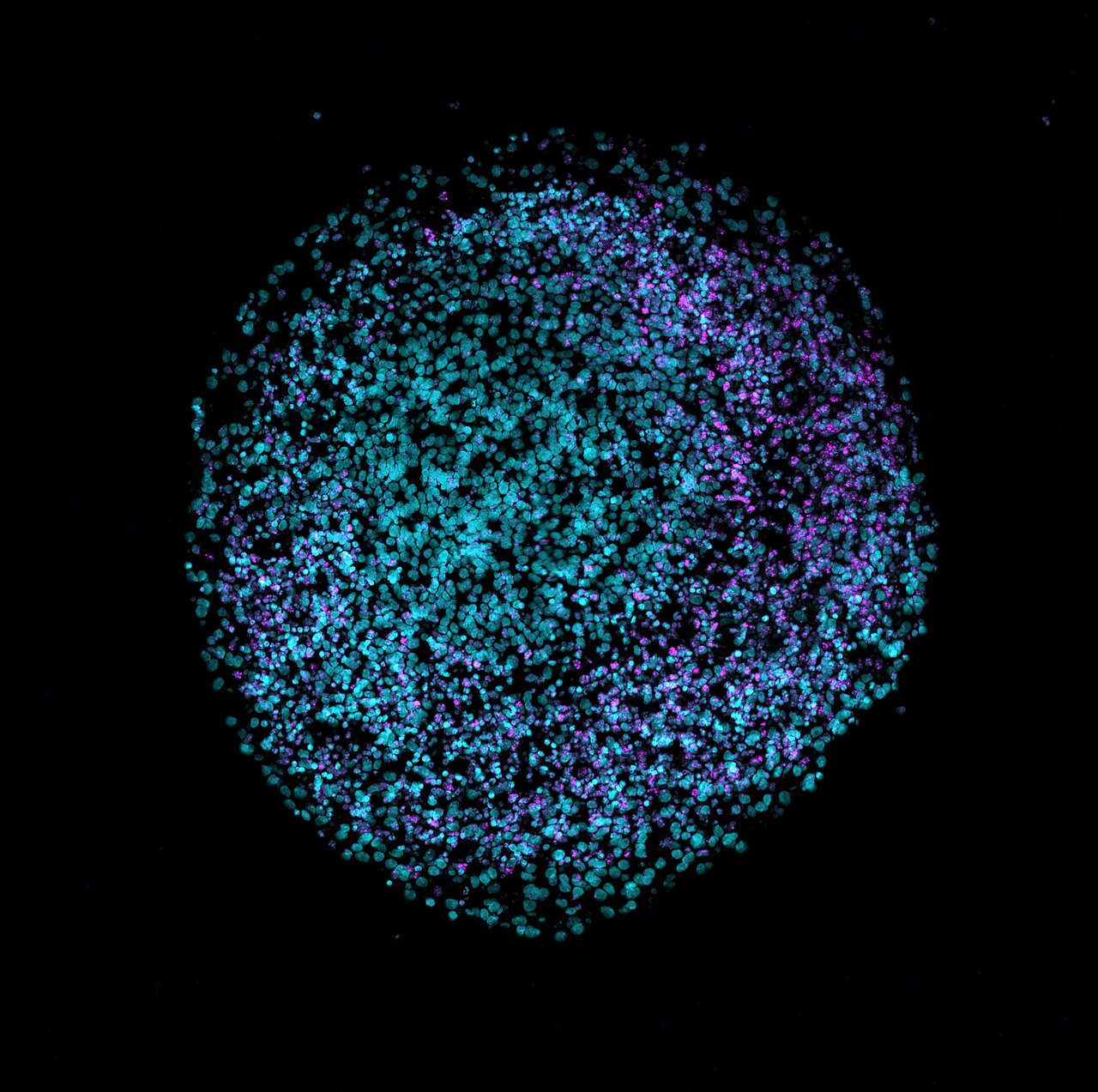
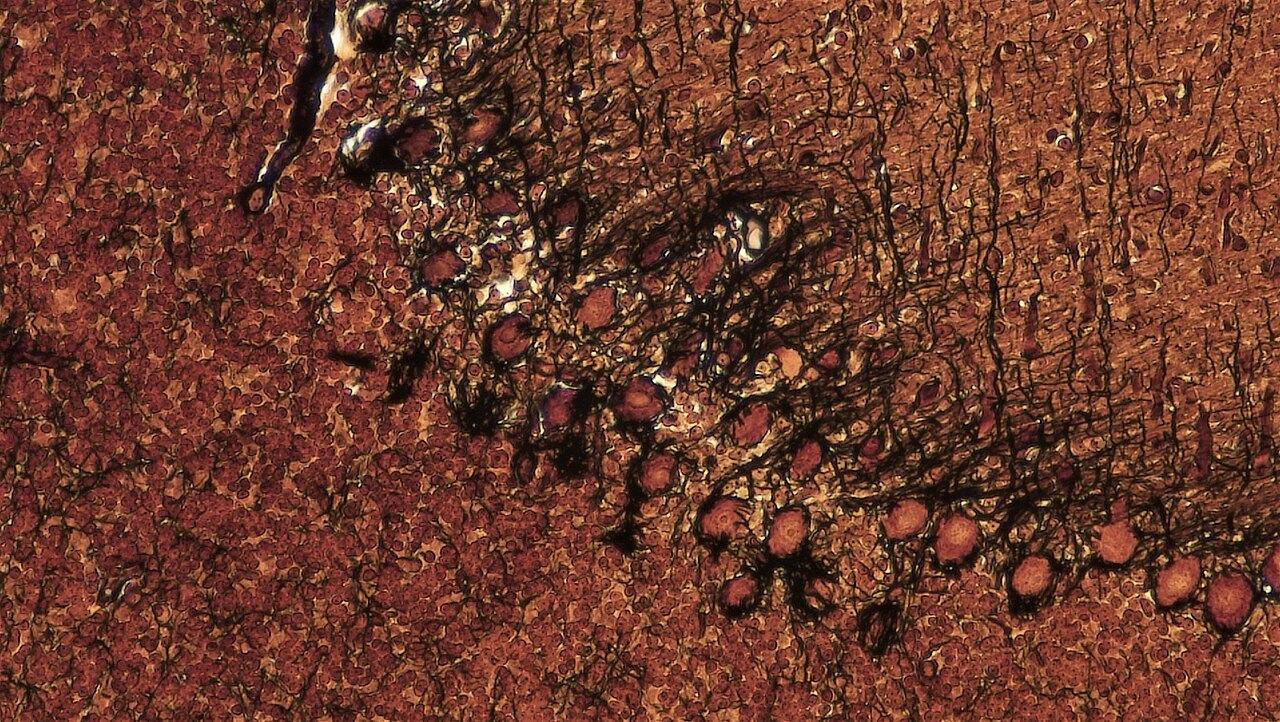
Image: Candidatus Electronema, a cable bacterium. Pia B. Jensen, Aarhus, CC BY 4.0, via Wikimedia Commons.
Comments