


Most gene editing to date has been a business of small corrections. Swap one letter, patch a short stretch, snip out a few bases. That works when a disease traces back to a tiny typo. It falls apart when the problem is structural: a gene sitting in the wrong orientation, a regulatory region that needs to go, a repeat that has ballooned to hundreds of copies. For those, you want to move DNA in bulk. A team at the Arc Institute and collaborators in Berkeley and Tokyo now report a tool that does exactly that, rearranging up to 0.93 megabases of human DNA in a single programmable step.
The tool is a bridge recombinase. These are RNA-guided enzymes that the same group described earlier as a way to insert, cut out, and flip DNA using a short "bridge RNA" that base-pairs with both the target site and the incoming DNA. Think of the RNA as a set of matching addresses. One end recognizes where in the genome to act, the other end recognizes the cargo. Change the RNA sequence and you change what the enzyme grabs, without touching the protein at all.
From a test tube to the human genome
The earlier work stayed mostly in bacteria and in vitro. Getting a system like this to behave inside human cells is a different problem, because the human genome is vast and the enzyme has many more chances to grab the wrong site. So the researchers went looking through natural diversity and landed on a bridge recombinase ortholog they call ISCro4, then set about making it usable.
Two rounds of engineering did the heavy lifting. They redesigned the ISCro4 bridge RNA guided by how the system works mechanically, and they ran deep mutational scanning on the recombinase itself, testing large numbers of protein variants to see which ones performed. The payoff was an insertion efficiency of up to 20 percent into the human genome and genome-wide specificity as high as 82 percent. That second number matters as much as the first. An efficient enzyme that also lands in the wrong place is not something you want near a patient.
Flipping and deleting, not just adding
Insertion is only one of the three moves. The team also showed the system could invert and excise DNA inside the same chromosome, mobilizing up to 0.93 megabases. A megabase is a million base pairs, which is a large fraction of a typical gene neighborhood. Being able to flip or remove a block that size in one shot is the part that separates this from letter-by-letter editing.
They also ran a proof of concept aimed at disease. Working on plasmids rather than in the genome directly, they used the system to excise gene regulatory regions and repeat expansions of the kind that drive certain inherited disorders. Repeat expansions, where a short DNA sequence gets copied far too many times, sit behind conditions like Huntington's disease and some forms of muscular dystrophy. Cutting the whole expanded stretch out, rather than trimming it, is an appealing idea. It is also still early.
What this does not yet show
A few things are worth keeping in view. The repeat-expansion and regulatory-region results were done on plasmid DNA, a controlled stand-in, not on those sequences in their real chromosomal setting. The headline efficiency of 20 percent means most target cells were not edited, which is fine for research but far from a therapeutic bar. And 82 percent specificity, impressive as it is for a system operating over the whole genome, still leaves off-target activity that would need careful accounting before anyone talks about the clinic. The authors frame this as defining strategies for optimal use, which is honest. This is a capable new instrument, not a finished therapy.
Still, the direction is clear. If single-base editors gave biologists a fine-tipped pen, bridge recombinases are closer to cut-and-paste for whole paragraphs. The ability to insert, invert, and delete large DNA segments with one programmable enzyme opens up edits that were awkward or impossible before, from reorganizing chromosomes in the lab to eventually addressing diseases rooted in structure rather than spelling.
Perry, N. T. et al. "Megabase-scale human genome rearrangement with programmable bridge recombinases." Science, 2026. doi.org/10.1126/science.adz0276
PubMed PMID: 40997214.
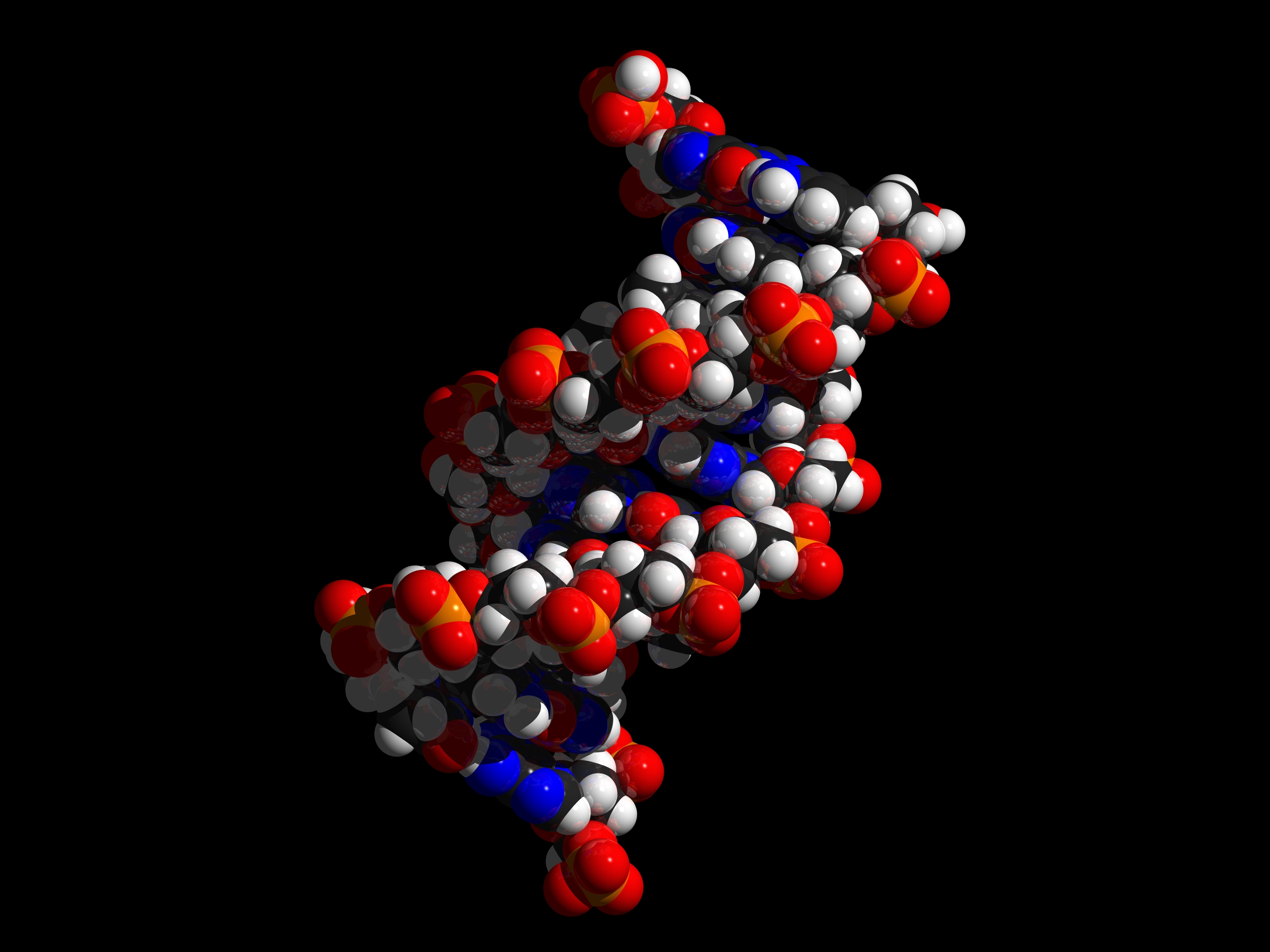
Photograph: Ude, Public domain, via Wikimedia Commons.
Comments