


Pain that outlives its cause is one of medicine's harder puzzles. A sprained ankle heals, the tissue knits back together, and yet for some people the ache never leaves. Neuroscientists have long suspected the problem lives in the nervous system rather than the injured limb. A team at Stanford has now traced a specific wiring diagram that turns a passing hurt into a lasting one, and shown that cutting any wire in the loop switches the pain off.
The study, published in Nature, maps what the authors call a spino-brain-spinal cord circuit. Injury signals leave the spinal cord and climb to the thalamus. From there they reach the primary somatosensory cortex, the strip of brain that registers touch and body position. Instead of stopping there, the signal loops back down: cortex to the lateral superior colliculus, then to a cluster of neurons in the rostral ventromedial medulla that carry mu-opioid receptors, and finally back to the spinal cord where the whole thing began.
That last set of medulla neurons matters. They project down onto the spinal cord and have been linked before to pain becoming chronic. What was missing was the route by which an injury out in a paw actually reaches them. The new work fills in the intermediate stops, node by node.
An off switch that spares ordinary pain
The experiments hinge on a clean contrast. In healthy mice, silencing any single node along the loop did almost nothing. The animals still felt sharp stimuli and pulled away at normal thresholds. Ordinary pain, the useful kind that keeps you from resting a hand on a hot stove, ran through untouched. But in mice with inflammatory or nerve injury, silencing any one node erased the mechanical hypersensitivity. Thresholds returned to normal. A light touch stopped registering as painful.
The reverse held too. Repeatedly activating a node in otherwise healthy mice produced robust, lasting hypersensitivity. A single burst of activity did not do it. The chronic state built up through repetition, which fits the clinical picture of pain that sets in over time rather than all at once.
So the circuit is not the alarm that tells you something hurts right now. It is the machinery that keeps the alarm ringing after the danger has passed.
Why a specific target changes the calculus
This distinction is the part worth sitting with. Most painkillers, opioids included, blunt pain broadly. They dull the sharp and the chronic alike, which is why they come with sedation, tolerance, and the risk of dependence. A circuit that drives chronic mechanical pain while leaving normal nociception alone is a different kind of target. Silence it and, at least in mice, the animal keeps its protective reflexes but loses the maladaptive oversensitivity.
The presence of mu-opioid receptors on the medulla neurons is a telling detail. Those receptors are where morphine and its relatives act. Finding them at a defining node of this loop suggests the body's own opioid system already tunes the circuit, and hints at why opioids can quiet chronic pain even as they cause so much collateral trouble elsewhere.
What the map does and does not promise
The usual restraint applies. This is mouse work, and mouse pain models are proxies. Mechanical hypersensitivity in a rodent paw is measurable and reproducible, but it is not the same as a person's back that has hurt for a decade. Human pain carries mood, memory, and expectation that a reflex test cannot capture. The circuit was mapped with optogenetic and chemogenetic tools that let researchers switch neurons on and off with a precision no drug currently matches. Translating that into a therapy people can take is a long road, and many circuits that looked decisive in mice have stalled on the way to the clinic.
Still, the logic is appealing. Chronic pain has been notoriously hard to treat partly because the field lacked targets that separate it from ordinary sensation. Here is a candidate that does exactly that.
What the study offers is less a cure than a map. It names the stations along a loop and shows that each one is necessary to keep chronic pain going, and that none is needed for pain to work normally. That kind of anatomical specificity is what drug developers need before they can even begin. Whether a molecule can hit one of these nodes selectively in a human nervous system is the open question. For now, the achievement is knowing where to aim.
Wang, Q. et al. "Deconstruction of a spino-brain-spinal cord circuit that drives chronic pain." Nature, 2026. doi.org/10.1038/s41586-026-10296-y
PubMed PMID: 41922770.
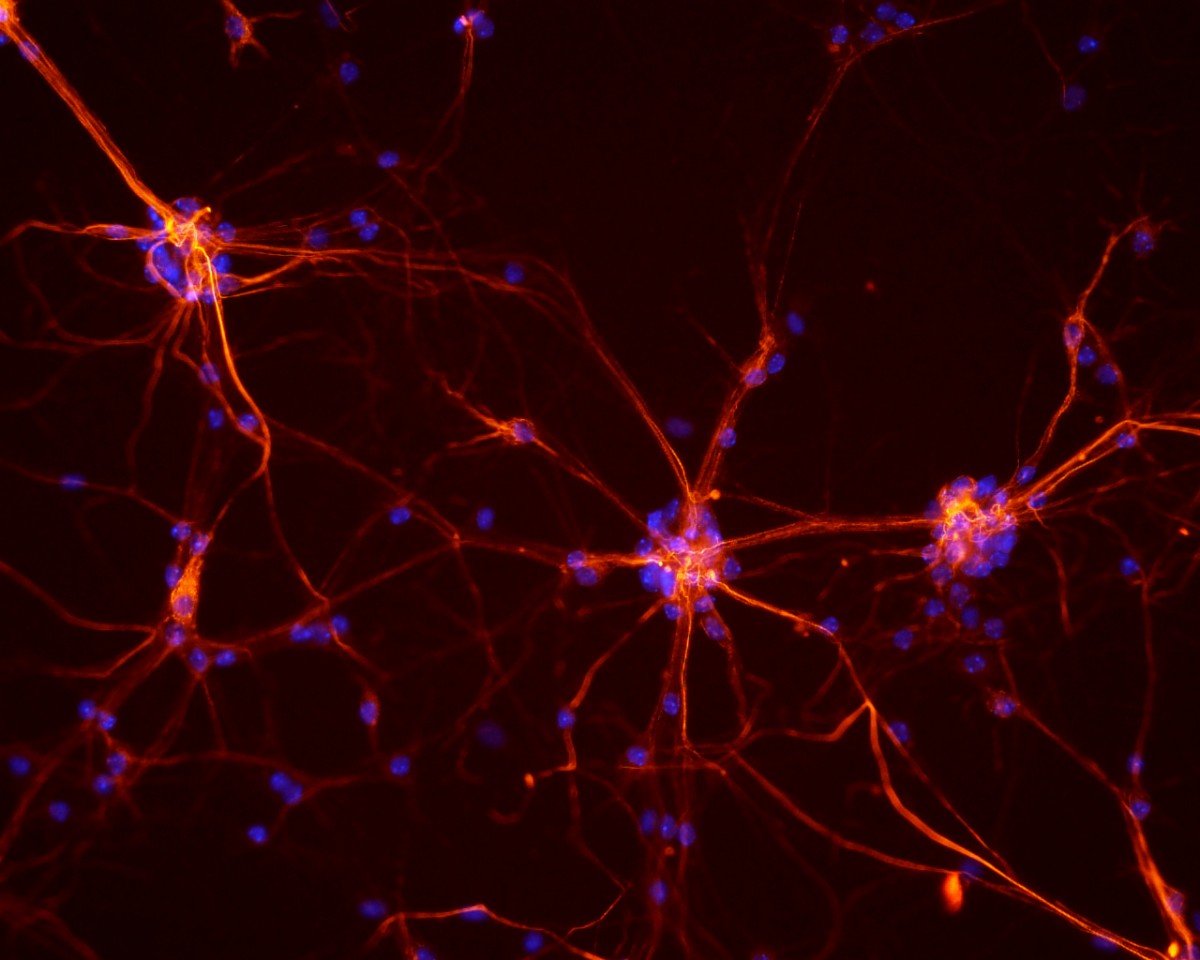
Photograph: S. Jeong, NICHD/NIH Image Gallery, Public domain, via Wikimedia Commons.
Comments