


Most cancer genetics happens one gene at a time. A pathologist orders a panel that checks a handful of usual suspects, then maybe a second test if the first comes back empty, then a third to sort out an ambiguous result. Each round costs tissue and time. A new report in Nature Medicine asks a blunt question: what if you just read the entire tumor genome once, up front, and let a single test answer everything at once?
Researchers at the Netherlands Cancer Institute did exactly that for 888 patients with solid tumors, running paired tumor-and-normal whole-genome sequencing as part of routine diagnostics rather than as a research add-on. The paired design matters. By sequencing healthy tissue alongside the tumor, they could tell which mutations the cancer acquired and which the person was born with.
The test worked, and it worked fast
Sequencing succeeded in 89 percent of cases, with a median turnaround of six working days. That speed is the part clinicians tend to doubt about whole-genome sequencing, and here it held up in a real hospital workflow. Potentially actionable biomarkers turned up in 73 percent of patients. Some pointed to reimbursed, standard-of-care drugs (27 percent), and a larger share pointed toward experimental therapies or clinical trials (63 percent).
Finding a biomarker is not the same as acting on it. Within a year, 40 percent of patients with a reimbursed option and 19 percent of those with an experimental option had actually started that biomarker-informed treatment. And the outcome numbers are where the study gets interesting. Patients who received a treatment matched to their genome had a median overall survival 31 percent longer than those who did not, a difference of 96 days.
The gap widened among people who had not yet had any systemic therapy. In that group, patients on biomarker-informed treatment had not reached median survival by the time of analysis. Those on treatment picked without genomic guidance had a median of 427 days. Those who received no systemic therapy at all had 214 days. Read these numbers carefully, though. People steered toward a matched drug are often healthier and more treatable to begin with, so some of that survival edge reflects who they were, not only what they were given.
Where a single test earns its keep
The clearest wins came in the hardest cases. For 123 patients with cancer of unknown primary, where doctors cannot find where the tumor started, whole-genome sequencing either contributed to a diagnosis or surfaced a reimbursed treatment option in 67 percent of cases. Sixty-eight percent went on to start therapy tailored to the tumor type. For a group that has historically had few good answers, that is a meaningful shift.
The paired-normal approach paid off in another way. Clinically relevant inherited variants, the kind that can raise a family member's cancer risk, showed up in 6.5 percent of patients. Those findings only exist because the team sequenced healthy tissue too. A tumor-only panel would have missed them.
Tally it all up and whole-genome sequencing had a concrete clinical consequence for 41 percent of tested patients. Not a footnote in a report. A change in what happened next.
What the number does not settle
This was a single comprehensive cancer center, and the patients who reached whole-genome sequencing were not a random slice of everyone with cancer. The survival comparisons are observational, so they show association, not proof that the sequencing itself extended anyone's life. The 11 percent of failed cases are a real limit, usually tied to samples with too little tumor or degraded DNA. And a treatment target found on paper still depends on a drug existing, a trial having open slots, and an insurer agreeing to pay. Roughly two-thirds of the actionable findings pointed to experimental options, which are not available to everyone.
Still, the direction is hard to ignore. The debate over genomic testing in oncology has long been whether a broad, expensive readout beats a stack of cheaper targeted assays. This study puts a real workflow behind the theory: one test, a six-day wait, and a documented change in care for four in ten patients. According to PubMed, the work appears in Nature Medicine (doi.org/10.1038/s41591-026-04280-2).
van Putten, J. et al. "Real-world clinical utility of tumor whole-genome sequencing in solid cancers." Nature Medicine, 2026. doi.org/10.1038/s41591-026-04280-2
PubMed PMID: 41862707.
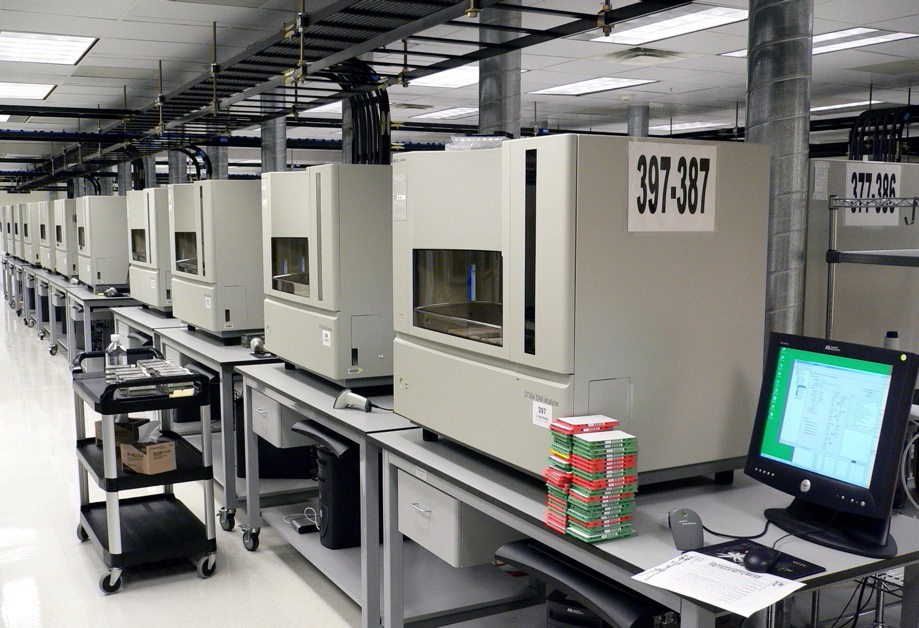
Photograph: Steve Jurvetson, CC BY 2.0, via Wikimedia Commons.
Comments