Cut a tropical tree in the right place and its trunk keeps a diary. Each year of growth lays down a band of wood, wide in good years and pinched in bad ones. For a long time it was assumed that tropical trees did not keep this diary at all, because the seasons near the equator seemed too blurred to leave clean annual rings. That assumption was wrong, and a large group of researchers has now used those hidden rings to ask a question that hangs over the whole climate conversation: when drought hits, how much does a tropical forest stop growing?
The answer, drawn from 483 tree-ring records spanning Latin America, Africa and Asia, is smaller than many expected. Averaged across the driest 10 percent of years since 1930, stem growth fell by about 2.5 percent. That is a real dip, but it is a nudge, not a collapse. The work was published in Science in late July by Pieter Zuidema of Wageningen University and more than 140 collaborators, one of the largest coordinated efforts ever assembled in tropical dendrochronology.
Reading the wood
Tree rings are one of the few ways to see growth over the long term without a satellite or a decade of patient field visits. A wide ring means the tree added a lot of wood that year; a narrow one means it barely grew. Because wood is roughly half carbon, ring width is also a rough ledger of how much carbon dioxide the tree pulled out of the air and locked into its trunk. That makes these records a direct line into one of the biggest uncertainties in climate science: whether tropical forests will keep acting as a brake on rising CO2 or start slipping.
The team lined up each site's ring record against its history of dry years, then measured how much growth sagged when the rains failed. Two patterns stood out. First, the growth dip rarely lingered. Trees that lost ground during a drought tended to bounce back the next year, and strong growth in wet years helped make up the difference. Second, the pain was not spread evenly. At the hottest and driest sites the declines were steeper, sometimes past 10 percent, and conifers such as pines and their relatives took a harder hit than the broadleaf flowering trees that dominate most rainforest.
Why the number matters
Climate models have generally treated drought as a serious threat to the tropical carbon sink, on the logic that thirsty trees grow less and therefore store less carbon. Some projections lean on that link to forecast forests flipping from carbon sink to carbon source as the world dries. A 2.5 percent average dip does not fit that grim picture very well. It suggests that, at least through the droughts of the past ninety years, tropical trees have been more stubborn than the models gave them credit for, holding their growth roughly steady even when water ran short.
That stubbornness has plausible roots. Deep-rooted trees can tap water well below the surface. Many species drop leaves or slow their metabolism to ride out a dry spell, then surge back when the rain returns. The net effect, at least so far, is a forest that wobbles under drought but does not buckle.
What the study can't say yet
Resilience recorded in old wood is not a promise about the future, and the authors are careful on this point. Their records capture droughts that already happened, most of them milder than what a hotter century is likely to bring. A tree that shrugs off a dry year at today's temperatures may not shrug off a longer, hotter one layered on top of an already stressed landscape. The paper's own signal hints at this: the sites that were hottest and driest were also the ones where growth fell most, which is exactly the direction conditions are heading.
There are also limits built into the method. Rings measure trunk growth, not the whole tree. A drought can kill a tree outright, or starve its roots and leaves, without that damage showing up cleanly in a single narrow band of wood. Trees that died in a drought are not there to be cored, so the surviving record may lean slightly optimistic. And ring data is patchy in some regions, with far more chronologies from parts of Latin America than from swaths of central Africa.
What the study does deliver is a rare, physical, ground-level check on an assumption that has been doing a lot of work in climate projections. Tropical forests have absorbed decades of drought with less loss of growth than feared. That is genuinely reassuring, and it is also a warning wrapped in good news: the resilience is real, but it was measured under conditions we are steadily leaving behind.
Zuidema et al. "Pantropical tree rings show small effects of drought on stem growth." Science, 2025. doi.org/10.1126/science.adq6607
PubMed PMID: 40743338.
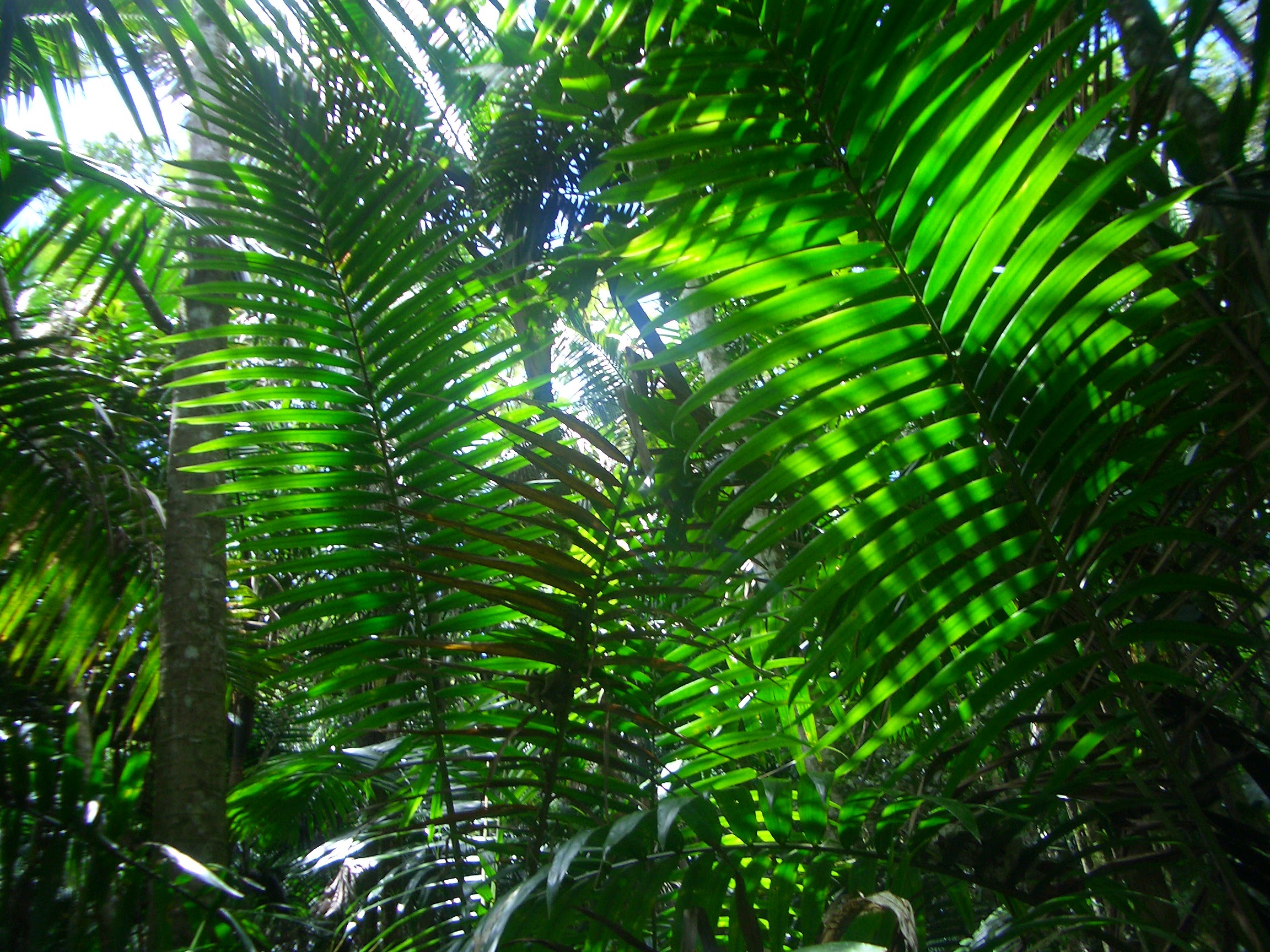
Photograph: EgorovaSvetlana, CC BY-SA 4.0, via Wikimedia Commons.
Comments