
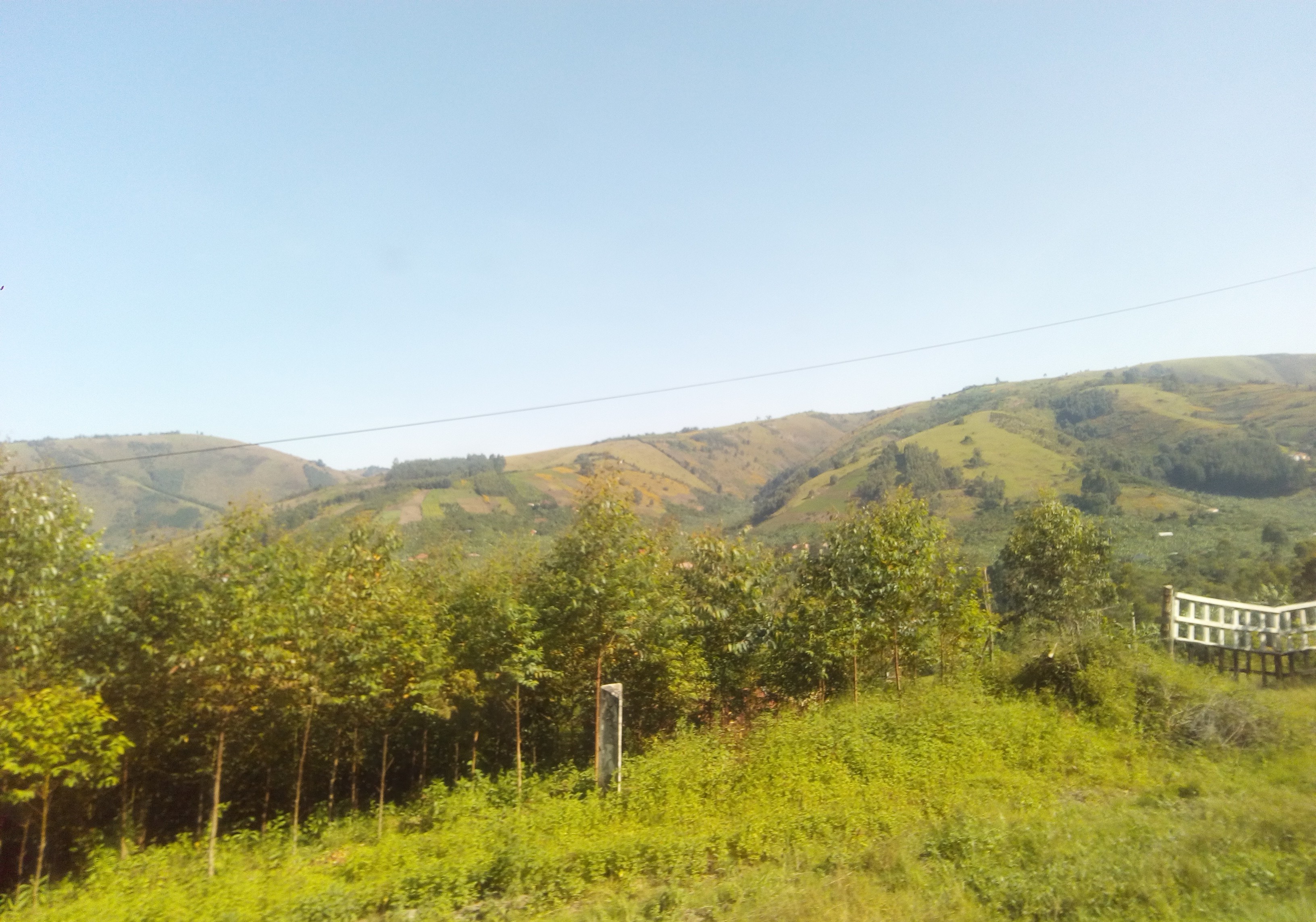
Look out the window of a train in Portugal, along a highway in Uganda, or across a hillside in California, and you may be looking at a tree that has no business being there. Eucalyptus from Australia. Pines from North America. Acacias that jumped continents. A study published this week in Current Biology puts a number on just how common this has become. Of the 50,470 tree species the researchers could track, 26,096 have been carried beyond their native ranges by people. That is 51.7 percent. More than half of the trees we know have been planted somewhere they did not evolve.
The team, led by Yingying Zhu and colleagues, pulled together more than 31 million occurrence records to build the picture. It is one of the first attempts to map tree movement at a global scale rather than country by country, and the scale of the reshuffling is hard to ignore.
Where the trees are going, and why
The flows are not random. South America, North America, and temperate Asia hold the largest numbers of non-native tree species. Europe stands out for a different reason. There, a striking 88.4 percent of the tree species recorded are non-native, the highest proportion anywhere. Most of these introductions happen within continents rather than across them, one region borrowing from its neighbors.
Climate and human wealth both leave fingerprints. Non-native tree richness climbs in warmer, wetter places and in regions with higher social and economic development. That last point matters. It suggests these introductions track roads, plantations, gardens, and trade more than they track any natural process. Where people build and prosper, they bring their favorite trees with them.
The researchers also found that introductions cluster on the evolutionary tree itself. Certain plant families supply far more travelers than others. Of the families that contain globally threatened species, 63.7 percent now harbor at least one threatened tree growing as a non-native far from home.
The traits of a traveler
Some trees are moved far more often than others, and the study picks out what they have in common. Taller species get introduced more. So do species with lower leaf phosphorus and higher specific leaf area, a measure of thin, fast-built leaves. These are the hallmarks of early successional, competitive plants. The kind that grow quickly, grab light, and colonize disturbed ground.
That profile is exactly what worries ecologists. The traits that make a tree attractive to plant, fast growth and easy establishment, are the same traits that make a species good at spreading on its own. The authors note that this combination points to real invasion risk down the line. A tree planted for timber or shade today can become the thicket that crowds out native forest tomorrow.
Notably, the pattern for non-native species differs from what the researchers see for native tree distributions. Native richness follows its own rules. The human-moved trees follow ours.
What the map does not tell you
This is a global snapshot built from occurrence records, and it comes with real limits. It documents where species have been introduced. It does not measure how many have actually turned invasive, caused harm, or died out after planting. Occurrence data can be patchy, and well-studied regions like Europe generate more records than under-sampled tropics, which can tilt the picture. The 51.7 percent figure describes movement, not damage. Plenty of introduced trees sit quietly in a botanical garden or a single plantation and go nowhere.
The study also cannot say which introductions will pay off and which will backfire. Some non-native trees store carbon, stabilize soil, or provide timber that takes pressure off native forests. Others escape and spread. Sorting the two apart takes long-term monitoring the dataset cannot provide.
Still, the direction is clear enough to act on. The authors argue for policies that put native biodiversity first and treat fast-growing, easily-spread introductions with more caution than they usually get. Half the world's tree species are already on the move. The question is how much of that movement we let run unchecked.
Zhu, Y. et al. "Global patterns and drivers of tree introductions." Current Biology, 2026. doi.org/10.1016/j.cub.2026.04.044
PubMed PMID: 42127896.
Photograph: Emma Oruk, CC BY-SA 4.0, via Wikimedia Commons.
Comments