


Tumors are chatty. Long before a cancer is big enough to spot on a scan, its cells shed tiny membrane-wrapped packets called extracellular vesicles into the bloodstream, each one studded with proteins that hint at where it came from. The problem has never been that these vesicles are silent. It is that hearing them takes hours of careful pipetting, ultracentrifugation, and lab hands skilled enough not to contaminate the sample along the way.
A team led by researchers at Massachusetts General Hospital and collaborators in South Korea has tried to collapse that whole workflow onto a spinning plastic disc. Their device, called SpinEx, takes 150 microliters of whole blood, isolates the vesicles, tags them for 16 protein targets at once, and hands back a readout in under 75 minutes. According to PubMed, the work appeared in Nature Biomedical Engineering.
What the disc actually does
SpinEx stands for separation-processing integration for extracellular vesicles, and the name captures the trick. Everything happens on one compact disc that spins like a centrifuge. As the disc turns, centripetal force pushes liquid through an on-disc chromatography step that separates the vesicles from the rest of the blood. The vesicles then get caught on microbeads and painted with antibodies that stick to specific surface proteins. Detection comes from measuring two fluorescence signals at once from the labeled vesicles sitting on those beads.
The point of putting it all on a disc is to cut out the manual handling that makes vesicle work slow and error-prone. No transferring tubes between machines. No overnight spins. The blood goes in, the disc turns, and the sorting, capturing, and labeling run as one continuous sequence. That matters because contamination and inconsistent technique are exactly the kinds of problems that keep promising vesicle assays stuck in research labs and out of clinics.
How it did on real samples
The team ran a pilot clinical study on 221 plasma samples, profiling 30 vesicle-associated proteins across them. Using fluorescence flow cytometry to read out cancer-specific biomarkers, vesicles processed by SpinEx separated cancer samples from non-cancer ones with 90 percent accuracy and 97 percent specificity. When the researchers pushed further and asked the system to sort samples into five tumor types, it did so with 96 percent accuracy.
That high specificity number is worth pausing on. A blood test that flags cancer is only useful if it does not also cry wolf on healthy people, and false positives are what turn a screening tool into a source of needless anxiety and follow-up procedures. A specificity of 97 percent means the device rarely mislabeled a non-cancer sample as cancer, at least in this cohort.
The gap between pilot and clinic
None of this means a spinning disc will be reading your blood at the next checkup. This was a pilot study, and pilot numbers tend to look their best. The samples came from people already known to have cancer or known not to, which is a very different task from screening the general population where cancers are rare and early-stage signals are faint. The tumor-type classification was tested on five cancers, not the full sprawl of what oncology has to distinguish. And the reported accuracy rests on this particular set of 221 samples; larger and more varied groups have a way of shrinking impressive figures.
What SpinEx offers, then, is not a finished diagnostic but a piece of engineering that removes a stubborn bottleneck. The vesicles carrying tumor information were always there in the blood. Reading them just required too much labor to be practical at scale. If a self-contained disc can do that reading in about an hour from a small blood draw, the harder biological question of which vesicle proteins reliably mark which cancers gets a lot easier to study. The authors frame it plainly: the device may support development of clinically viable assays. That word, may, is doing honest work.
Woo, H.-K. et al. "Automated disc device for multiplexed extracellular vesicle isolation and labelling from liquid biopsies in cancer diagnostics." Nature Biomedical Engineering, 2026. doi.org/10.1038/s41551-025-01601-7
PubMed PMID: 41606293.
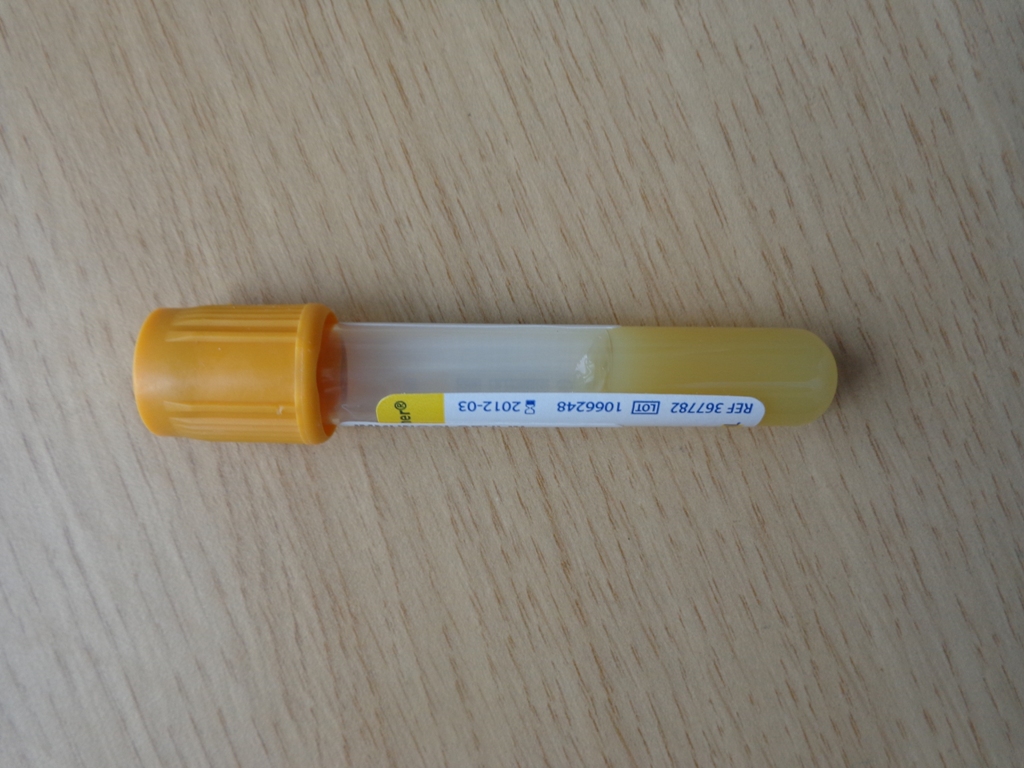
Photograph: AfroBrazilian, CC BY-SA 3.0, via Wikimedia Commons.
Comments