

Zika, dengue, West Nile, Japanese encephalitis. These viruses travel by mosquito and cause very different kinds of misery, from fever to brain swelling to birth defects. They also share a family tree. All are orthoflaviviruses, and all rely on getting inside our cells and staying intact long enough to copy themselves. A study published this week in Cell Host & Microbe describes a human gene that gets in the way of exactly that step, and it does so across the whole family.
The team, led by Qi Li and colleagues at Huazhong Agricultural University with collaborators including Michael Diamond at Washington University, went looking for the gene using a brute-force approach. Instead of knocking genes out, they turned them up.
Switching genes on, one by one
Most genetic screens for antiviral factors delete genes and watch what breaks. This group ran a genome-wide CRISPR activation screen, which does the opposite. It boosts the expression of each gene in turn, then asks which cells suddenly resist infection. One gene stood out: SPART, also known as Spartin or SPG20. Cells making more of it fought off Zika. Cells lacking it let the virus replicate more freely.
The mechanism turned out to hinge on a second protein, an enzyme called ITCH. ITCH is an E3 ubiquitin ligase, meaning it attaches small ubiquitin tags to other proteins. The researchers found that ITCH tags the Zika capsid, the protein shell that protects the viral genome. Tagging the capsid triggers the virus to uncoat too early, spilling its genetic material before the cell is ready to be hijacked. SPART's job is to position ITCH correctly by disrupting its location on endosomes, the small compartments where incoming virus particles get sorted.
The logic held up when the team removed both genes together. Deleting SPART alone helped the virus. Deleting SPART and ITCH at the same time erased the effect, which is what you would expect if SPART works through ITCH rather than on its own.
Why the pregnancy result matters
Zika drew global attention in 2015 and 2016 because infection during pregnancy can damage the developing fetal brain. So the researchers tested their idea in pregnant mice. Animals lacking Spg20, the mouse version of SPART, had higher viral loads in both mother and fetus, along with more fetal abnormalities. Mice lacking Itch showed the reverse pattern. The same split appeared with other orthoflaviviruses, not just Zika, which is the part that makes SPART interesting as a broad target rather than a one-virus curiosity.
That breadth is the headline. A single host factor that restricts Zika, dengue, West Nile, and Japanese encephalitis would be a rare thing. Most antivirals are built against one pathogen. A shared vulnerability in how these viruses uncoat could point toward a countermeasure that does not need to be reinvented for each outbreak.
What this does not settle
This is mouse and cell-culture biology, not a drug. The screen shows that raising SPART levels restricts the virus, but nobody has a way to safely raise SPART in a person, and there is no evidence yet that doing so would help someone already infected. The maternal-fetal experiments used gene-edited mice, which model the pathway cleanly but do not capture the full complexity of human pregnancy or the range of orthoflaviviruses that circulate in the wild. SPART and ITCH also do other things in healthy cells, so any therapy aimed at this axis would have to avoid disturbing their normal work. The paper maps a mechanism. Turning a mechanism into medicine is a longer road.
Still, the finding reframes part of the fight against mosquito-borne viruses. The block is not aimed at the virus surface, where mutations pile up fastest, but at a physical step the virus cannot easily skip. Every orthoflavivirus has to uncoat. If forcing that to happen at the wrong moment can be encouraged rather than prevented, it opens a line of attack that several dangerous viruses would share.
Li, Q. et al. "A CRISPR activation screen identifies SPART as a pan-orthoflavivirus restriction factor." Cell Host & Microbe, 2026. doi.org/10.1016/j.chom.2026.04.018
PubMed PMID: 42161262.
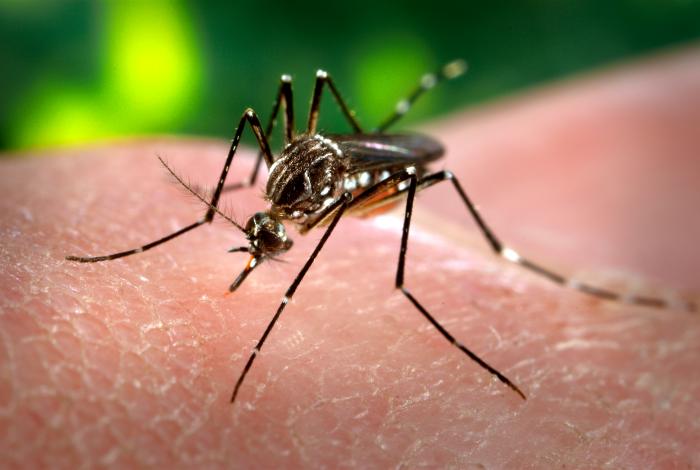
Photograph: James Gathany, CDC, Public domain, via Wikimedia Commons.
Comments