A meta-analysis of experiments answers a narrower question than it appears to. It reports what a stressor does to a system when researchers apply it, averaged over the places they chose to apply it. It does not report how much the world has already changed. A new synthesis of soil animal feeding is a useful case, because its headline number is large and easy to read as the second kind of claim.
The synthesis pooled experiments in which soils were dried, warmed, burned, fertilised, grazed, tilled or dosed with pollutants, and compared how fast detritivores fed against untreated plots. Averaged across all of them, feeding activity fell by 47.8%. Earthworms, millipedes, woodlice and springtails break down dead plant material so that microbes can finish it, so their feeding rate sets part of the pace at which carbon and nutrients move through soil.
Why it matters: The ranking of stressors is the usable result. It tells land managers which pressures cost the most soil function per application, and it separates the practices that barely register from the ones that nearly shut feeding down.
The study, by Yin et al., a team led from Northwest A&F University in China with collaborators in Germany, Sweden and the Czech Republic, appears in Current Biology. It synthesises 650 observations from 55 studies. The figures below come from its abstract.
Which stressors cost the most
Four categories stood out. Climate change reduced feeding by 59.8%, chemical pollution by 57.6%, fire by 49.1% and land-use intensification by 34%. The subcategories matter more than the categories, because each category is a mix of very different treatments.
Within climate change, drought cut feeding by 68.9% and warming by 25.4%. Within pollution, insecticides cut it by 98.9%, fungicides by 59.7% and heavy metals by 59.5%. Within land-use intensification, mineral fertilisation accounted for most of the effect at 45.6%, while grazing, at 20.3%, and tillage, at 11.8%, were described by the authors as minor.
Two of these deserve a second reading. An insecticide effect of 98.9% means feeding at roughly a hundredth of the control rate. That is close to complete suppression, and an average that extreme usually says as much about the doses and settings chosen in the source studies as about typical exposure in a field; the abstract does not give the doses. And the drought and warming figures come from experiments that impose one factor while holding the other. In a real climate the two arrive together, since warmer soils dry faster, so the separate estimates are not a forecast of what a warming, drying region will see.
An average over experiments, not over the planet
The 47.8% figure is an effect size: how much lower feeding was in treated plots than in paired controls, averaged across observations. It answers the question of what happens when a stressor is applied. It is not an estimate of how much soil animal feeding has declined across the world's land, and nothing in the design could produce one. That would need repeated measurements of the same soils through time, and a map of where each stressor actually operates and at what intensity.
The authors framed the question in a way that made a decline the expected answer: We hypothesize that global environmental changes will result in a decline in the feeding activity of soil detritivores. That is a reasonable prior, and the data support it. But a synthesis built to test a direction is a different thing from a survey of change, and the earlier version of this article blurred the two.
The abstract also reports that the size of the reduction was strongly regulated by ecosystem type, soil organic carbon, soil pH, and detritivore species richness and abundance. It does not say in which direction each of those acts. It is tempting to read the richness result as diversity buffering against shocks, a familiar idea in ecology, but these data, as summarised, do not show that.
What the study can't say yet
Observations from the same study are not independent, and the abstract does not say how the analysis handled that. 650 observations from 55 studies is about 12 per study, so a few large studies with many treatment levels can weigh heavily on a subcategory, and the insecticide and tillage estimates may rest on far fewer studies than the total suggests. The abstract gives no per-category study counts or intervals, and without them the precise percentages carry more apparent certainty than they should.
Feeding activity is also a proxy. It measures how fast soil animals consume organic material over the test period, not decomposition as a whole, carbon storage or nutrient supply to plants. The authors are careful about this step, concluding that the declines may further impair energy transfer within soil food webs. That link is argued from what detritivores do, not measured in this synthesis.
Finally, the results are reported one stressor category at a time. Farmland is fertilised, tilled and sprayed in the same season, often during a dry spell. Whether those effects add, multiply or partly cancel is not something a category-by-category average can answer.
Quick questions
Are soil animals eating half as much as they used to? That is not what this study measured. It found that, in experiments, applying a stressor lowered feeding by about half on average compared with untreated soil.
What is the most practical finding? The spread within categories. Among farming practices, mineral fertilisation cut feeding by 45.6% while tillage cut it by 11.8%, and among pollutants insecticides were far more damaging than the rest.
What's the one-line takeaway? Across 650 experimental comparisons, drought and insecticides were the heaviest brakes on soil animal feeding, but the 47.8% average describes the effect of applied stress, not a measured global decline.
Yin, R. et al. "Global environmental changes threaten the feeding activity of soil detritivores." Current Biology, 2026. doi.org/10.1016/j.cub.2025.12.040
PubMed PMID: 41547344.
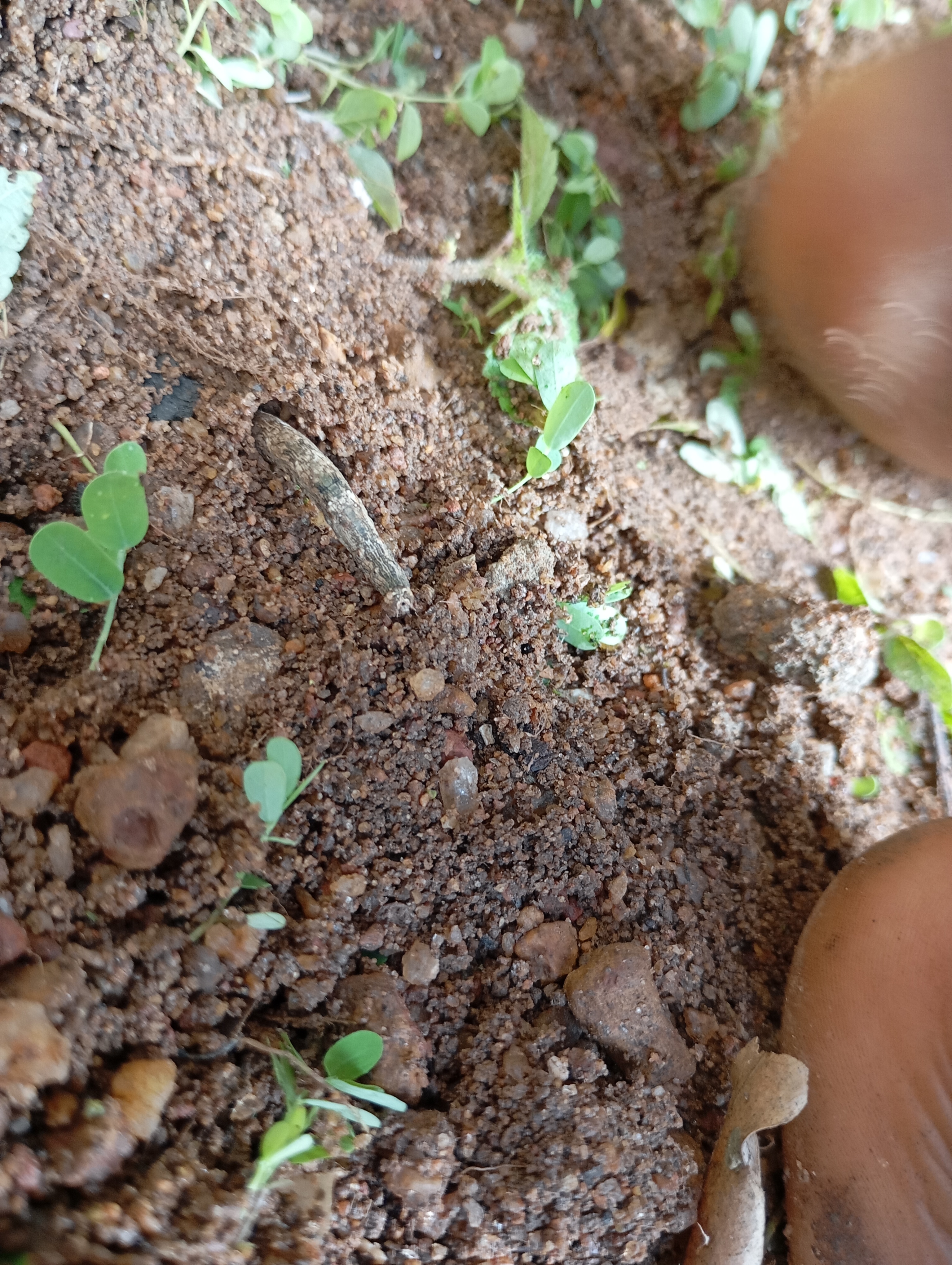
Photograph: Zmu'az4Z, CC BY 4.0, via Wikimedia Commons.
Comments