
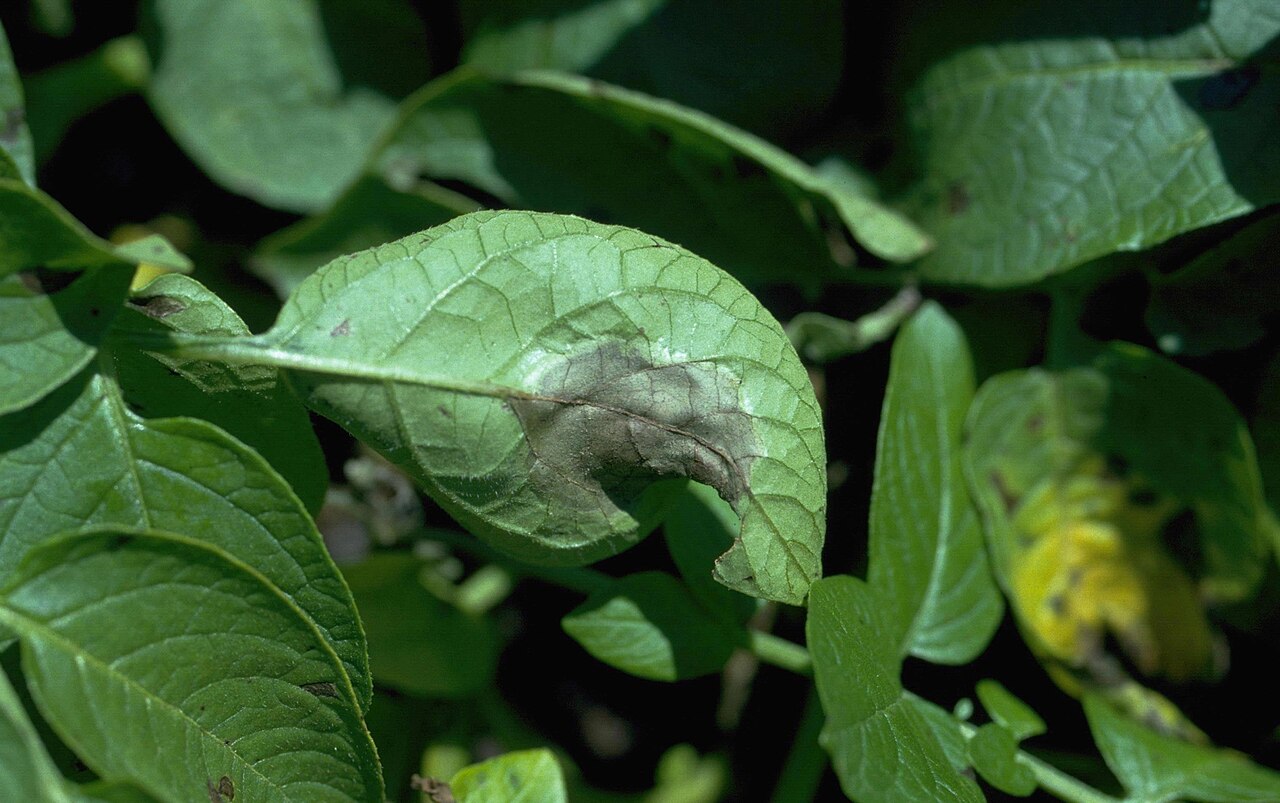
A plant that eats insects and is pollinated by insects has a design problem. The trap and the flower are both advertisements aimed at the same audience, and every pollinator digested is a pollinator that does not carry pollen anywhere. Most carnivorous plants resolve this spatially, holding flowers on long stalks well clear of the traps. An alpine herb from the Hengduan Mountains has solved it differently, and in doing so has settled a question Darwin left open in 1875.
Darwin, fresh from his work on sundews, suspected that some Saxifraga species with sticky glandular hairs might be carnivorous. His feeding experiments were inconclusive, and the genus has sat in the ambiguous category of protocarnivorous ever since: plants that catch insects without demonstrated ability to digest them or absorb anything from them. A team at the Kunming Institute of Botany has now tested Saxifraga candelabrum against all four criteria that define carnivory, and it passes each one.
Why it matters: The bar for calling a plant carnivorous is deliberately high, requiring attraction, capture, digestion and uptake to be shown separately. Clearing it adds an entirely new order, Saxifragales, to the roster of lineages that independently evolved the strategy, which makes carnivory look less exotic and more like a repeatable answer to nutrient scarcity.
Four criteria, tested separately
Capture was the easy part and the least informative, since sticky hairs catch insects whether or not a plant benefits. The stronger evidence is that it is systematic. Trapped insect counts scaled with both the number and length of inflorescence branches, mature plants carried an average of 71 trapped insects, and juveniles with few branches caught almost nothing. Herbarium sheets going back to 1888 showed prey on 43 of 45 flowering specimens, which rules out a recent or local curiosity.
Attraction was tested by enclosing flowering plants in either a glass case, which blocks scent while leaving them visible, or a white net, which blocks the view while letting odour through. Visitation held up when sight was blocked and fell when scent was blocked, so the lure is olfactory. Analysis of the floral volatiles turned up compounds including myrcene and eucalyptol, both known to be detected by insects.
Digestion was shown with a fluorescent phosphatase substrate, which lit up in the glandular hairs. A closely related Saxifraga growing alongside it, which rarely traps anything, showed no such activity. That comparison matters, because it distinguishes secreted plant enzymes from bacteria decomposing a corpse stuck to a leaf.
Following the nitrogen
Uptake is the criterion that separates true carnivory from mere trapping, and it needs a tracer. The team raised over a thousand fruit flies on nitrogen-15 labelled amino acids for two months, then placed ten labelled flies on each experimental plant. Isotope ratios rose significantly in S. candelabrum and in a Drosera positive control, while two non-carnivorous species handled identically showed no change at all, which excludes passive absorption and surface contamination.
Soil around the plants stayed unlabelled, so nothing arrived via the roots. The distribution inside the plant is the detail worth pausing on: enrichment was highest in flowers, lower in the cauline leaves closer to where the flies were placed, and lowest in the basal leaves. Nitrogen was not simply diffusing from the point of capture, it was being routed to the reproductive organs, which is what you would expect of a monocarpic plant that flowers once and dies.
Eating only what you do not need
The behavioural finding is the elegant one. The insects stuck to the glandular hairs were overwhelmingly small chironomid gnats. The insects doing the actual pollinating were large-bodied flies and bees, and those were rarely caught. As Zhang and colleagues report in Nature Communications, here we found another strategy to balance carnivory and pollination: selectively capturing non-pollinators. Rather than separating trap from flower in space, the plant separates them by prey size.
The genomics adds a comparative layer. Against two other unrelated sticky-trap carnivores, the team found 20 gene families expanded in all three, enriched for digestion and phosphate transport. Across all six carnivorous species with different trap types, no gene family was shared, which is itself informative: convergence appears to track the mechanism rather than carnivory in the abstract.
What the study can't say yet
The genomic signals are associations. The authors state that further functional studies are needed to test whether the gene losses they identify causally underlie carnivorous adaptation, and the same caution applies to the expansions and accelerated substitutions. Enrichment for plausible-sounding functions is a hypothesis about which genes to test, not a demonstration that any of them does the job.
The nitrogen experiments also measure uptake, not benefit. Showing that prey-derived nitrogen reaches the flowers does not establish that it improves seed set, survival or fitness, and the cost-benefit case for carnivory rests on that step. Ten fruit flies over two weeks is also a generous meal delivered by hand; what a plant obtains from whatever the wind brings in a dry alpine crevice is a different quantity.
Quick questions
Was Darwin right? About the genus, yes. He tested two other Saxifraga species and got inconclusive results; this work confirms carnivory in a third, which supports his intuition without validating his specific cases.
How does a plant avoid eating its pollinators? By trapping small insects on glandular hairs while its actual pollinators are large-bodied flies and bees that do not get stuck. The selectivity is a by-product of prey size rather than any active discrimination.
What's the one-line takeaway? An alpine Saxifraga attracts insects by scent, digests them with its own enzymes, routes the nitrogen to its flowers, and catches almost exclusively the insects that were never going to pollinate it.
Zhang et al. "Identification of carnivory in the flowering plant Saxifraga via multidisciplinary evidence." Nature Communications, 2026;17(1). doi.org/10.1038/s41467-026-75288-y
PubMed PMID: 42552312.
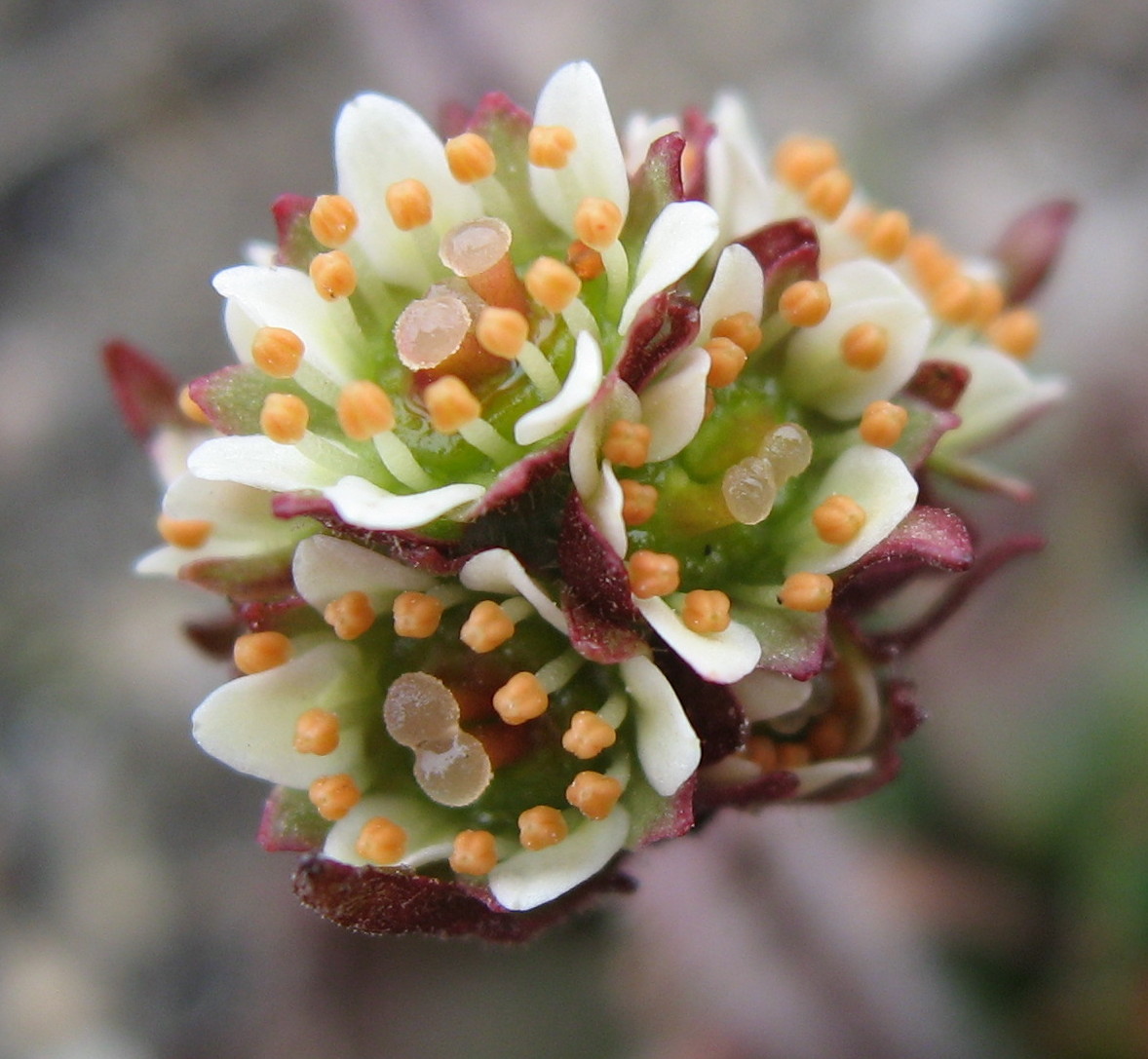
Image: Saxifraga nivalis, a related species in the same genus, Kim Hansen, CC BY-SA 3.0, via Wikimedia Commons.
Comments