
Respiratory syncytial virus faces a chicken-and-egg problem the moment it enters a cell. To copy its genome, RSV builds droplet-like compartments called viral factories, blobs of protein and RNA with no membrane around them. These form the way oil separates from water, through a process that needs a high concentration of the right proteins. But making that much protein requires the factories to already be running. So how does the first factory ever get built?
A team led by Dhanushika Ratnayake at the Hubrecht Institute set out to catch the answer as it happened. Writing in Nature, they tracked RSV infection in living cells with enough resolution to follow individual viral genomes, one particle at a time. What they saw reframes how the virus gets going.
The seed was already inside the particle
The factories did not condense out of the cytoplasm on their own. They grew from the incoming viral genome itself. Each RSV particle, it turns out, arrives with a partly built protein network already wrapped around its genome before it ever reaches a cell. The researchers call these bundles pre-replication centres.
Think of them as starter cultures. A pre-replication centre is a potent seed because it grabs and holds onto viral proteins efficiently, so a droplet nucleates around it right away instead of waiting for protein levels to climb. The same tight grip pulls in the viral polymerase and its helper proteins early, which means the virus can start transcribing its genes even before a full-blown factory exists. One activity feeds the next. The seed recruits proteins, the proteins enable transcription, transcription makes more proteins, and the factory snowballs into being.
This is a real shift in thinking. The standard picture had these compartments assembling fresh inside each cell once conditions were right. Instead, a critical piece of the machinery is packaged at the factory, so to speak, inside the virion during its own production.
Why one cell rages and its neighbor stays quiet
The pre-assembly step turned out to be strikingly uneven from particle to particle. Some virions carried well-formed seeds. Others carried almost nothing. Because the amount of pre-built network depends on how much viral protein got loaded during a virion's manufacture, no two particles are quite alike.
That variability tracks a puzzle clinicians and virologists have long noticed: infected cells behave very differently from one another, some churning out virus fast while others lag. The paper ties that cell-to-cell spread back to the virus, not the host. A cell that happens to be infected by a particle carrying a strong seed gets a fast start. A cell that catches a poorly loaded particle sputters. Heterogeneous virions, the authors argue, are an underappreciated source of heterogeneous infection.
RSV is worth understanding at this level of detail. It is the most common cause of bronchiolitis and pneumonia in babies under one year old, and it sends large numbers of infants and older adults to the hospital every winter. New antibody shots and vaccines have started to blunt that toll, but antiviral drugs that stop the virus once someone is already sick remain thin on the ground.
A moment worth targeting
If the earliest step of replication depends on a pre-formed seed and its ability to pull proteins together, that seed becomes an appealing thing to disrupt. Break the pre-replication centre, or block its knack for nucleating a droplet, and the whole feed-forward loop may never start. It is a different pressure point than the polymerase itself, which is where most antiviral efforts have focused.
Some caution is in order. This work was done in cultured cells, watching the opening minutes of infection, not in the airways of a sick child. Whether a drug can reach and jam these seeds in a real respiratory tract is an open question, and the leap from an elegant mechanism to a usable therapy is long and frequently disappointing. The findings also come from one virus; how widely the pre-loaded-seed trick applies across other RNA viruses that build similar factories is not yet settled.
Still, the core observation is clean and a little surprising. A virus we tend to picture as bare genetic cargo in a protein shell is doing quiet assembly work before it ever lands, and that hidden head start may decide how badly a given cell suffers. Watching infection genome by genome turned a paradox into a mechanism.
Ratnayake, D. et al. "Pre-assembly of biomolecular condensate seeds drives RSV replication." Nature, 2026. doi.org/10.1038/s41586-025-10071-5
PubMed PMID: 41606345.
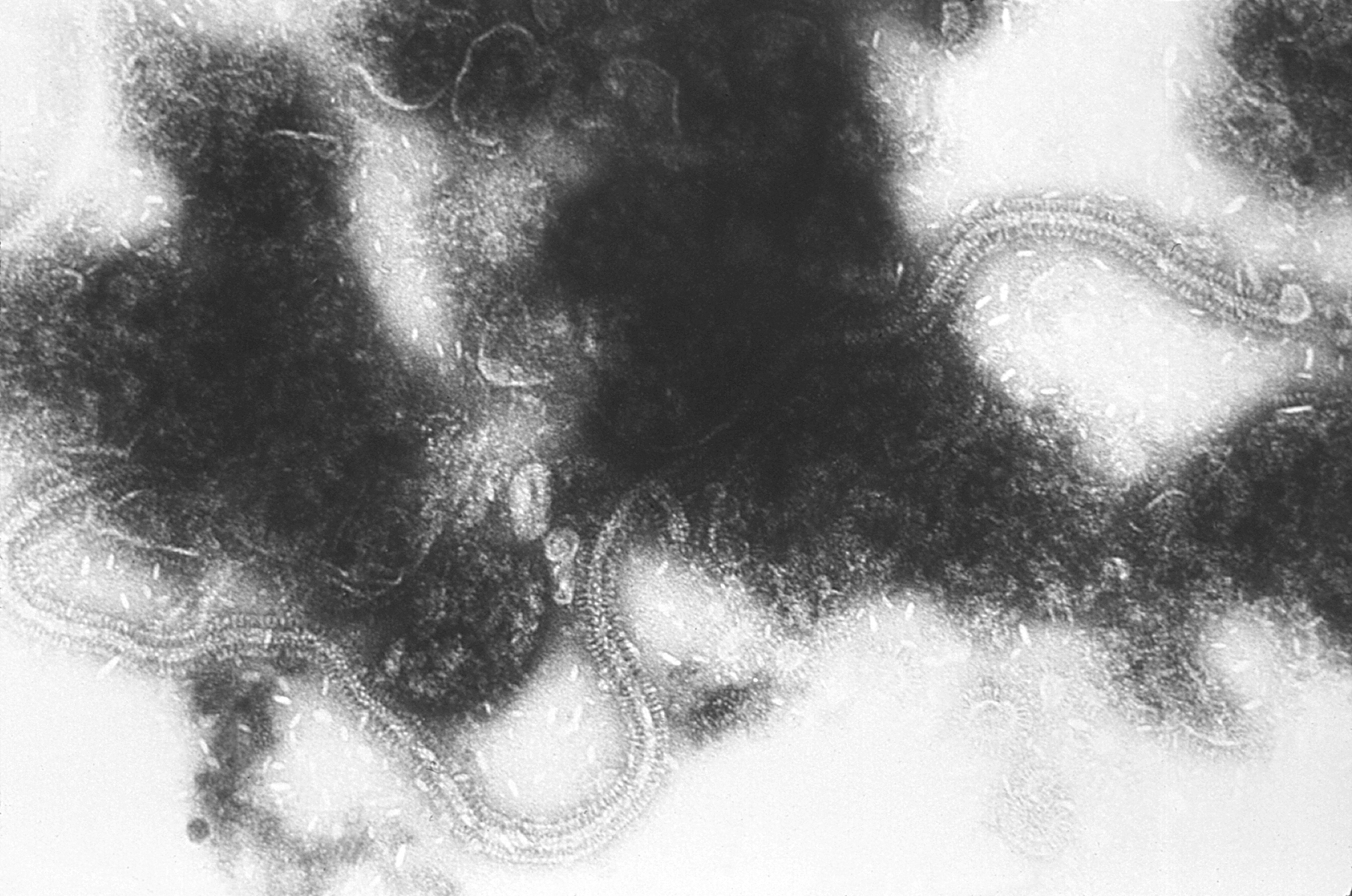
Photograph: CDC/Dr. Erskine Palmer, Public domain, via Wikimedia Commons.
Comments