


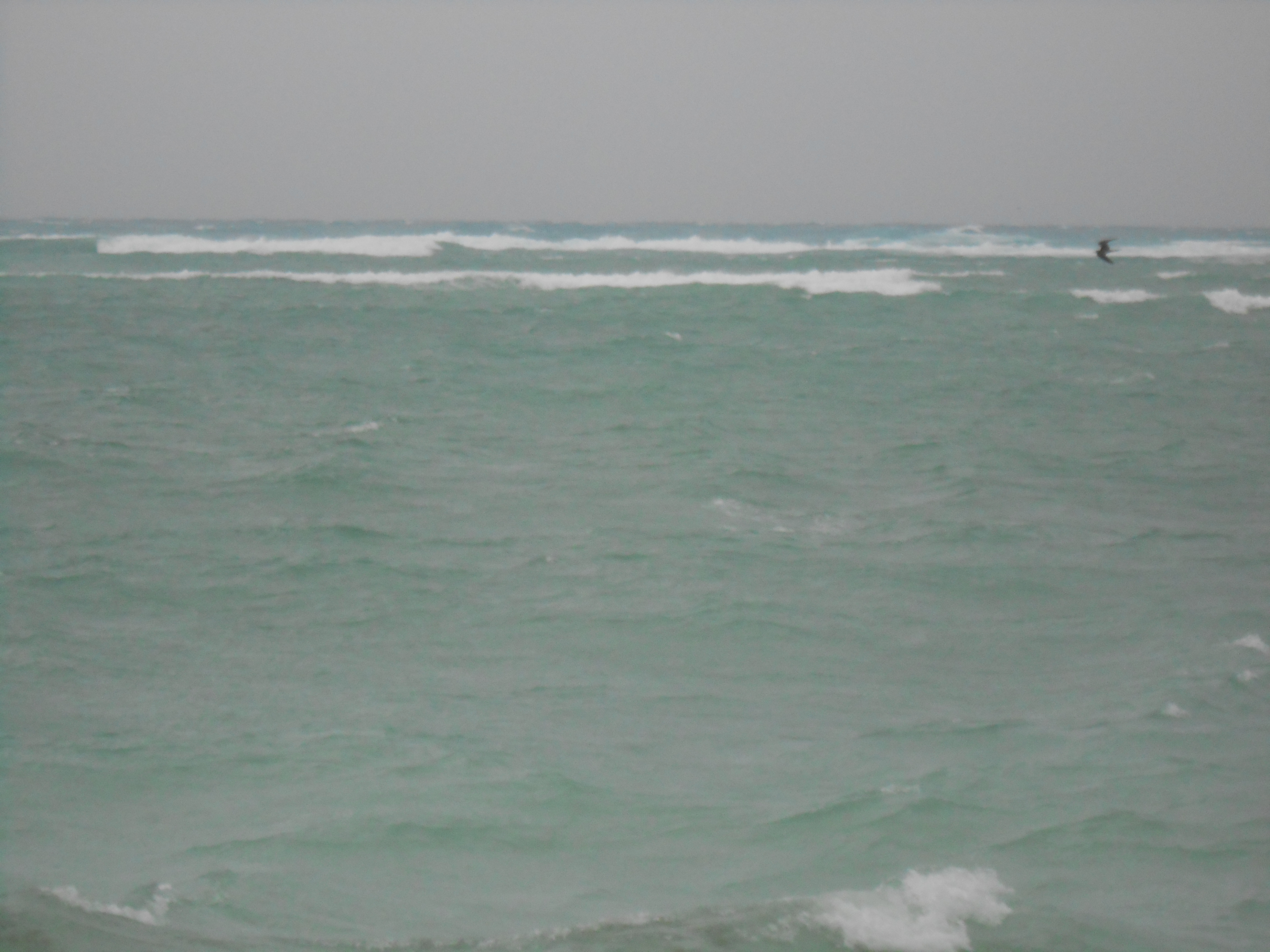
A marine heatwave does not announce itself the way a heatwave on land does. There is no shimmer over asphalt, no wilting garden. The water just gets warmer, sometimes for months, and the animals living in it either move, adapt, or die. The 2011 event off Western Australia wiped out kelp forests that never came back. The blob that sat in the northeast Pacific from 2013 to 2016 starved seabirds and reshaped fisheries. As these events grow more common, one question keeps nagging at ocean scientists: can we see them coming?
A new study in Nature Communications argues that part of the answer lies in something climate models have often treated as background noise. The ocean is not a passive tub of water absorbing heat from the sky. It moves. Currents carry warmth sideways, and turbulent mixing pushes it down and pulls it back up. The team behind the paper, led by Xianglin Ren and Wei Liu at the University of California, Riverside, set out to measure how much that motion matters.
Two oceans, one comparison
To do it, they ran two versions of a climate model and compared them. One version had a fully dynamic ocean, with circulation and mixing operating as they do in the real world. The other used a slab ocean, a simplified layer that soaks up and releases heat but does not flow anywhere. The difference between the two runs is, in effect, the fingerprint of ocean dynamics.
That fingerprint turned out to be large. In the mid-to-high latitudes, and in the eastern tropical Pacific, the dynamic ocean produced marine heatwaves that were both more intense and longer-lasting than the slab version could generate. In the eastern tropical Pacific, that makes intuitive sense, because heatwaves there are tied to extreme El Nino events, which are themselves creatures of ocean circulation. But the broader pattern says something more general. A model that ignores how water moves will systematically underestimate how bad these events get.
The researchers traced the reason using a mixed-layer heat budget, which is a way of accounting for every source of heat entering and leaving the top layer of the sea. During a heatwave, the extra warmth was not simply piling up from the atmosphere above. Vertical mixing and horizontal transport were doing much of the work, changing both the magnitude of the temperature spike and the rhythm of how it built and faded. In the dynamic ocean, the hottest extremes evolved differently than in the slab world.
A window of warning in the North Atlantic
There is a more hopeful thread here too, and it runs through the North Atlantic. The study found robust multi-year potential predictability of marine heatwaves in that region, meaning the model could anticipate them years rather than days in advance. The credit goes largely to the Atlantic Meridional Overturning Circulation, the vast conveyor that ferries warm water north and cold water south. Because that circulation changes slowly and somewhat predictably, the heatwaves it helps drive inherit some of that predictability.
What the result does not promise
A word about what this is and is not. This is a modeling study, and potential predictability is not the same as a working forecast. Showing that a model can predict its own future is a necessary first step, not a delivered service. Real forecasts have to contend with imperfect observations and the messy business of initializing a model to match today's ocean. The findings also lean on one modeling framework, and heat budgets can shift with resolution and choices about how mixing is represented. None of that erases the central result, but it does set the ceiling on what to claim.
Still, the direction is clear enough. If ocean dynamics are what make marine heatwaves severe, then they are also the thread to pull on for warning systems. A fisheries manager who knows a bad summer is likely two years out can plan differently than one caught by surprise. A reef monitored for early stress can be triaged. The Atlantic result suggests those lead times are not fantasy, at least in some places.
The ocean has always been the planet's great heat sponge, quietly absorbing most of the warming humans have caused. This paper is a reminder that the sponge is not inert. It sloshes, it overturns, and where it moves, it decides how much heat pools where life is trying to hang on.
Ren, X. et al. "Ocean dynamics shape marine heatwaves and their predictability." Nature Communications, 2026. doi.org/10.1038/s41467-026-69509-7
PubMed PMID: 41708619.
Photograph: Editor abcdef, CC0, via Wikimedia Commons.
Comments