


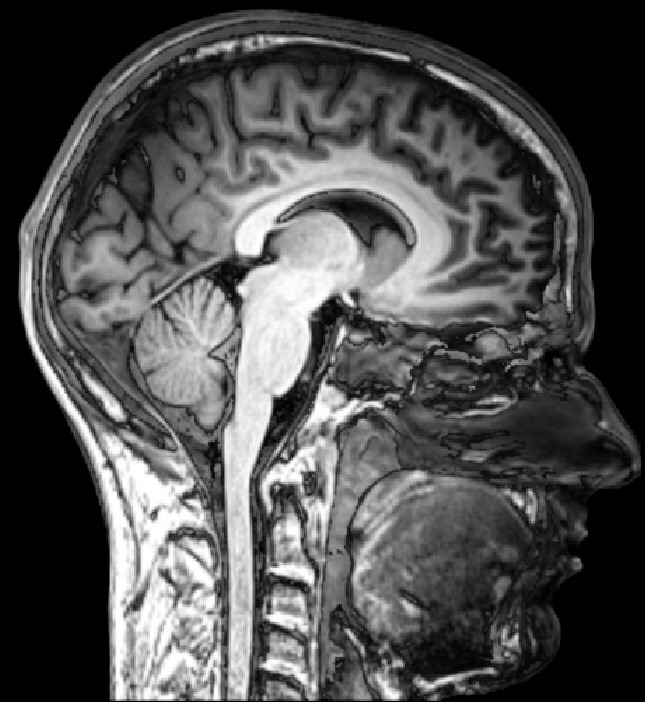
Your birth certificate gives one number. Your organs disagree with each other, and with the certificate. A heart can run ahead of schedule while the liver lags behind, and until recently there was no clean way to read those differences from a routine scan. A team led by Huizi Cao and Junhao Wen at Columbia, working with collaborators across Pennsylvania, the National Institute on Aging and several other centers, has now turned the ordinary MRI into a set of organ-by-organ age gauges.
The work, published in Nature Medicine, builds seven separate clocks from magnetic resonance imaging. Each one estimates the biological age of a single organ: the brain, heart, liver, adipose tissue, spleen, kidney and pancreas. The researchers call the difference between an organ's estimated age and a person's actual age a biological age gap, abbreviated MRIBAG. A positive gap means the organ looks older than the calendar says.
What 313,645 scans reveal
The scale here is the point. The team drew on imaging and health data from 313,645 individuals assembled by a group they call the MULTI Consortium. That let them do more than describe organ aging. They cross-referenced the seven gaps against 2,923 plasma proteins, 327 metabolites and roughly 6.5 million common genetic variants, so each clock could be tied to measurable biology rather than left as a black box.
The genetics turned up 53 pairings between an organ age gap and a specific genomic location that cleared the genome-wide significance bar. Statistical tools including Mendelian randomization suggested the organs are not aging in isolation. Some gaps influence others, and the MRI clocks lined up with 24 aging measures built from non-imaging data. The gaps also connected to 525 disease endpoints, which is a wide net for a single measurement type.
From the gene mapping, the authors flagged nine druggable genes as possible targets for treatments aimed at slowing aging. That is a modest, honest framing. These are candidates for future work, not therapies waiting in a pharmacy.
From a number to a prognosis
A clock is only interesting if it predicts something. The seven MRIBAGs did. Older-looking organs were associated with higher future risk of systemic disease, with diabetes mellitus given as one example, and with all-cause mortality. In other words, the scans carried information about what happens next, not just a snapshot of the present.
The most provocative result sits at the end of the paper. The researchers looked at people enrolled in a trial of solanezumab, an Alzheimer's drug, tracked over 240 weeks. Participants whose brains scored as more youthful followed a different cognitive decline trajectory than those with more aged brain profiles. The authors are careful here. They write that this split cannot be fully attributed to the drug itself. The brain clock separated the groups, but untangling how much of that reflects treatment versus underlying biology is left open.
Reasons to stay skeptical
A few things deserve caution. This is an associative study built on a consortium of existing datasets, so it shows that organ age gaps travel alongside disease and death, not that an aged organ causes them in any given person. Mendelian randomization pushes toward causal reasoning, but it rests on assumptions that do not always hold. The druggable genes are early leads. And the cohorts behind these clocks skew toward the populations that get large-scale MRI studies done on them, which limits how far the numbers should be stretched to everyone else. The authors themselves hedge the headline solanezumab finding, which is a good sign about the rest.
Still, the direction is clear. If a scan a patient is already getting can be re-read to say the heart looks five years old for its age, that is a diagnostic dividend from data that used to sit unused. The seven-organ framework gives aging research a common yardstick, and it does so from a machine that already sits in most hospitals.
Cao, H. et al. "MRI-based multi-organ clocks for healthy aging and disease assessment." Nature Medicine, 2026. doi.org/10.1038/s41591-025-03999-8
PubMed PMID: 41102562.
Photograph: everyone's idle, CC BY-SA 2.0, via Wikimedia Commons.
Comments