


When surgeons replace a diseased or damaged artery with a synthetic graft, the repair can quietly fail. Scar tissue and cell overgrowth narrow the tube from the inside, a process called stenosis. Blood flow drops. By the time anyone notices, the vessel is often badly choked. Catching that narrowing usually means a hospital visit for an X-ray angiogram, an MRI, or a Doppler ultrasound. Those scans are accurate, but they happen once in a while, not continuously, and they tend to arrive late.
A team at UCLA has taken a different route. Instead of scanning the graft from outside, they made the graft itself the sensor. Their device, described in Nature Biotechnology, is a magnetoelastic vascular graft that converts the motion of blood pushing against its walls into an electrical signal. The graft runs on the hemodynamics passing through it. No battery, no external power source.
How a tube learns to talk
Magnetoelastic materials change their magnetic properties when they are squeezed or stretched. The UCLA graft uses that effect. Each pulse of blood flexes the wall, and that flexing generates a small voltage. When the vessel is open and flow is smooth, the signal has one shape. When narrowing starts and flow becomes turbulent or restricted, the signal changes. The graft broadcasts these readings wirelessly, so a monitor outside the body can track them in real time.
The researchers built the grafts to be biocompatible and waterproof, which matters for something meant to sit inside an artery for the long haul. They also made them at different diameters, since a graft for a small vessel is not the same as one for a large one. Manufacturing was designed to scale rather than to produce a single hand-built prototype.
Tested in rats and pigs
The team implanted the grafts into the femoral arteries of rats and swine, connecting them to the existing vessels through microsurgery. The grafts restored blood flow. When the researchers deliberately induced narrowing, the device flagged both where the stenosis was and how severe it had become. An AI model interpreted the electrical patterns to make those calls.
Durability is the usual sticking point for implanted electronics. A four-month study in rats checked whether the graft held up and whether the body rejected it. The authors report that the grafts stayed stable over that period, with no obvious signs of a harmful immune response. For an implant that would ideally last years, four months is a start rather than a finish, but it clears an early bar.
What this does and does not show
This is animal work. Rat and pig arteries are useful stand-ins, but they are not human ones, and swine hearts pump differently from ours. The stenosis in these experiments was induced by the researchers, so it does not fully mimic the slow, messy narrowing that develops in patients over months and years. Four months of stability is encouraging, yet human grafts need to survive far longer, and long-term signal drift, sensor wear, and the reliability of the wireless readout in a moving, living person all remain open questions. The AI analysis was trained and tested in this controlled setting; how it performs across body types, activity levels, and real disease is unknown.
Still, the core idea is appealing. Vascular grafts already go into hundreds of thousands of people for bypass surgery, dialysis access, and trauma repair. Turning that passive piece of hardware into something that reports on its own condition could shift stenosis from a problem found late to one found early. The next steps are the hard ones: bigger animals, longer timelines, and eventually the question of whether a self-powered artery can be trusted inside a human body for a decade or more.
Chen, G. et al. "Hemodynamics-driven magnetoelastic vascular grafts for stenosis diagnosis." Nature Biotechnology, 2026. doi.org/10.1038/s41587-025-02619-7
PubMed PMID: 41667708.
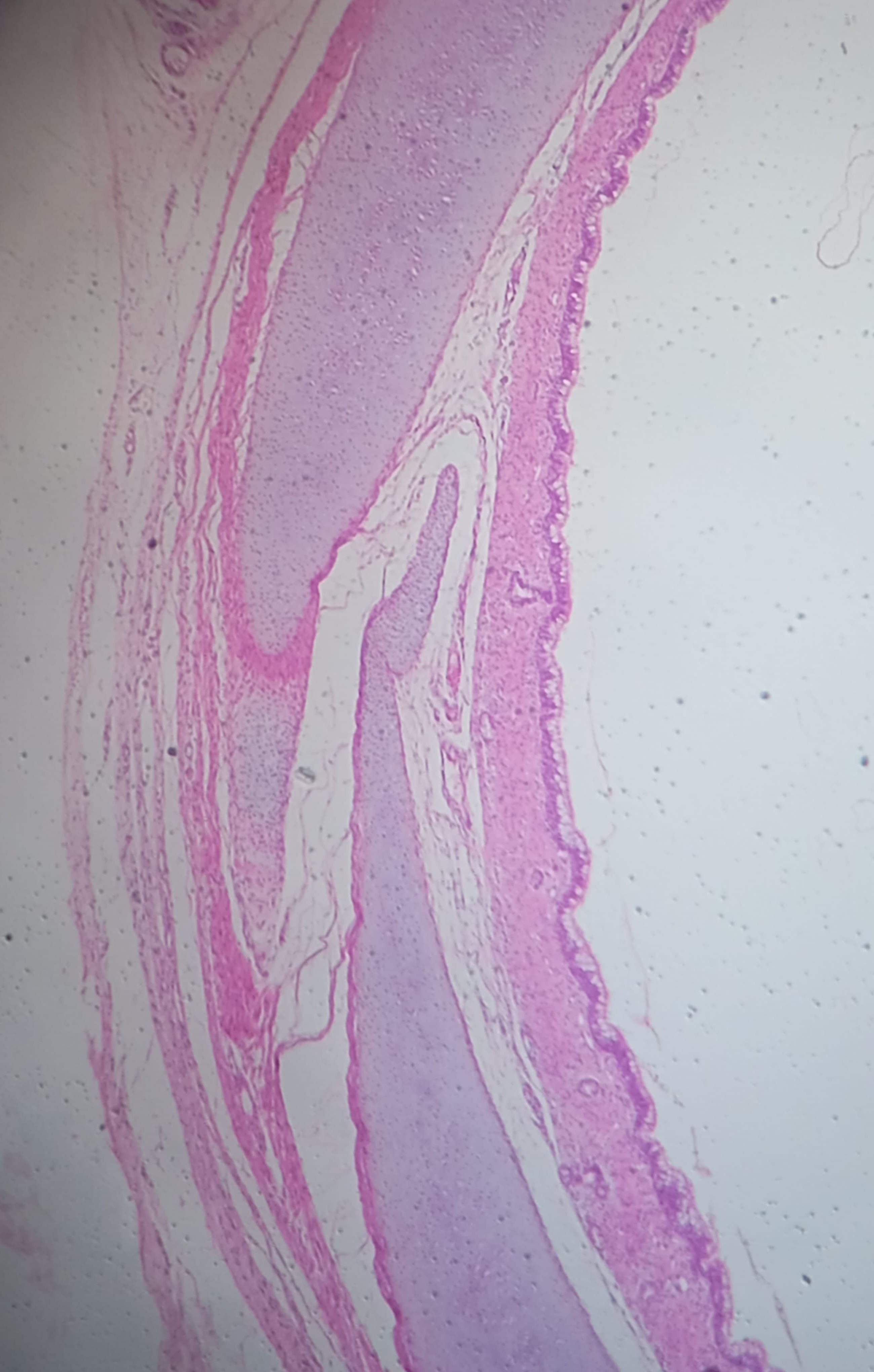
Photograph: Otavio Astor Vaz Costa, CC BY 4.0, via Wikimedia Commons.
Comments