
For most of the last hundred years, the only tuberculosis vaccine anyone could get was BCG, a shot developed in the 1920s that protects babies fairly well and adults barely at all. TB still kills more than a million people a year, and the people it kills most often are the ones whose immune systems are already under attack. Near the top of that list are people living with HIV, for whom tuberculosis remains the leading cause of death.
So it matters that a genuinely new TB vaccine candidate, called M72/AS01E, has been inching toward the finish line. In an earlier trial it cut the rate of active TB disease by about half in adults who were already carrying the bacterium. That is the best result a TB vaccine has shown in decades. But that trial did not include people with HIV. A study published in July in The Lancet HIV set out to fill that gap, and its answer was encouraging enough to change what the larger, ongoing trial looks like.
What the vaccine is, in plain terms
M72/AS01E is not a live or weakened bug. It is a lab-made protein stitched together from two pieces of Mycobacterium tuberculosis, the bacterium behind TB, mixed with an adjuvant called AS01 that revs up the body's response. The same adjuvant sits inside the shingles vaccine Shingrix, so it is well understood. The idea is to train the immune system to recognize the TB bacterium without ever exposing someone to the real thing.
The reason to worry about people with HIV is straightforward. HIV attacks the very CD4 T cells that a TB vaccine is trying to mobilize. A vaccine that works beautifully in a healthy volunteer might do very little in someone whose T cell army has been thinned out. There was no way to know without testing it.
What the trial found
The researchers enrolled 402 people aged 16 to 35 in South Africa, split roughly evenly between the vaccine and a placebo. Everyone had HIV that was well managed on antiretroviral therapy, with viral loads suppressed to very low levels and CD4 counts of at least 200. Half got two doses of M72/AS01E a month apart. The other half got dummy injections. Nobody, including the doctors giving the shots, knew who got what.
On safety, the vaccine behaved about how you would expect from a modern adjuvanted shot. Sore arms were common. Roughly three quarters of vaccine recipients reported injection-site pain, most of it mild and gone within a few days. There were no serious side effects tied to the vaccine, which is the bar that matters.
The immune response held up too. A month after the second dose, people who got the real vaccine had produced a robust jump in TB-specific antibodies and in the CD4 T cells that do the heavy lifting against the bacterium. That happened whether or not their bodies already showed signs of latent TB infection going in. In a population whose T cells are HIV's favorite target, seeing a solid T cell response is the reassuring part.
What the study can't say yet
Here is the honest limit. This trial measured safety and immune response. It did not measure whether the vaccine actually stops people from getting sick with TB. A strong antibody count and a rise in the right T cells are good signs, but they are stand-ins for protection, not proof of it. Only a much larger and longer trial can show whether fewer vaccinated people go on to develop active disease.
The other caveat is who was in the room. Everyone here had well-controlled HIV and reasonably healthy CD4 counts. That leaves out the people who are often in the most danger: those with advanced HIV, low CD4 counts, or virus that is not suppressed. The vaccine's behavior in that group is still an open question, and it is the group where a TB vaccine could do the most good.
What the trial did accomplish is a permission slip. Because M72/AS01E proved safe and immunogenic in people with controlled HIV, that group is now being folded into the global phase 3 registration trial already underway. In other words, the population most threatened by tuberculosis will not have to wait for a separate study to find out whether the first promising TB vaccine in a generation works for them. They are in the main trial now, and that is where the real answer will come from.
Dagnew et al. "Safety and immunogenicity of investigational tuberculosis vaccine M72/AS01E in people living with HIV in South Africa: an observer-blinded, randomised, controlled, phase 2 trial." The Lancet HIV, 2025. doi.org/10.1016/S2352-3018(25)00124-9
PubMed PMID: 40614747.
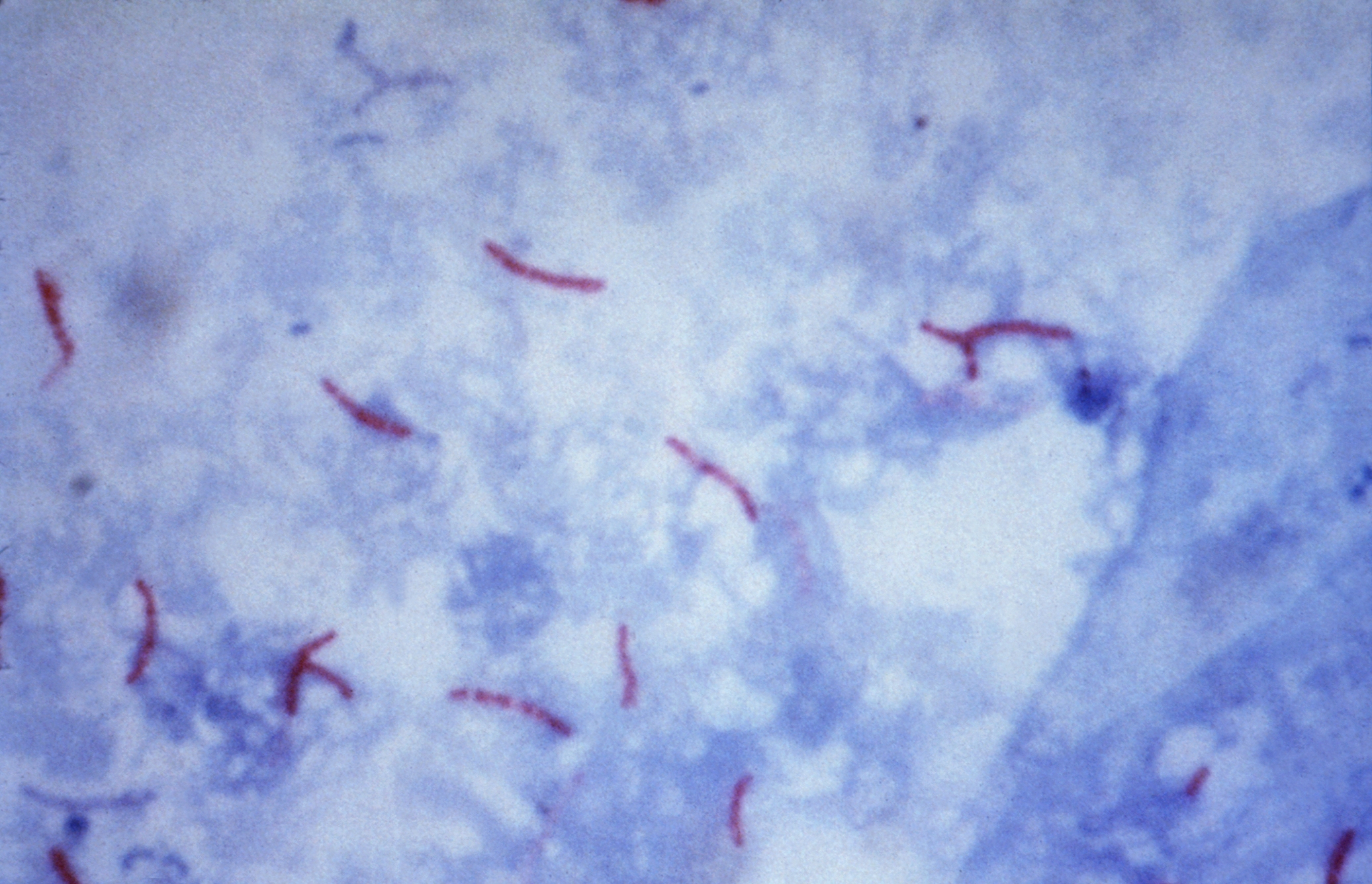
Photograph: CDC/Dr. George P. Kubica, Public domain, via Wikimedia Commons.
Comments